Creating a tiny home gym is all about making every centimetre count. Weight plates scattered on the floor are not only messy, they are a genuine trip hazard, can damage flooring and make training less enjoyable. A compact folding weight tree solves this by keeping plates organised, quiet and safely stored against a wall or in a corner when not in use. In this guide we’ll look at how to choose the right solution and where to position it so your plates stay off the floor, even in the smallest workout nook.
Why a compact folding weight tree beats stacking plates on the floor
Leaving plates stacked against a wall might feel like a space saver, but it quickly becomes a wobbling, noisy pile. A folding plate tree gives every plate a dedicated peg so you can grab what you need without bending awkwardly or shuffling heavy discs around. This helps protect your back, reduces the chance of broken toes and keeps the training area visually clean, which is surprisingly motivating in a small home gym. Folding models are designed to sit flat or nearly flat when empty, so you can reclaim floor space between sessions while still enjoying the safety and organisation of a proper storage system when you train.
Key features to look for in a tiny home gym plate tree
When space is limited, focus on three features: footprint, capacity and folding mechanism. Look for a rack that has a vertical, tower-style design rather than a wide A-frame, so it tucks easily into corners. Check the maximum load rating and the diameter of the pegs to ensure compatibility with your plates (Olympic vs standard). A good compact tree should hold at least a basic set of plates for your heaviest barbell lifts while remaining stable. The folding system should be simple enough to use one-handed, with secure locking pins or bolts so the rack cannot collapse accidentally while loaded. Rubber feet or floor-friendly end caps are also important to keep noise down and protect hard floors in apartments.
Smart positioning: corners, behind doors and under rigs
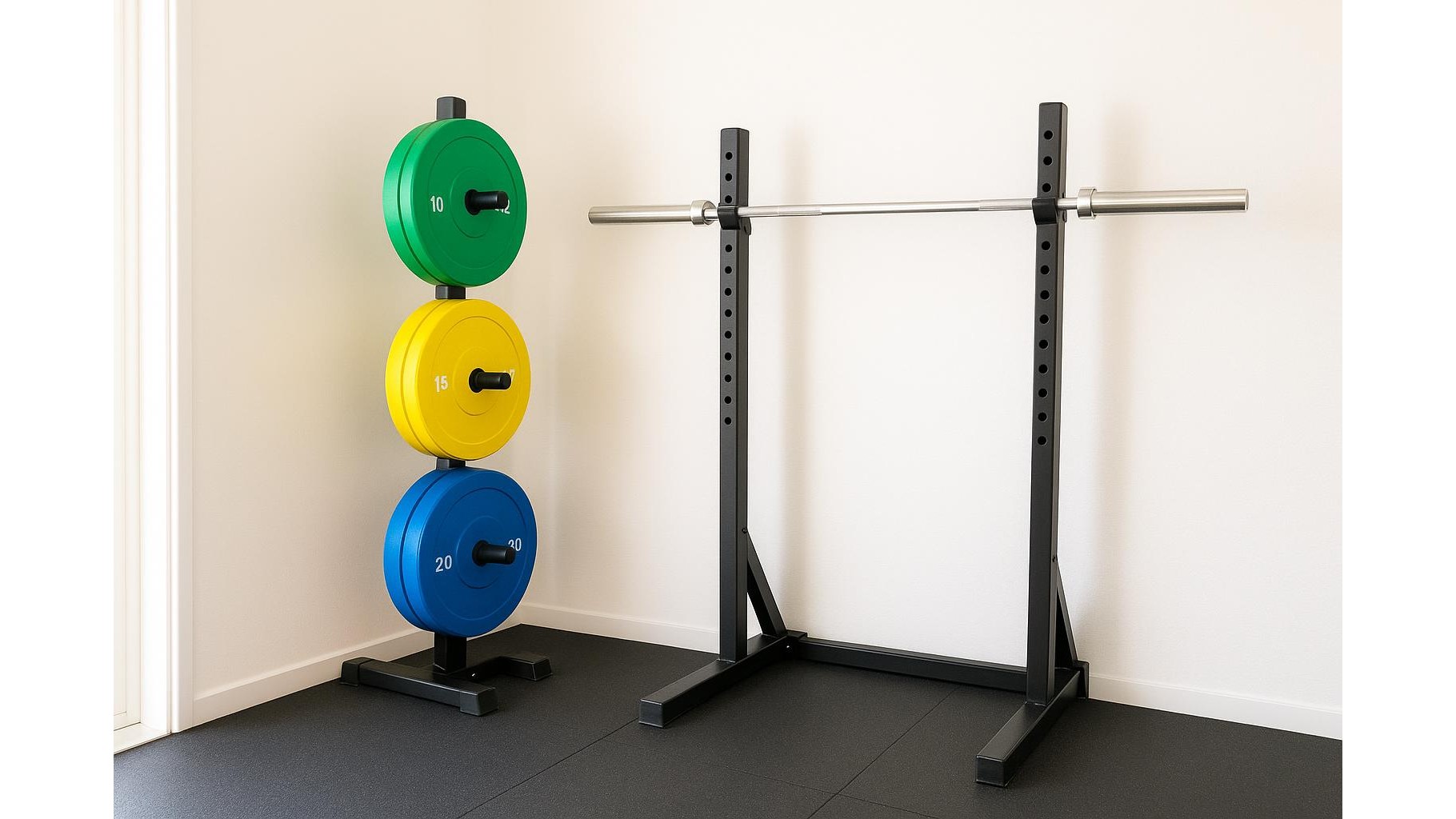
Even the best compact plate storage fails if you place it in the wrong spot. Aim to position your folding weight tree as close as possible to where you load your barbell, but not in the path of your main lifts. Corners behind a squat stand, the space beside a doorway or the area under a wall-mounted pull-up rig are all prime real estate in a small gym. Ensure you have enough clearance to fully open and fold the rack without hitting skirting boards or radiators. If you train in a multipurpose room, such as a living room or office, choose a place where the tree can fold flat against the wall so it visually “disappears” when you are not training, keeping the room tidy and partner-friendly.
Noise, floor protection and safety tips for plate storage
In compact homes, noise control matters as much as space. To keep things quiet, combine your folding weight tree with a small section of rubber gym flooring or a heavy-duty mat underneath. This stops the rack from sliding and cushions any bumps as you rack plates. Load heavier plates on the lower pegs and lighter plates higher up to lower the centre of gravity and prevent tipping. Always push plates fully onto the peg and avoid overloading one side. If you have children at home, choose a rack that sits close to the wall and consider bolting it or using furniture straps for extra security. Small details like these make a big difference to safety in a tiny home gym.
Adapting folding plate storage to your training style
Your training style should dictate how you arrange plates on the tree. If you often move between deadlifts and overhead press, keep your most used pairs (for example 5 kg and 10 kg plates) on the most accessible pegs so you can swap weights quickly during supersets. Lifters who use bumper plates for Olympic lifting might dedicate the lower pegs to thicker discs and keep smaller change plates on the upper arms or even on a separate compact post. Because a folding weight rack lives so close to your main station in a small gym, a logical plate order minimises wasted time and movement, helping you stay focused on your sets instead of hunting for the right weight.
Designing a tiny home gym is a balancing act between practicality and comfort. A carefully chosen compact folding weight tree, positioned intelligently and used with a few simple safety and noise-reduction tricks, can transform a cluttered corner into an efficient strength zone. By lifting your plates off the floor and onto a stable, foldable rack, you protect your body, your equipment and your living space, making it easier to train consistently even when square footage is limited.