Spending all day on your feet in retail, hospitality or healthcare can leave your lower body tense and overworked, especially if you also follow a home workout routine. Without a simple evening recovery routine, tight feet, calves, hips and lower back can build into nagging pain, reduced mobility and poor training performance. This targeted protocol combines gentle mobility, stretching and self-massage to help you reset after long shifts so you can train safely and feel fresher the next morning.
Set the scene: breathing and gentle mobility reset
Before you touch any equipment, give your nervous system permission to relax. Lie on your back with your feet on the floor and knees bent, and take 10 slow belly breaths, focusing on long exhales to downshift from “on your feet all day” mode. Then spend 3–5 minutes on gentle mobility: ankle circles, slow heel raises, hip circles and cat–cow for the spine. The goal here is not to stretch hard but to introduce smooth, pain‑free movement to the joints that have been locked in standing and walking all day. This prepares tissues for deeper work on your feet, calves, hips and lower back without triggering extra tension.
Decompressing the feet after long shifts
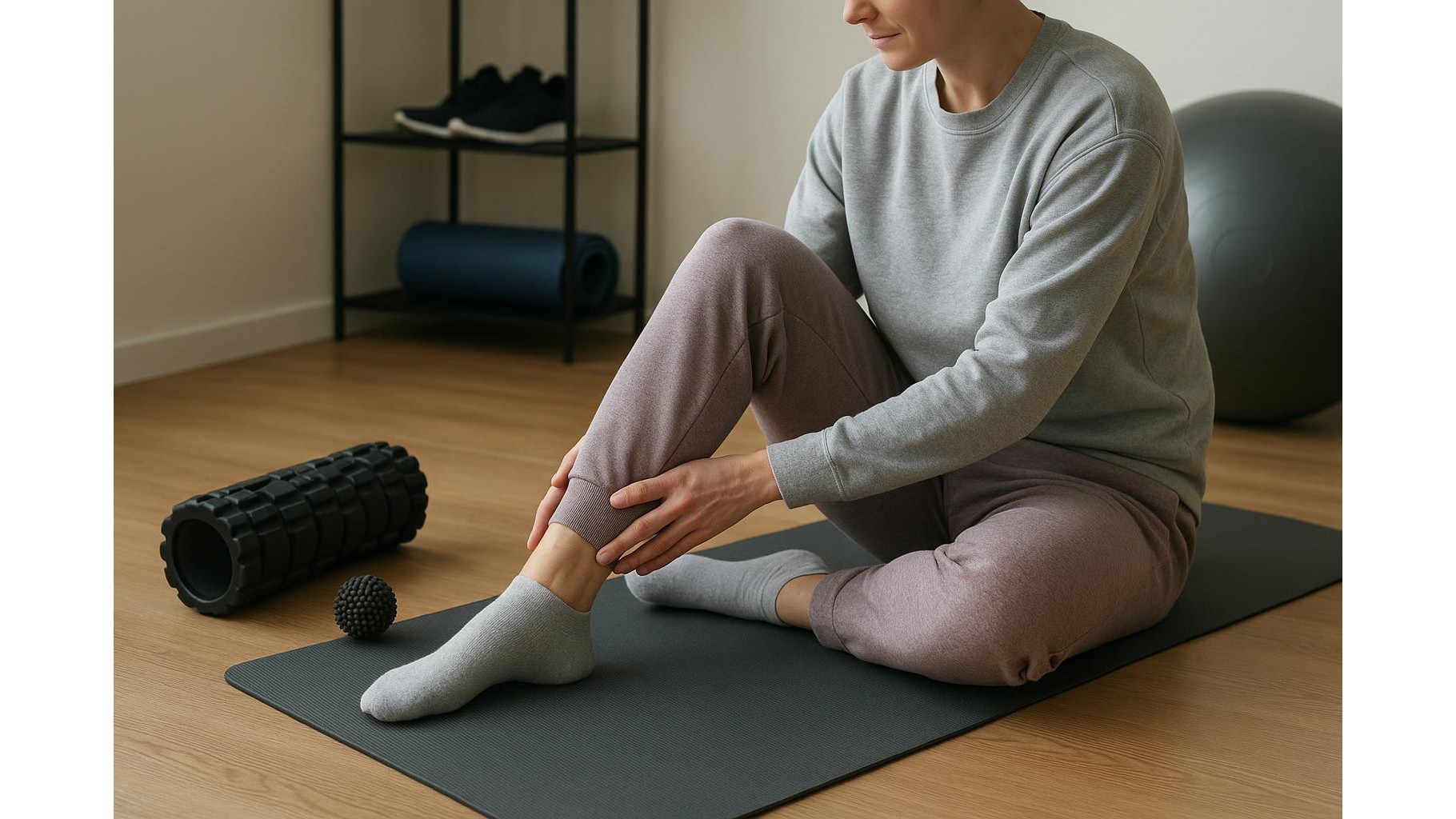
Your feet absorb thousands of steps during a shift, and cramped shoes plus hard floors often create stiff arches and sore toes. In the evening, start by simply walking barefoot on a soft mat, spreading your toes and slowly rocking from heel to toe. Then use a firm ball (for example, a generic trigger point massage ball or tennis ball placed under the arch) and roll the sole of each foot for 1–2 minutes, pausing on tender spots and breathing slowly. Follow with a seated toe stretch: tuck your toes under while kneeling, lean back slightly and hold for 20–30 seconds, staying below sharp pain. This gentle foot recovery work improves blood flow and restores mobility, setting a better foundation for squats, lunges and home strength training.
Releasing tight calves and shins
Standing and walking all day can leave your calves rock‑hard, which in turn overloads your Achilles and plantar fascia. Sit on the floor with one leg extended, loop a towel or light resistance band around the ball of your foot and gently pull the toes towards you for 30 seconds to stretch the calf, then point the toes away to wake up the front of the shin. For light self-massage, place a foam roller or rolled‑up yoga mat under the calf and slowly roll from ankle towards the back of the knee for 1–2 minutes each side, keeping pressure light and controlled. This combination of stretching and pressure improves circulation, reduces stiffness and helps your ankles move more freely in your next home workout session.
Opening hips that have been locked in standing
Even without sitting much, hours of standing can cause the hip flexors, glutes and deep hip rotators to seize up. Start in a half‑kneeling hip flexor stretch: one knee on the floor, other foot in front, gently tuck your pelvis and shift forwards until you feel a stretch in the front of the hip of the back leg. Hold 30–45 seconds and switch sides. Next, move to a lying figure‑four stretch: on your back, cross one ankle over the opposite knee and pull the supporting leg towards your chest until you feel a deep glute stretch. Hold and breathe. If you have a massage ball, you can place it under the outer hip and gently roll small circles for 30–60 seconds. This targeted hip mobility work helps reduce lower back compensation and makes split squats, deadlifts and hinges feel smoother in your home gym.
Soothing the lower back without aggressive cracking
After long shifts, many people feel their lower back as the first area to complain, especially when they then lift or do HIIT at home. Instead of aggressive twisting, focus on gentle decompression. Lie on your back, hug both knees towards your chest and rock slowly side to side for 30–60 seconds. Then place your calves on a chair so your hips and knees are at 90 degrees, and rest here for 2–3 minutes, breathing into your belly and lower ribs. You can add very small pelvic tilts, gently flattening and releasing your lower back against the floor. These simple lower back drills help offload the spine, calm surrounding muscles and create a more neutral, supported position for your core when you start your home workout.
Putting it all together into an evening routine
To make recovery stick, treat this as a short, repeatable evening routine rather than a one‑off fix. Aim for 10–20 minutes, ideally right after you get home or at least before your home training session: 3–5 minutes of breathing and mobility, 3–4 minutes on feet and calves, 3–4 minutes on hips and 3–4 minutes on your lower back. Work at a low intensity, stay under pain and focus on slow, relaxed breathing. Over time, this protocol can reduce end‑of‑shift soreness, improve joint range of motion and help you perform better in your home gym without feeling beaten up. Consistency is more important than perfection: show up for this routine most nights and your body will repay you with more comfort, resilience and energy.