Building a home workout habit on a tight budget is hard enough before you even think about supplements. With endless products promising fast gains, it’s easy to waste money or expect miracles. This guide gives you a realistic, budget‑friendly framework: which categories might actually help, what to skip at first, and how to plug them into your new routine safely.
Start with food, sleep and expectations
Before buying any fitness supplements, make sure the foundations of your routine are in place. You need a halfway decent diet with enough protein, regular meals, and basic fruits and vegetables for micronutrients. Add to that 7–9 hours of sleep and a consistent home training plan built around push‑ups, rows, squats, hip hinges and some conditioning. Supplements only make sense once these basics exist; they are a small percentage on top of your diet and training, not a shortcut. Set your expectations: no pill will replace disciplined workouts in your home gym or instantly transform your body on its own.
The case for a simple protein powder
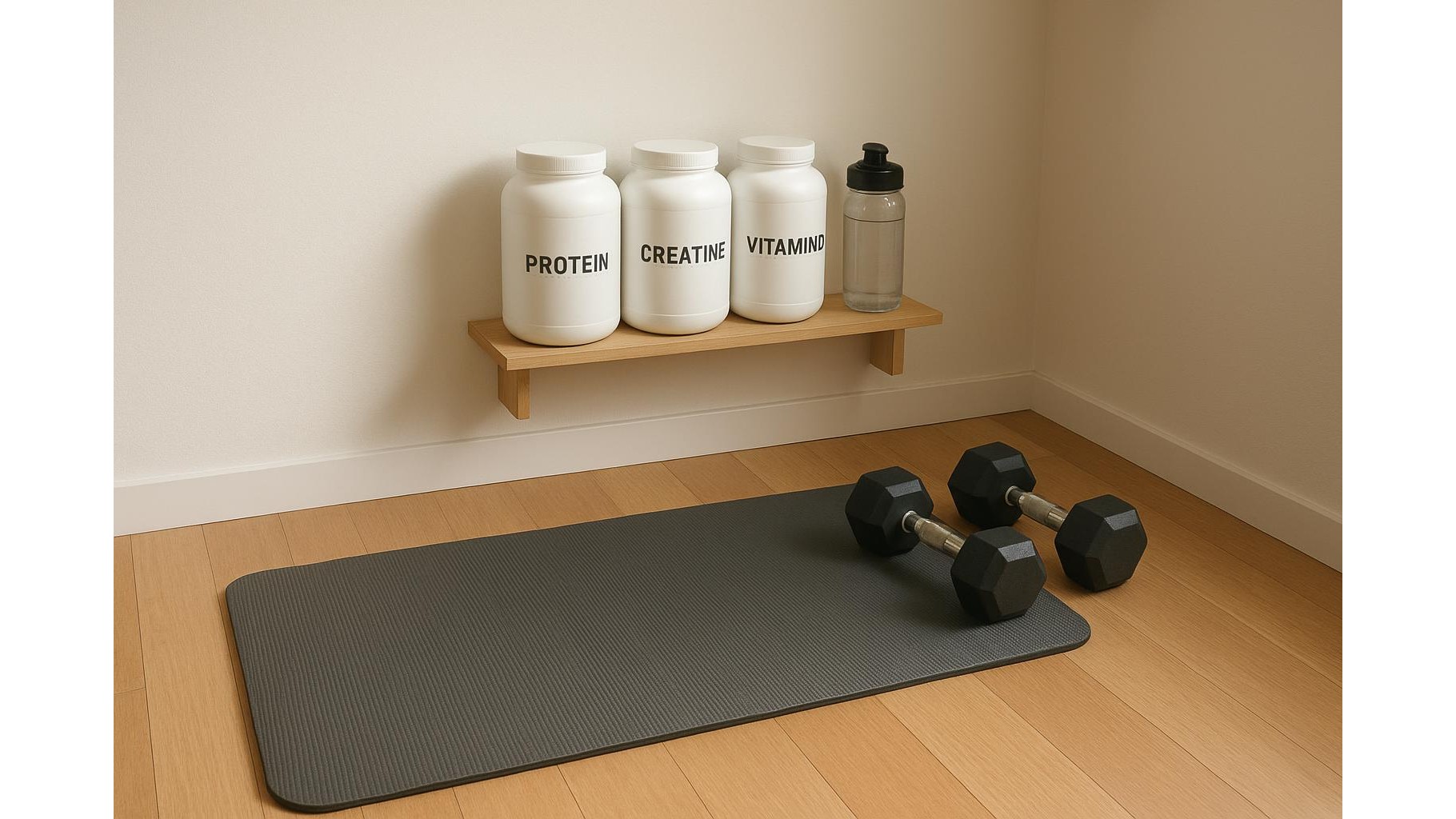
If your normal meals don’t reach roughly 1.6–2.2 g of protein per kg of bodyweight, a basic whey protein powder is usually the most useful first purchase. A low‑frills whey concentrate lets you hit your daily target without expensive high‑protein snacks or constant cooking. You can blend it with oats, milk or water for a quick shake after your home session, or use it between meals to support muscle recovery and growth. Look for products that clearly list protein per serving, minimal added sugar and no gimmicky claims about “extreme” mass gain. On a small budget, avoid premium flavours and huge tubs; a modest size from a reputable brand is enough while you test your tolerance and your actual needs.
Creatine: high impact, low cost basic
After protein, the next high‑value option for many beginners is plain creatine monohydrate. It is one of the most researched sports supplements and can help improve strength and high‑intensity performance for resistance training, including short, hard sets in your home gym. Creatine is usually cheap per serving, especially when you buy unflavoured powder. You only need about 3–5 g per day, taken with water or a shake, and you do not need fancy “buffered” or “liquid” versions. Prioritise products that list only creatine monohydrate on the label and provide clear dosing instructions. Drink enough water and be aware that slight water‑weight gain in the muscles is normal, not fat gain. If your budget is very tight, creatine is often a better early investment than exotic pre‑workouts.
Health basics: vitamin D and a simple omega‑3
If you live in a climate with limited sun or spend most of your day indoors, a low‑dose vitamin D3 supplement can be a smart health‑first choice. Adequate vitamin D supports immune function, bone health and potentially training readiness, which matters when you’re trying to build a consistent home routine. Pairing that with a basic omega‑3 fish oil capsule can help cover gaps in a diet low in oily fish, supporting heart health and possibly recovery. These are not direct muscle‑building boosters, but they protect your ability to train over the long term. On a small budget, choose modest doses and avoid “mega” products that drastically raise cost per serving. Always check with a doctor or pharmacist if you have medical conditions or take medication.
What to skip (for now) and how to rank your buys
Many flashy pre‑workouts, fat burners and “testosterone boosters” offer poor value, especially when money is tight. Caffeinated pre‑workouts mainly provide stimulation; you can often get similar effects from a coffee and good music before training. Herbal blends with big promises but vague ingredient amounts are best avoided at the beginning. To decide what to buy first, rank your priorities: 1) fix diet and sleep, 2) add a basic protein powder if you can’t hit protein from food, 3) consider creatine monohydrate for strength and power, 4) plug in simple vitamin D3 and omega‑3 if your lifestyle or diet suggests a deficiency risk. Only after covering these basics should you even think about more niche products.
A realistic starter strategy for home workout beginners is simple: invest your limited budget in the supplements that actually fill nutritional gaps and support your core training goals, not in hype. Sort your essentials in this order: solid food, sleep and a structured routine, then a no‑frills protein powder, creatine and basic health support like vitamin D and omega‑3 if needed. Keep expectations grounded, monitor how you feel and perform, and remember that the most powerful “supplements” to your progress are consistency and intelligent programming in your home gym.