
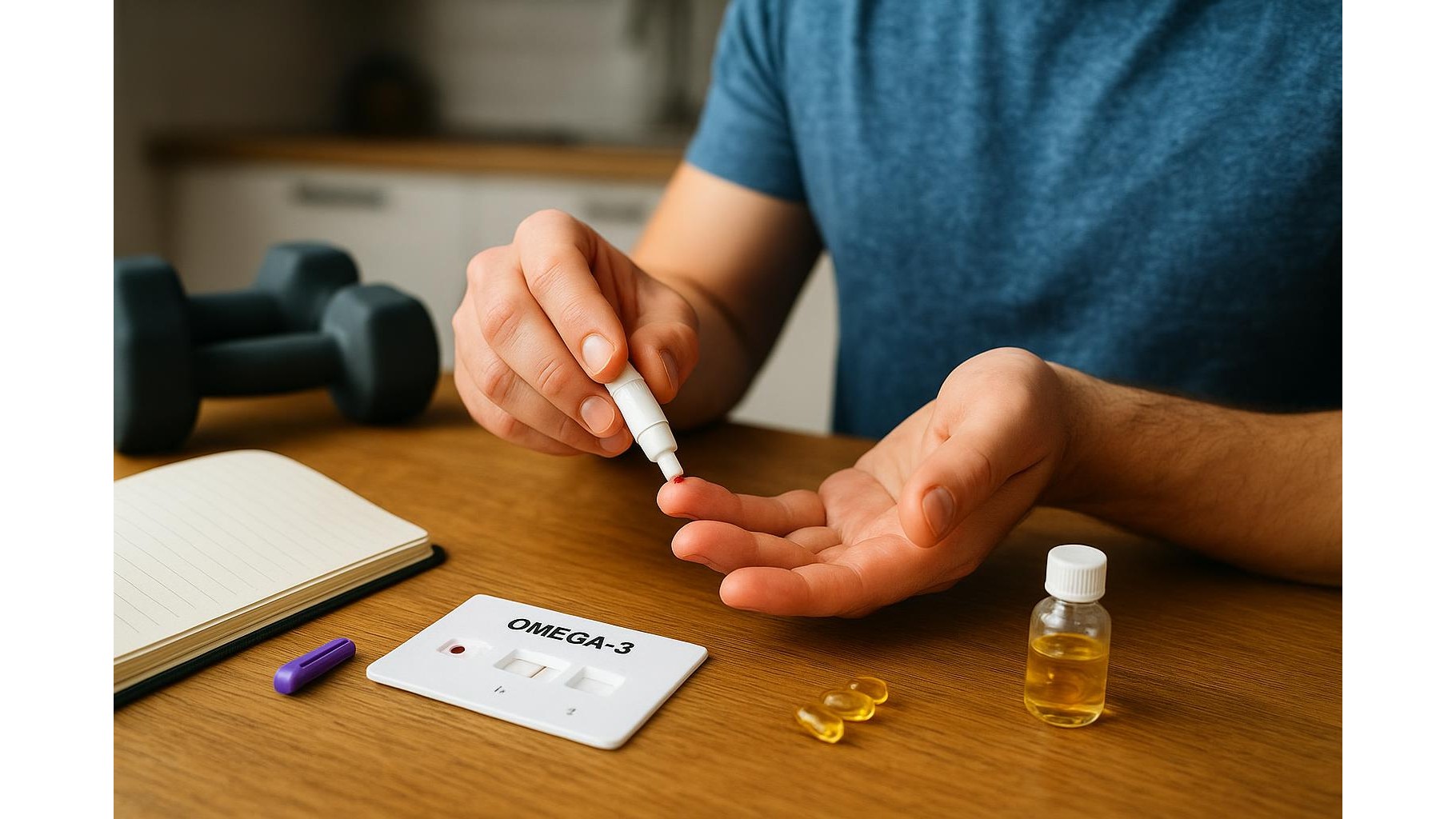
For home athletes building a home gym, fine-tuning recovery and heart health is as important as adding another plate to the bar. One powerful but often overlooked tool is an at-home omega-3 blood test. Instead of guessing how much fish oil you need, these simple kits measure your omega-3 index and give you data you can use to personalise food and supplements, support joint health, and improve cardiovascular function.
What is an omega-3 index and why it matters
The omega-3 index is the percentage of EPA and DHA (the main marine omega-3 fats) in your red blood cell membranes. Research suggests that an index of around 8–12% is associated with better heart health, while values below 4% are considered low. For home lifters and endurance athletes, a higher omega-3 status is linked with improved inflammation control, smoother joint function, and potentially better recovery after tough training blocks. Unlike a single meal snapshot, the omega-3 index reflects roughly the last three months of your diet and supplement habits, making it a reliable indicator of your long-term intake.
How at-home omega-3 blood tests work
At-home omega-3 blood testing kits typically use a small finger-prick sample. You clean your finger, use a lancet to draw a few drops of blood, and apply them to a test card. After drying, the card is sent back to the lab in a prepaid envelope. A few days later, you receive an online report showing your omega-3 index, sometimes broken down into levels of EPA, DHA and other fatty acids. The reports often include reference ranges so you can see if your status is low, optimal or high. Because the method is minimally invasive and requires no clinic visit, it suits athletes who train at home, follow structured programs, and want periodic feedback to refine their nutrition strategy.
Interpreting your omega-3 blood test results
Once you receive your results, focus on the omega-3 index value and the lab’s recommended ranges. A low index (for example under 4%) suggests you likely consume little oily fish and minimal EPA/DHA supplements. A moderate index (around 4–8%) often means some fish or low-dose supplements but room for improvement, especially if you train hard or have a family history of heart issues. An optimal index (around 8–12%) indicates your long-term intake of EPA and DHA is supporting cardiovascular health and may help with joint comfort and muscle recovery. Anything unusually high should be discussed with a healthcare professional, particularly if you also use blood-thinning medication or have bleeding risk factors.
Adjusting food and supplements based on your score
To improve a low or borderline omega-3 index, start with whole foods. Aim for 2–3 portions per week of oily fish such as salmon, mackerel, sardines or herring. Plant sources like flax and chia provide ALA, but this converts poorly to EPA and DHA. For most home athletes, a high-quality fish oil supplement or algae oil (for those avoiding fish) is the most practical way to raise the index. Typical intake is in the range of 1,000–2,000 mg combined EPA+DHA per day, though your needs depend on body size, training load and starting level. Combine this with a generally anti-inflammatory diet rich in vegetables, fruits and whole foods, while moderating processed foods rich in omega-6 oils, to support better joint health and recovery.
Integrating omega-3 testing into your home training plan
For home gym enthusiasts who track volume, load and sleep, adding periodic omega-3 blood tests can become another performance metric. Testing every 3–6 months lets you see if changes to your diet or supplement routine are actually improving your omega-3 index. If you increase your oily fish and fish oil intake, you should see the index rise over time, often within one or two test cycles. Combine this with subjective markers: less joint stiffness after heavy squats, fewer post-session aches, and steadier energy levels. While omega-3 is not a magic bullet, using data-driven adjustments helps you create a more complete recovery system at home, alongside smart programming, sleep hygiene and mobility work.
In summary, at-home omega-3 blood testing gives home athletes a simple way to move from guesswork to personalised nutrition. By understanding your omega-3 index, improving intake of EPA and DHA from fish and supplements, and retesting regularly, you can better support joint health, recovery and heart function. For anyone serious about long-term performance in a home gym environment, this small investment in data can pay off in more resilient training and healthier years under the bar.









