Building strong legs at home doesn’t require bulky gym machines. With a pair of adjustable dumbbells, a sturdy chair, and a sofa or bench, you can create a highly effective 45-minute lower body workout that targets quads, hamstrings, glutes and calves. This guide walks you through a structured plan using only dumbbells and household support surfaces, with clear progressions for beginners and intermediate lifters so you can keep getting stronger over time.
Essential equipment for home leg day
The core of this workout is a solid pair of adjustable dumbbells. A versatile option is the PASYOU 4 in1 Dumbbells Set, which combines dumbbells and a barbell with adjustable weight plates up to 20 kg and offers secure locking knobs for safety during squats and lunges. Its compact, space-saving design suits small home gyms, and the textured handles improve grip when your hands get sweaty. Beyond the weights, all you need is a sturdy chair (for split squats and step-ups), a low table or sofa edge (for hip thrusts) and a clear floor space where you can move safely without tripping over objects.
Warm-up: prepare joints and muscles
Before loading your legs, spend 5–7 minutes on a focused warm-up. Start with 1–2 minutes of light cardio such as marching on the spot, high knee walks or climbing stairs. Then move into dynamic mobility: 10–15 bodyweight squats, hip circles, leg swings front-to-back and side-to-side, and glute bridges on the floor. Finally, perform an easy, unloaded version of the first exercise in your main workout (bodyweight squats or reverse lunges) for 1–2 sets of 10 reps. This boosts blood flow, lubricates the knee and hip joints, and activates the glutes so they can contribute properly when you add dumbbells.
Main block: squats and lunges for quads and glutes
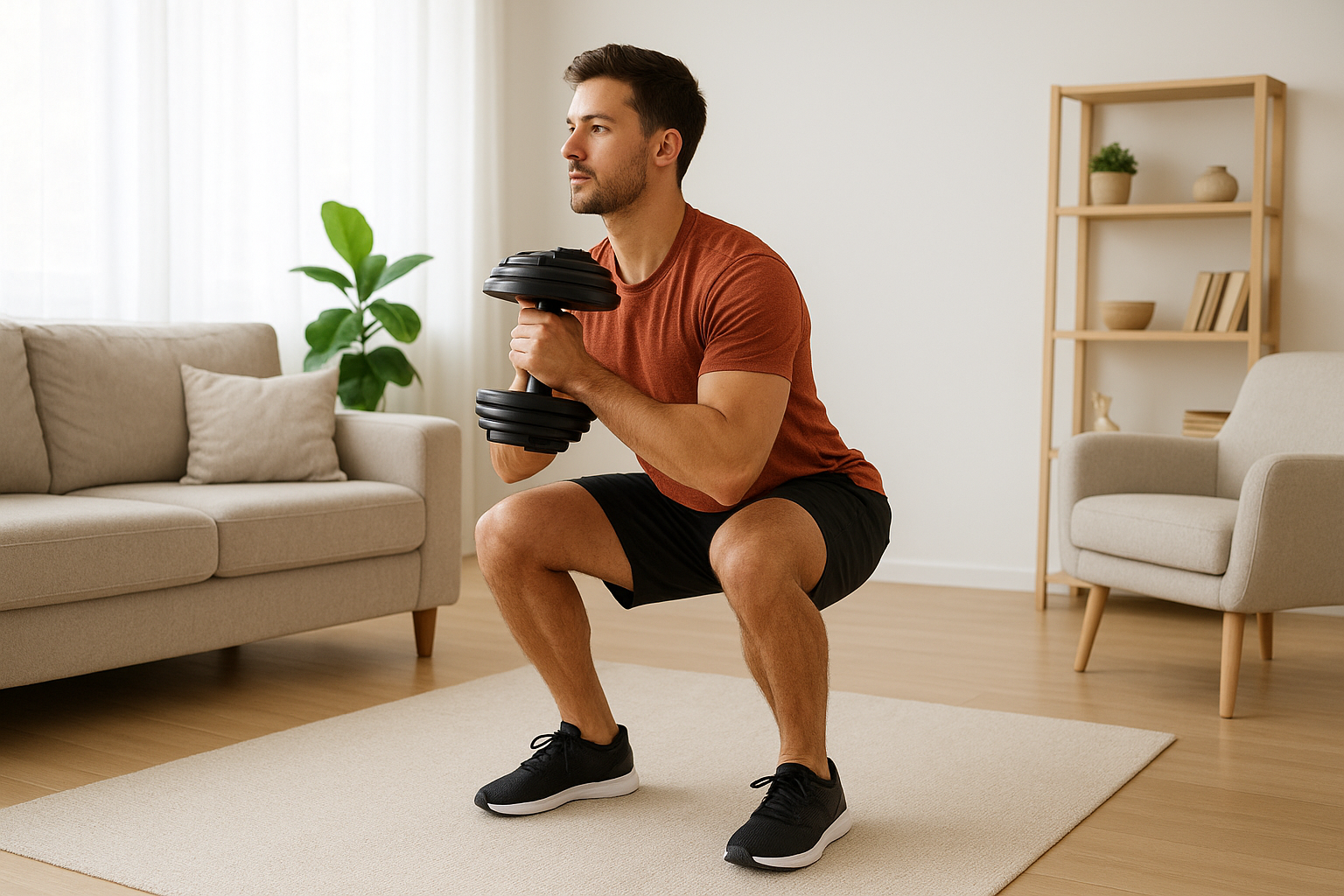
The first 20 minutes of your home leg workout will focus on squats and lunges. For beginners, start with goblet squats holding one dumbbell at your chest: 3 sets of 10–12 reps with 60–75 seconds rest. Follow with reverse lunges, stepping back to reduce knee stress, for 3 sets of 8–10 reps per leg. Intermediates can progress to dumbbell front squats or barbell-style squats using the PASYOU connecting bar, working in the 8–10 rep range with slightly heavier loads, then move into walking lunges or Bulgarian split squats using a chair as support. Keep your core tight, chest up and weight evenly distributed through the mid-foot and heel to protect your knees and lower back.
Glute and hamstring focus with hip hinges
Next, prioritize the posterior chain with hip-dominant movements. Begin with dumbbell Romanian deadlifts (RDLs): 3 sets of 10–12 reps, pushing your hips back while keeping a soft bend in the knees and a flat back. This lights up the hamstrings and glutes more than the quads. Then use your sofa, bench or low table for hip thrusts: rest your upper back on the edge, place a dumbbell across your hips and drive through your heels to full hip extension. Beginners can do bodyweight hip thrusts for 15–20 reps; intermediates should add weight and aim for 10–15 controlled reps. Focus on a strong glute squeeze at the top and avoid over-arching the lower back.
Calves, core and stability work
Finish your strength work with calf and core moves that also build balance. Stand holding the PASYOU dumbbells by your sides and perform standing calf raises for 3 sets of 15–20 reps, using a step or thick book under your forefoot to increase the range of motion. For added stability training, try single-leg calf raises with one hand lightly touching a wall or chair for support. Then hit your core with suitcase holds (holding a dumbbell in one hand while standing tall) or slow weighted dead bugs on the floor. Strong calves and a braced core help you maintain alignment in squats and lunges, reducing the risk of ankle rolls and lower-back strain during heavier sets.
Progressions, recovery and weekly structure
To keep progressing without machines, apply simple progressive overload. Beginners should start with 2 leg days per week using lighter dumbbells, adding 1–2 reps per set each week until they can hit the top of the rep range comfortably, then increase the weight slightly. Intermediates can train legs 2–3 times weekly, cycling between higher-rep, lighter sessions and lower-rep, heavier sessions using the adjustable PASYOU set. Always leave at least one full rest day between hard leg workouts, and use light walking, stretching and foam rolling (if available) for recovery. Over time, you’ll build strong, defined legs at home using nothing more than dumbbells and furniture, without ever needing a leg press or squat machine.
This 45-minute lower body workout proves that you can train effectively at home with minimal equipment. By combining a versatile adjustable dumbbell set such as the PASYOU 4 in1 Dumbbells Set, smart use of chairs and sofas, and clear progressions for both beginners and intermediates, you can steadily build strength, muscle and stability. Stick to the structure, track your loads and reps, and your home leg day will rival any machine-based gym session.