Training squats in a home gym can be intimidating, especially without a full rack or spotters. A simple depth box or sturdy bench under you transforms the movement: it gives you a fixed target, improves squat depth, adds a safety margin and builds confidence rep after rep. With the right setup, you can also use the same box for split squats, step‑ups and accessories, making it one of the most valuable low‑cost additions to any home gym.
Why a depth box changes your home squat
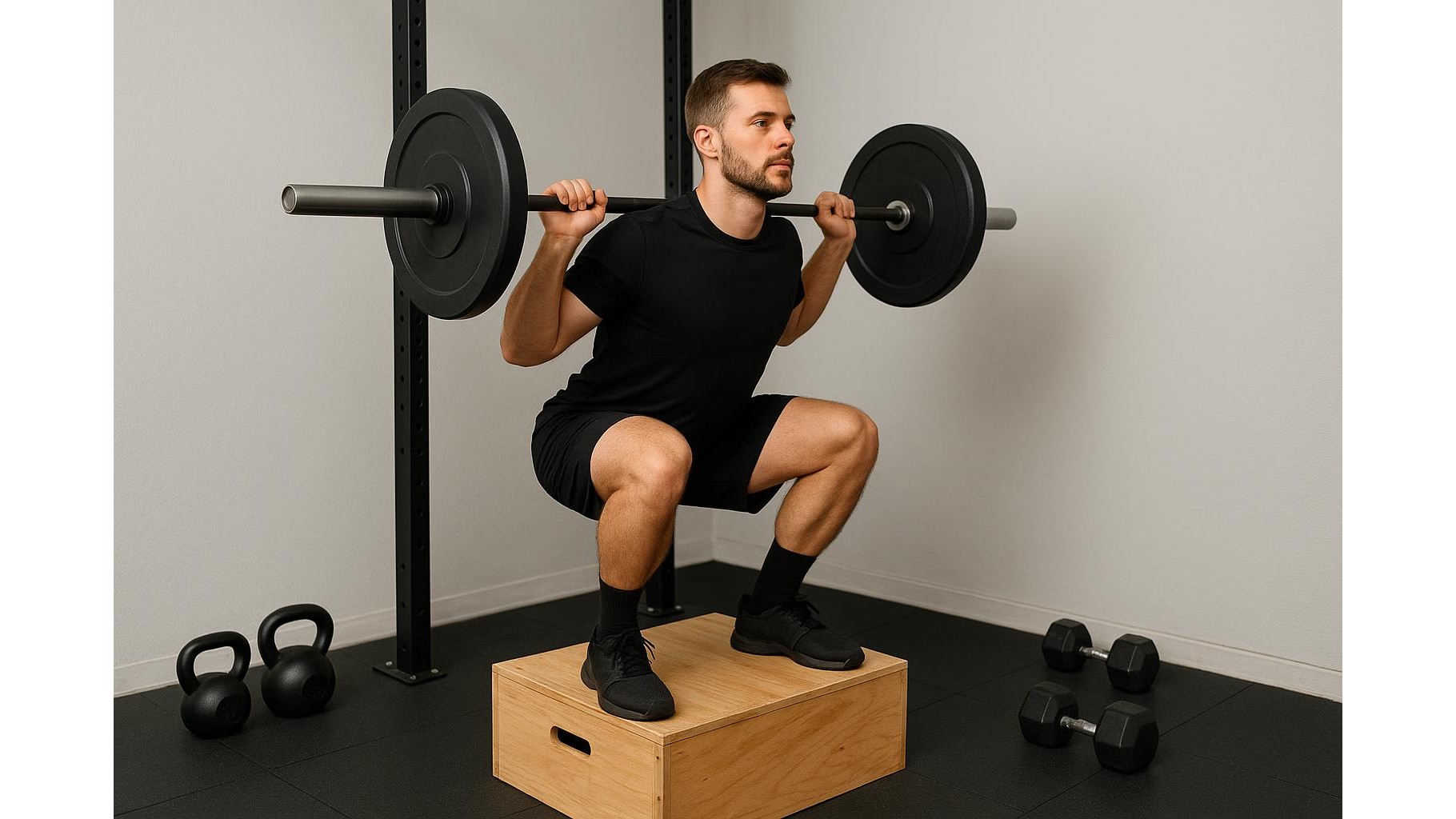
A squat depth box is any stable surface placed behind you at the bottom of your squat. As you descend, you lightly sit back onto the box or just tap it with your glutes, then drive back up. This gives you a clear cue for consistent depth and stops you from cutting reps high when the weight feels heavy or confidence dips. It also reduces the fear of «falling through the hole», because you know there is a solid platform right beneath you. For lifters without safety arms or a full rack, a box becomes a practical safeguard and a powerful coaching tool for learning to sit back, keep the chest up and maintain tension at the bottom.
Choosing the right height and type of box
The ideal box height is usually around parallel or just below, where your hip crease is level with the top of your knee. Many lifters find that 40–45 cm works well, but body proportions differ, so test a few options until you can reach the box while keeping a neutral spine and your heels flat. Prioritise a design that is rock‑solid and non‑wobbly, with a surface that won’t slip when you sit back. Classic plyometric boxes, flat benches and sturdy platforms made from layered rubber mats can all work. For home gyms, it’s smart to choose something that doubles as a platform for Bulgarian split squats, step‑ups or box squats with different stances so it earns its floor space.
Safe setup: stance, bracing and box position
To use a depth box safely, set it so that when you stand in your normal squat stance, the box is directly behind your hips. You should be able to reach it by sitting back, not by rocking forward or losing balance. Before each rep, create full‑body tension and bracing: big breath into the belly, ribs stacked over hips, feet screwed into the floor. Descend under control until you just touch the box—avoid crashing down or fully relaxing. Think «light sit, instant drive»: the box is there as a target and safety net, not a chair. If you notice your knees caving in or your heels lifting to reach the box, adjust the height or reduce the load until your technique is solid.
Building confidence and depth over time
One of the biggest advantages of box squats at home is the psychological effect. Having a fixed depth target and a surface underneath you removes a lot of anxiety, so you can focus on driving hard through the mid‑range instead of worrying about getting stuck. Start with a slightly higher box to lock in stable technique, then gradually lower the height in small steps as your mobility and control improve. You can also use paused box squats, briefly holding tension on the box before standing, to strengthen the bottom position. Over time, this approach teaches you to hit the same depth on every rep—even when you move away from the box—and makes heavier loads feel more manageable.
Using a box for split squats and accessory work
A good depth box also shines beyond regular squats. For Bulgarian split squats, place your rear foot on the box and use it as a stable platform to dial in hip depth and balance while loading each leg separately. You can elevate the front foot to increase range of motion, or use the box height to control how deep you go if your mobility is limited. The same box can be used for step‑ups, single‑leg box squats to a high box, and hip thrust variations, all of which build the glutes and quads that carry over directly to stronger barbell or goblet squats. With a single, well‑chosen box, your home gym gains a versatile tool that improves depth, stability and confidence across your lower‑body training.
In a compact home gym, a simple depth box or sturdy bench can replace more complex equipment by giving you a consistent depth cue, an extra layer of safety and a powerful confidence boost. By choosing the right height, setting it up securely and integrating it into both squats and split squats, you build better technique and stronger legs without needing a full rack or expensive machines. Treat the box as your coach and safety net, and your squats will get smoother, deeper and more powerful over time.