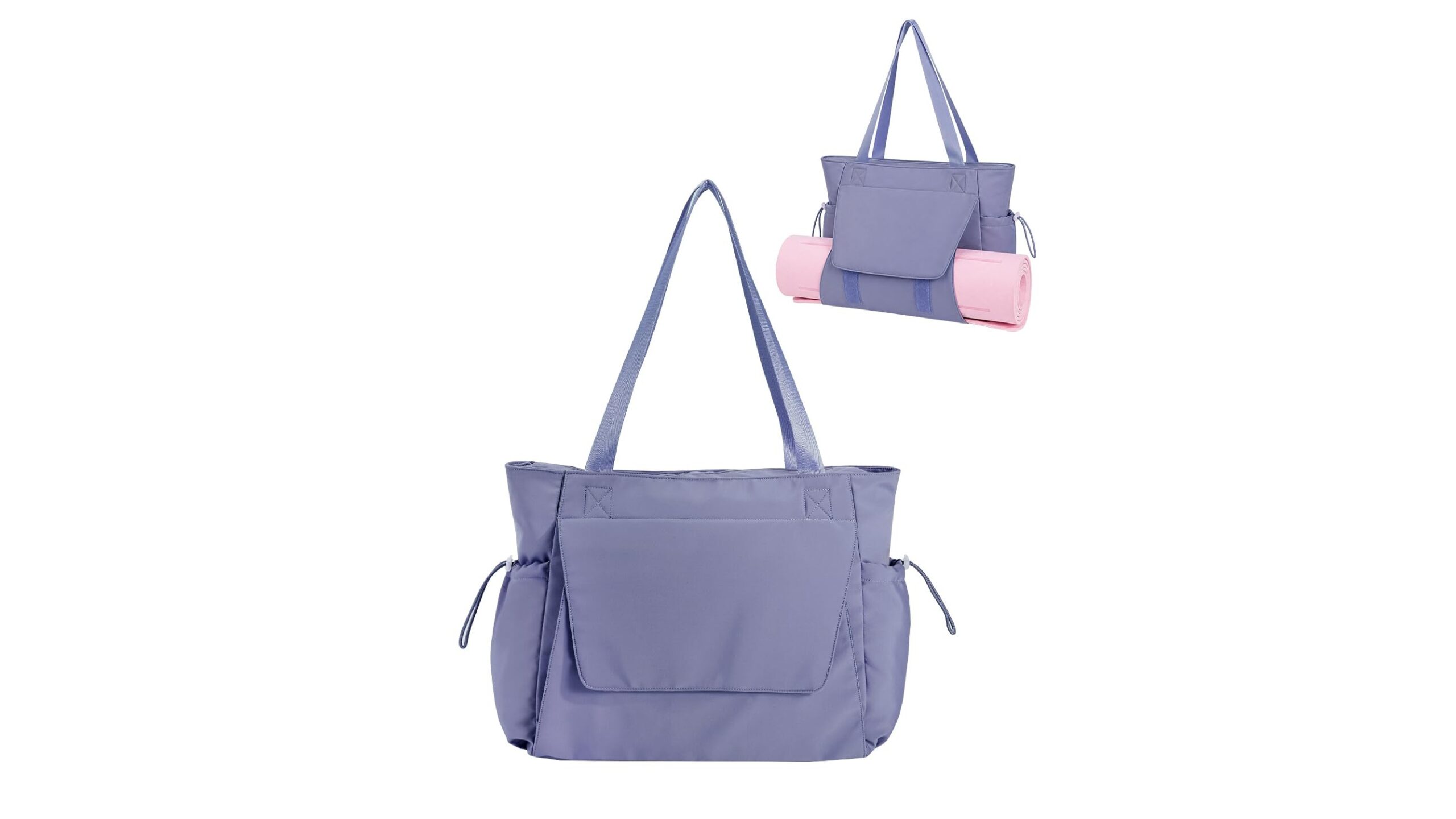
A consistent home routine that blends strength, rotation and mobility can be a game changer for golfers who want longer drives, better control and healthier joints. This 40‑minute workout uses only a pair of dumbbells and a fitness mat, making it easy to fit into your week whether you are preparing for the season or maintaining your swing all year round.
Why golfers need strength and mobility at home
Golf performance depends on a powerful yet controlled rotational swing. That means your hips, thoracic spine and shoulders must move freely, while your core and legs provide stability and force. Many golfers focus only on playing or hitting balls at the range, which can create imbalances and stiffness. A structured home strength workout lets you build the muscles that drive the swing and protect your joints without needing a full gym. Using a simple pair of dumbbells and a supportive mat, you can target the legs, glutes, core and upper back in movement patterns that directly translate to the course.
Essential equipment: dumbbells and a supportive mat
For this routine you only need two pieces of kit: a dumbbell pair and a cushioned exercise mat. Choose a dumbbell weight that feels moderate: you should manage 10–12 controlled reps with good form, feeling challenged in the last few reps but never straining. Adjustable or hex neoprene dumbbells work well because they are easy to grip and safe on home floors. A quality mat should offer enough padding for kneeling, core and mobility work without being so soft that you lose balance. Prioritise a non‑slip surface so you can lunge, rotate and hold positions confidently during your golf‑specific movements.
Warm‑up: priming rotation and joints (8 minutes)
Start with 3–4 minutes of light cardio such as marching on the spot, gentle high knees or step‑backs on the mat to raise your heart rate. Then move into dynamic mobility focused on the areas golfers rely on most. Perform cat‑cow on the mat for spinal flexion and extension, followed by open books (side‑lying thoracic rotations) for the upper back. Add standing hip circles and leg swings front‑to‑back and side‑to‑side, holding a light dumbbell for balance if needed. Finish with a set of slow bodyweight squats and shoulder circles to wake up the lower body and rotator cuff. The goal is to feel loose, warm and ready to move in all planes.
Main strength block: legs, core and rotation (24 minutes)
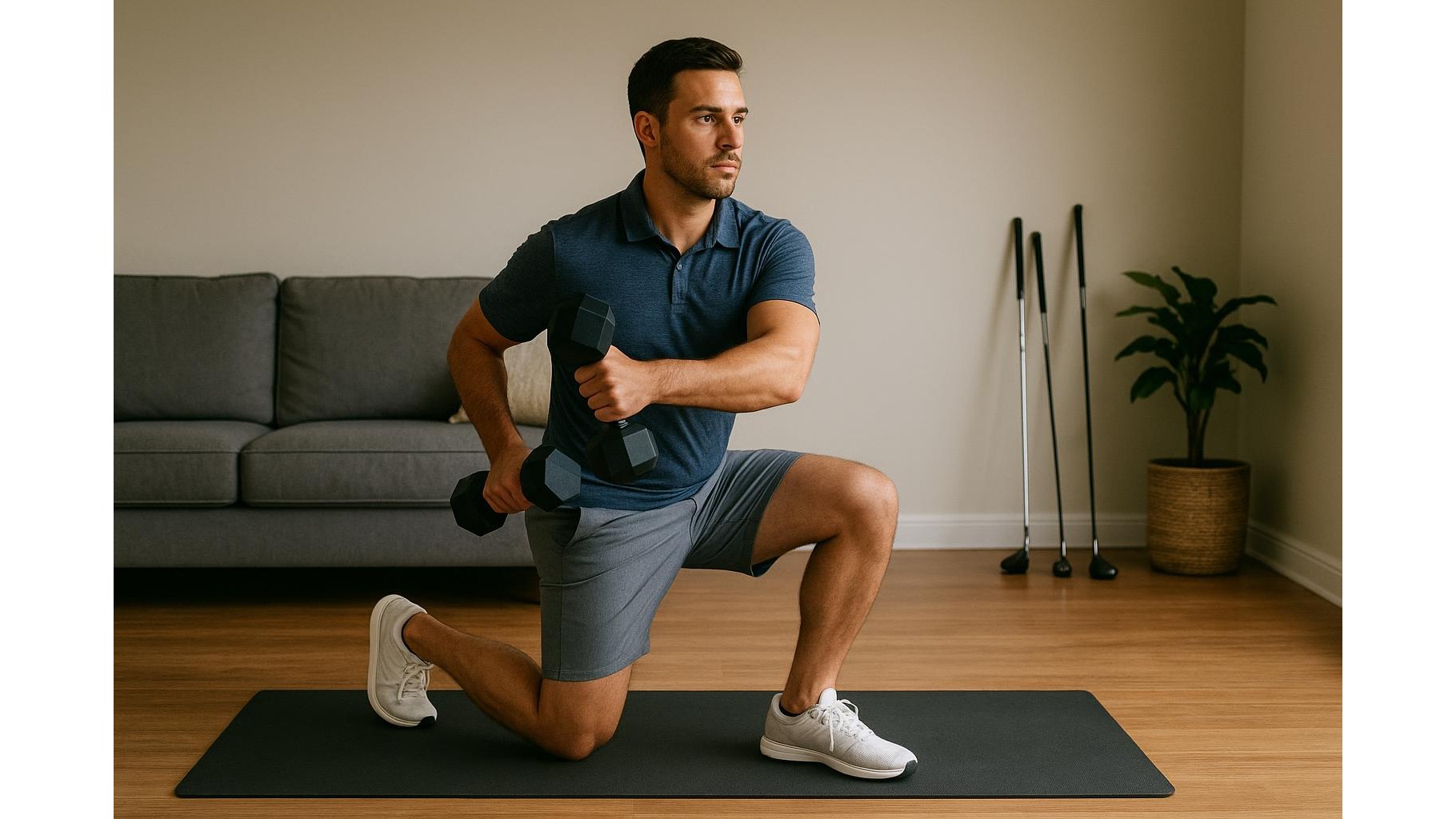
The main section uses three mini‑circuits that you repeat for 2–3 rounds each. Circuit 1: goblet squats holding one dumbbell at chest height to build quad and glute strength, followed by single‑arm dumbbell rows supported on the mat to strengthen the upper back and help maintain posture through the swing. Circuit 2: reverse lunges with dumbbells to improve hip stability and balance, paired with half‑kneeling rotations hugging a dumbbell to your chest, turning through the torso as you would in your swing. Circuit 3: dumbbell deadlifts to engage hamstrings and posterior chain, then pallof press holds (pressing a dumbbell away from your chest while resisting twist) for powerful anti‑rotation core strength. Rest 30–45 seconds between exercises and 60 seconds between circuits.
Mobility and recovery: keep your swing fluid (8 minutes)
After the strength work, use the mat for a short, targeted mobility flow that keeps your hips, spine and shoulders moving well. Spend 30–45 seconds per side in a runner’s lunge with rotation, reaching one arm up to open the chest. Move into a 90/90 hip stretch to address internal and external rotation, crucial for loading and unleashing your backswing. Add a child’s pose with side reach to lengthen lats and lower back, then finish with a gentle thread‑the‑needle stretch for the upper spine. Breathe slowly through your nose and exhale fully to let the muscles relax; this helps you recover faster and arrive at the first tee feeling loose, not stiff.
How to progress and fit this into your golf week
To get the most from this 40‑minute home strength and mobility workout, aim to perform it 2–3 times per week on non‑consecutive days. As you improve, increase the dumbbell load slightly or add one extra round to each circuit while keeping your form precise. On weeks when you play multiple rounds, shorten the session by dropping a circuit or reducing sets, focusing more on the warm‑up and mobility blocks to stay fresh. You can also slot in a brief 10‑minute version after a range session, using lighter weights and focusing on rotational core and hip work. Over time you should notice more stable contact, smoother tempo and better endurance across 18 holes, all supported by stronger muscles and healthier joints.
This simple combination of dumbbells and a mat creates a powerful, golf‑specific routine you can perform at home with minimal space and time. By consistently training strength, rotation and mobility, you give your body the tools it needs for longer drives, improved control and reduced injury risk throughout the season.