Building a home gym around resistance bands is smart, space‑saving and budget‑friendly—but only if your setup is safe. The most overlooked piece of hardware is the humble door anchor. Choose it badly and you risk damaged frames, frayed bands or, worse, bands snapping back at you mid‑row. This guide walks you through how to pick safe, sturdy door anchors that protect your walls, your bands and your body, so you can confidently expand your exercise library without drilling into the house.
Why the right door anchor matters for safety
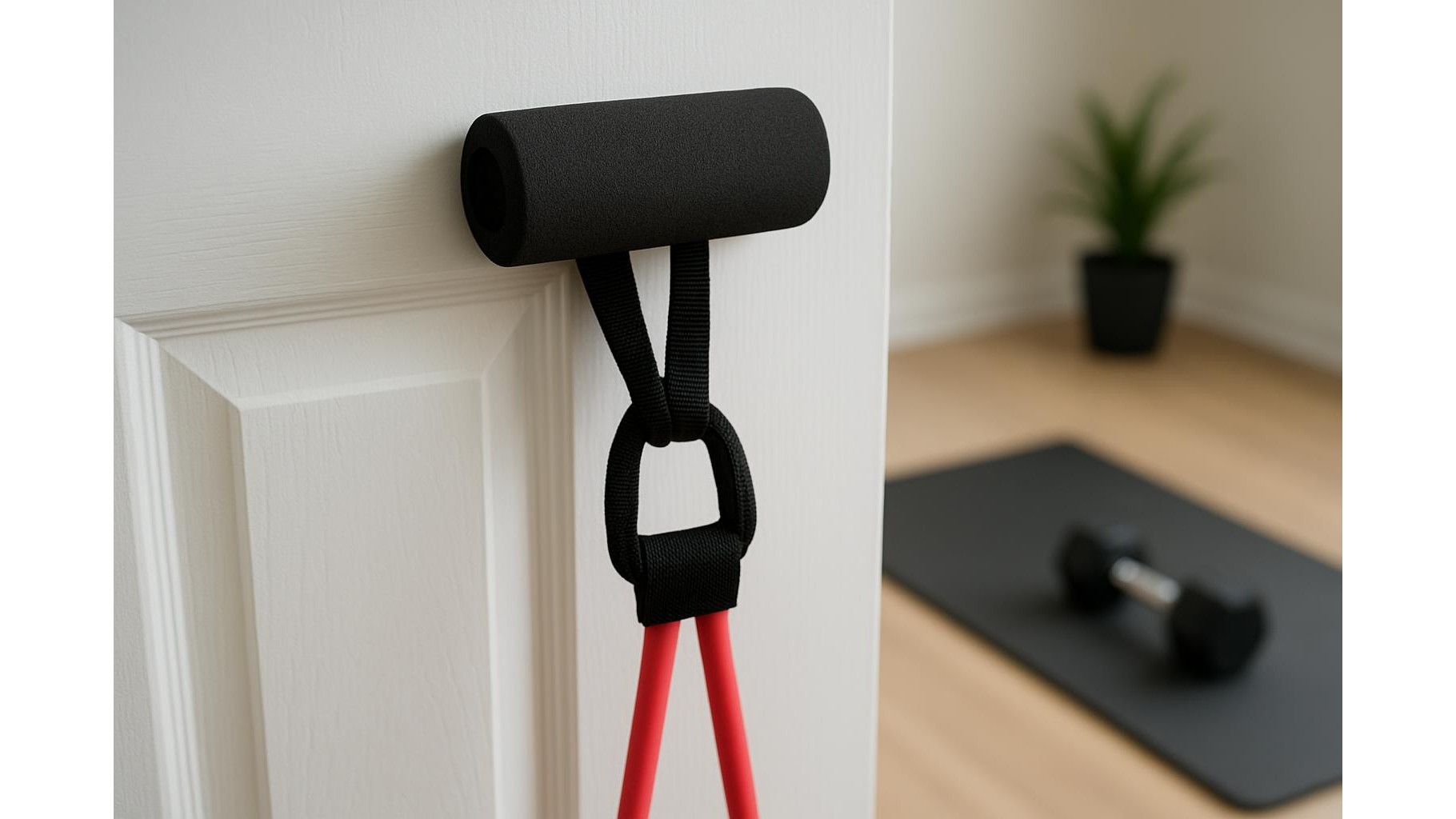
A resistance band door anchor is a small device that lets you fix a band to the top, side or bottom of a door. Quality anchors spread the load across a wide, padded surface so the pressure on the door and frame stays low, while also preventing sharp edges from cutting into the latex. Cheap or improvised options—like looping a band around the door handle—can concentrate force in a tiny area, causing doors to warp, hinges to fail or bands to snap. A good anchor also keeps the band in a stable position, reducing the chance that it suddenly slips free mid‑rep. If you train often, or share a home, the right anchor is essential for consistent, predictable safety.
Key design features that protect your walls and bands
Look first at the stopper, the part that sits on the far side of the door. It should be a wide, dense foam or rubber cylinder or block that compresses without deforming permanently. This large surface area spreads the pulling force so you do not dig a groove into the frame. The strap that connects the stopper to the loop should be heavy‑duty woven nylon, tightly stitched and preferably bar‑tacked at stress points. The loop itself needs to be smooth and slightly oversized to let thicker resistance bands slide without pinching. Avoid metal rings directly against the band unless they are fully rounded and polished, as sharp corners accelerate wear. Finally, check that the anchor is rated for at least the maximum tension of your heaviest band—manufacturers sometimes state a load rating; if they do not, treat very thin, flimsy anchors with suspicion.
Matching the anchor to your door type at home
Not every home has heavy, solid internal doors, so the anchor you choose should respect your building. For lightweight hollow‑core doors, opt for anchors with oversized foam stoppers that cushion the impact and distribute force, and use moderate resistance rather than the heaviest powerlifting‑style bands. If your doors open inward to your training space, you will usually place the anchor on the opposite side and pull against the closed door, which is safer and prevents it flying open. For older timber frames, a soft foam or rubber contact surface is crucial to avoid dents and chipped paint. If you have very tall or double doors, consider an anchor strap that can be placed at multiple heights—top, side and bottom—without stressing a single hinge. Always close and latch the door you are using, and avoid sliding doors and glass doors for band work altogether.
Adjustability, versatility and comfort in daily use
Once safety is covered, think about how easy the anchor is to live with in a home gym. A good door anchor should be quick to move, so you can switch from low rows to chest presses to triceps extensions without losing your rhythm. A soft, grippy stopper makes it simpler to wedge and unwedge the anchor without scratching the door. A slightly longer strap increases versatility, letting you position the band away from the very edge of the frame and change the angle of pull for more exercise options. If you use tube‑style resistance bands with clips, make sure the anchor’s loop can comfortably accept metal carabiners; if you use flat loop bands, look for a loop that does not twist them sharply. Some anchors come in a multi‑pack, letting you set up two or three fixed points on the same door for supersets or for training with a partner.
Practical setup tips to avoid damage over time
Even the best hardware needs correct setup to keep your walls and bands safe. Always position the stopper on the side of the door that will be pulled toward the frame, so your pulling force is trying to jam the door more tightly closed—not pull it open. Check the area around the frame for cracked paint or loose moulding before you start, and avoid anchoring against already damaged trim. Thread the band so it lies flat and centred in the loop, with no twists or sharp bends. Start with a lighter band when you use a new anchor for the first time, and step back gradually to increase tension. After a few sessions, inspect both anchor and door: look for compressed foam that does not rebound, fraying straps, or fresh scuff marks on the frame. Wipe the foam and strap occasionally to remove dust and sweat, which can reduce grip and accelerate wear.
Choosing the right resistance band door anchor is less about fancy branding and more about simple, robust design that respects the limits of your doors and your bands. Prioritise wide, padded stoppers, strong stitching and smooth contact surfaces, then match your anchor to the type of doors in your home and the level of tension you typically use. With a little care in setup and regular checks for wear, a quality anchor turns any solid door into a flexible, multi‑height training station, protecting your walls, extending the life of your bands and making your home gym both safer and more effective.