Choosing between a compact vertical climber and a mini stepper can feel tricky when you only have a corner of your living room or bedroom to dedicate to exercise. Both machines promise effective cardio workouts in a small footprint, but they deliver a very different feel, impact on your joints and long‑term training potential. In this guide we compare space requirements, noise, calorie burn, joint impact and versatility so you can confidently pick the machine that fits your home and fitness goals.
Space and portability in a real home corner
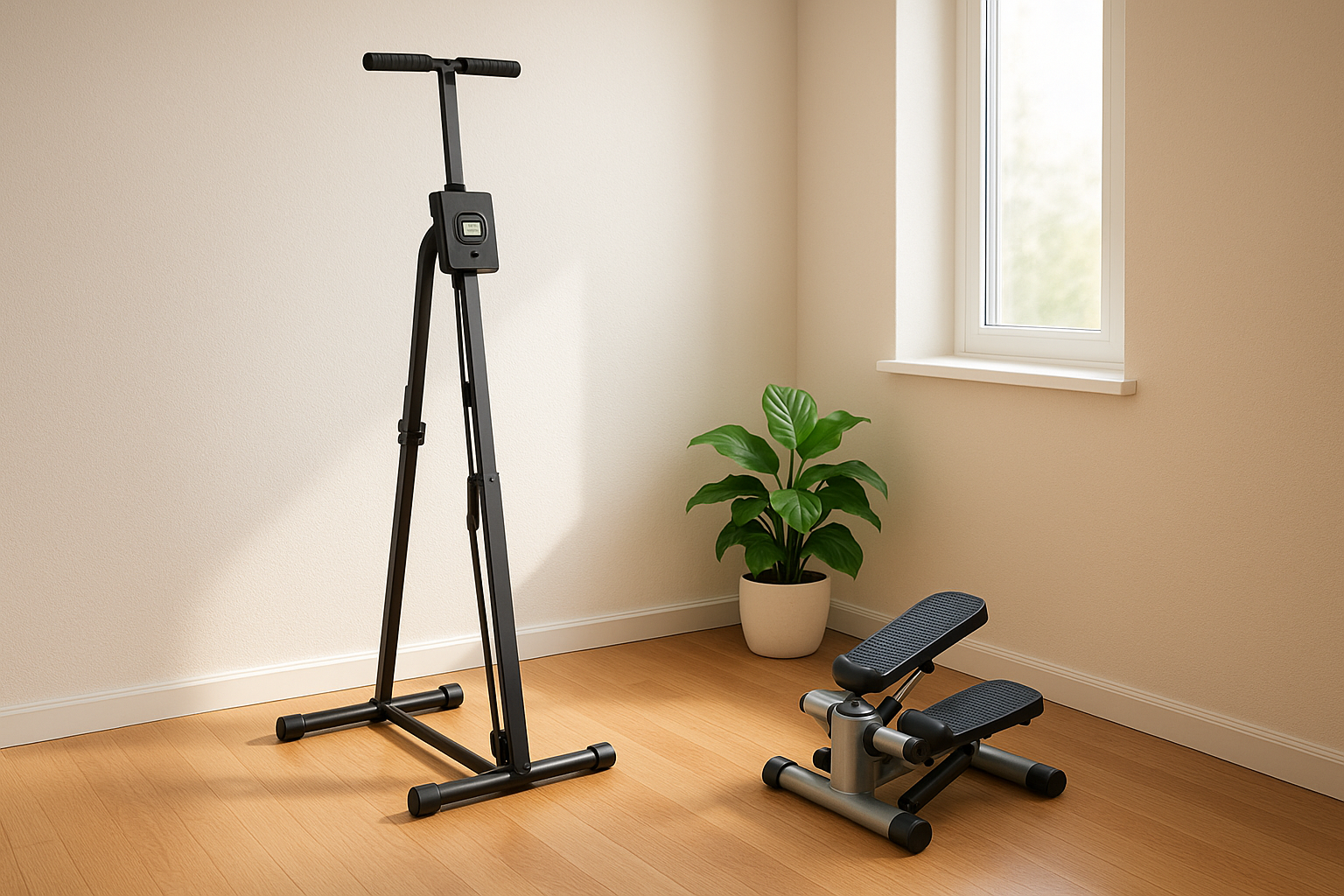
For tight spaces, both machines are designed to be compact, but in different ways. A vertical climber uses more vertical space and less floor area, often needing only the footprint of a dining chair but a full ceiling clearance for arm reach. Many models fold flat so you can lean them against a wall or store them behind a door after training. A mini stepper instead is extremely small on the floor and usually does not rise much higher than your knees. It can slide under a bed or into a cupboard with ease, and some are light enough to move with one hand. If your main limit is floor space, the climber wins; if storage height is the issue, a stepper is more forgiving.
Impact on joints and overall comfort
Both climbers and steppers are lower impact than running, but they stress your joints differently. A vertical climber mimics a climbing motion, engaging your shoulders, elbows and wrists along with hips, knees and ankles. The movement is usually smooth and guided on rails, which helps keep impact low, yet it can feel demanding on the upper body if you have shoulder issues. By contrast, a mini stepper focuses on a stepping motion similar to stair climbing. Your joints stay in a fairly small range of motion, which many beginners find comfortable, especially when models include shock‑absorbing pistons and oversized anti‑slip pedals. If you have sensitive knees or are returning from injury, a gentle stepper may be more manageable than the full‑body pull of a climber.
Calorie burn and training intensity
When it comes to calorie burn, vertical climbers generally have the edge because they recruit more muscles at once. Using arms and legs together can elevate heart rate quickly, making climbers ideal for short, intense HIIT sessions of 10–20 minutes. Many users report a strong cardio challenge even at modest resistance. Mini steppers, meanwhile, offer more moderate intensity by default, especially if they do not include handles and you use them while lightly holding a wall or desk. You can still burn significant calories through longer sessions, for example 20–40 minutes at a steady pace. If you want the most time‑efficient fat‑burning option, a vertical climber is usually superior; if you prefer a gentler burn you can sustain, a stepper shines.
Noise levels and home‑friendly operation
Living in an apartment or shared home makes noise a key decision factor. Vertical climbers use gliding rails and chains or belts, which can produce some mechanical sound, especially as they age or if they are not lubricated regularly. The long frame can also wobble slightly if you exercise vigorously, potentially transmitting vibration through the floor. Mini steppers typically rely on hydraulic pistons for resistance, which makes them relatively quiet apart from a soft hissing or squeaking when the oil warms up. Their low profile also reduces wobble and impact noise. For early‑morning or late‑night workouts near sleeping family members, a quality stepper is often the quieter and more discrete option.
Training versatility and long‑term motivation
For long‑term motivation, look at training versatility and how each machine fits into your routine. Vertical climbers deliver a tough full‑body workout that challenges cardio, strength and coordination in one go. You can vary intensity by changing tempo, range of motion or interval structure, but the basic movement pattern remains climbing. Mini steppers, on the other hand, can be combined with upper‑body dumbbell work or resistance bands, turning a simple stepping session into a low‑impact circuit workout. They also pair well with desk work or TV time because you can maintain a steady, lighter pace. If you love intense, focused sessions and want maximum results in minimum time, the climber keeps things exciting. If you value flexibility and multitasking, the stepper becomes easier to integrate into daily life.
In summary, both compact vertical climbers and mini steppers are smart solutions when you only have a corner to spare for fitness equipment. Climbers excel at high‑intensity, full‑body cardio with strong calorie burn, provided you have sufficient ceiling height and do not mind a slightly more complex movement. Steppers specialise in joint‑friendly, lower‑noise sessions that are simple to start and easy to sustain for longer durations. Consider your available space, joint history, preferred workout intensity and how you like to train day‑to‑day. Matching these factors to the strengths of each machine will guide you to the cardio option that truly fits your home corner and keeps you moving consistently.