Turning your lounge into a home gym can be empowering, but it also makes it harder to switch off. When your dumbbells sit next to the sofa and the yoga mat lives under the coffee table, your recovery time can easily be interrupted by family, flatmates or simple mental overload. Protecting your cooldown, stretching and relaxation in a shared living room is less about having the perfect space and more about setting clear boundaries, building simple routines and using a few smart tools to reduce friction and stress.
Create a clear recovery zone, even in a small living room
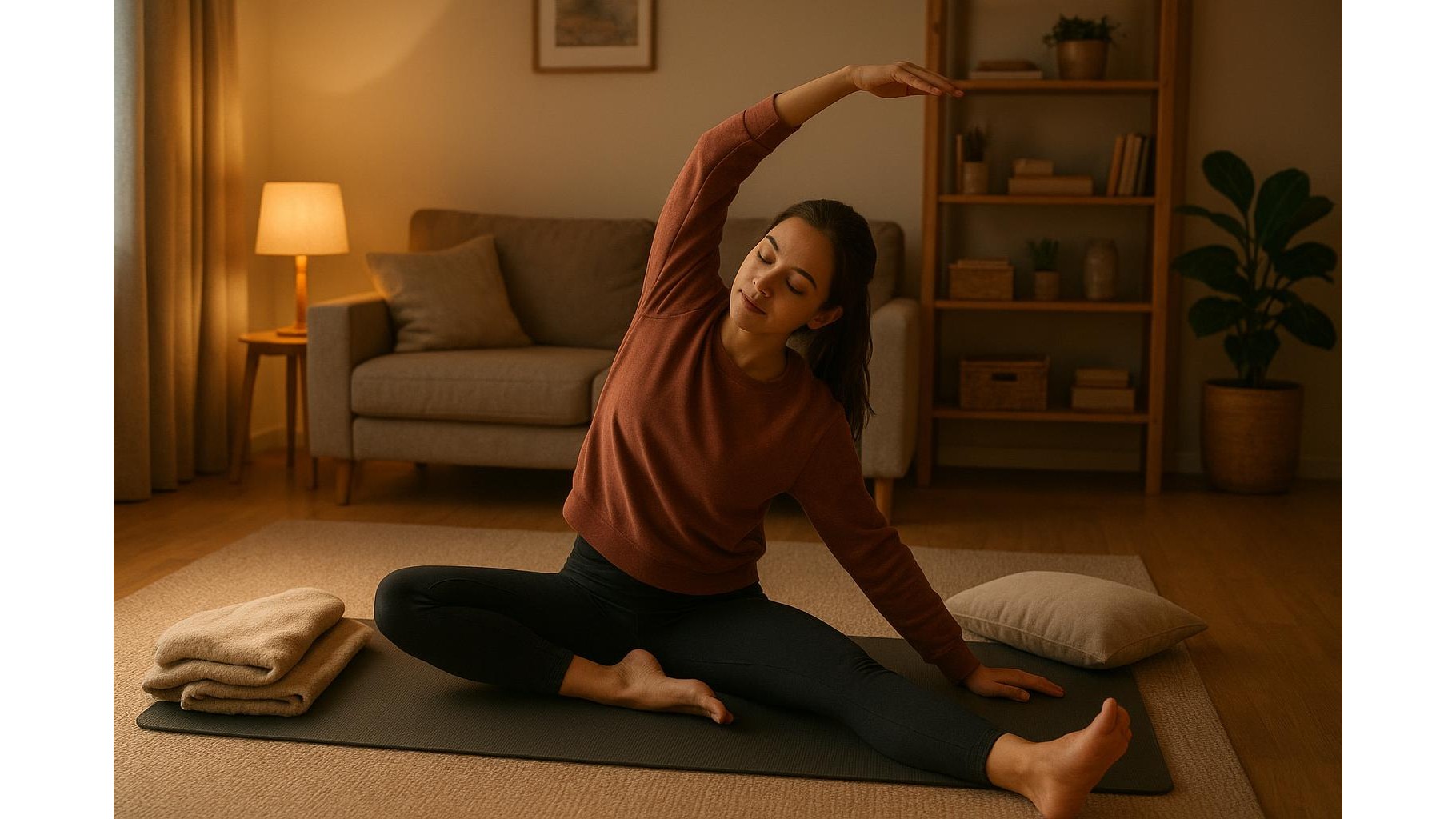
Even if you share a flat and have limited space, you can define a temporary but clear recovery zone. Choose a corner of the living room that becomes your dedicated spot for stretching, foam rolling and breathing exercises. Before your session, quickly declutter that area: move the coffee table, fold blankets, switch off distractions. The act of preparing the space tells your brain it is time to shift from training to cooldown. Keep a small basket or box for recovery gear – like a light blanket, a pillow for supported poses, and a soft mat – so you can set up and clear away in under two minutes. This makes it easier to stick to your routine without annoying the people you live with.
Use routines and signals so others respect your cooldown
In shared spaces, communication is as important as equipment. Agree on simple signals that show when you are in your recovery window: maybe wearing headphones, turning on a specific lamp, or placing your mat in the same position each time. Let your family or flatmates know that once the signal is on, you need 10–20 minutes without questions or noise. Frame it positively: explain that this helps you manage stress, prevents injury and makes you a calmer person to live with. Build consistent routines – for example, always cooling down right after your workout instead of leaving it for later – so the people around you know what to expect and can plan their own activities around your quiet time.
Low‑tech tools that make recovery more relaxing
You do not need complicated gadgets to create a powerful relaxation routine in your living room. A simple exercise mat or folded blanket provides a comfortable base for stretching and floor work, protecting your joints from hard floors and encouraging you to stay in poses longer. Add a small cushion or folded towel to support your head or knees in restorative positions. A light throw blanket can help your body stay warm during breathing exercises and final relaxation, which in turn makes it easier to unwind. Keep these items stored together so you are not hunting for them while other people are moving around the room – fast, predictable set‑up lowers friction and stress.
Manage noise, light and distractions in shared spaces
Recovery is not only about muscles; it is about your nervous system. In a shared living room, that means actively managing noise, light and visual clutter. If you cannot control external sounds, use calm background audio – like soft music or white noise – to create an acoustic bubble. Dim bright overhead lights and, if possible, use a single lamp or indirect lighting to signal that the intensity is dropping. Turn off unnecessary screens; if someone else is watching TV, angle your mat so the screen is out of your direct line of sight. These small adjustments reduce sensory load, allowing your mind to settle while you stretch and breathe, even if the rest of the flat is not perfectly quiet.
Set boundaries on time and space to avoid tension
Sharing a living room gym works best when everyone knows the rules. Set a clear start and end time for your cooldown and stick to it; a predictable 15‑minute window is easier for others to respect than a vague “I’ll be done soon”. If you live with children, involve them by explaining that your mat is a “quiet island” they cannot step on until you stand up. With flatmates, offer trade‑offs: you take the room for your recovery now, they get it later for their own activity. Written agreements on a shared calendar or messaging group can prevent misunderstandings. Boundaries are not about being rigid; they are about protecting your mental recovery so you can be more present and relaxed afterwards.
Make recovery feel rewarding so you actually do it
To consistently protect your home recovery, it has to feel like a reward, not a chore. End each session with a short ritual that you genuinely enjoy: a few minutes of your favourite track with eyes closed, gentle neck stretches on the mat, or slow diaphragmatic breathing. Notice how your body feels before and after – reduced tension in the neck, calmer heartbeat, softer shoulders – and mentally link that state to your cooldown routine. Share your plan with family or flatmates so they understand that this is your “reset” time. When recovery in your shared living room becomes associated with comfort and calm, you will defend that boundary more naturally, and everyone in the house benefits from a less stressed, more centred you.
Protecting your cooldown, stretching and relaxation time in a shared living room gym is absolutely possible with clear boundaries, simple routines and a few low‑tech recovery tools. By defining a temporary recovery zone, agreeing on signals, managing light and noise, and making the experience genuinely pleasant, you turn a busy common area into a flexible space that supports both your fitness and your mental wellbeing.