If you spend hours in front of a screen, your body pays the price: tight hips, rounded shoulders, stiff wrists and a sore lower back. The good news is you can counter all of this with a full body strength workout for gamers that fits neatly between matches. This 30‑minute, joint‑friendly routine uses basic home gym equipment and simple bodyweight exercises to build muscle, protect posture and boost in‑game performance without leaving your room.
Why gamers need strength training at home
Long gaming sessions mean you stay in the same position for hours: hips flexed, chest dropped forward, neck craned and hands gripping a controller or mouse. Over time this posture can weaken your glutes, tighten your hip flexors, overload your lower back and strain your wrists and shoulders. A targeted strength workout at home reverses these patterns by strengthening the muscles that gaming neglects and opening up the joints you lock up. Think of it as a performance upgrade for your body: better posture, more energy, faster reaction times and less pain so you can enjoy longer, more focused sessions without feeling wrecked afterwards.
Essential equipment: dumbbells and bodyweight only
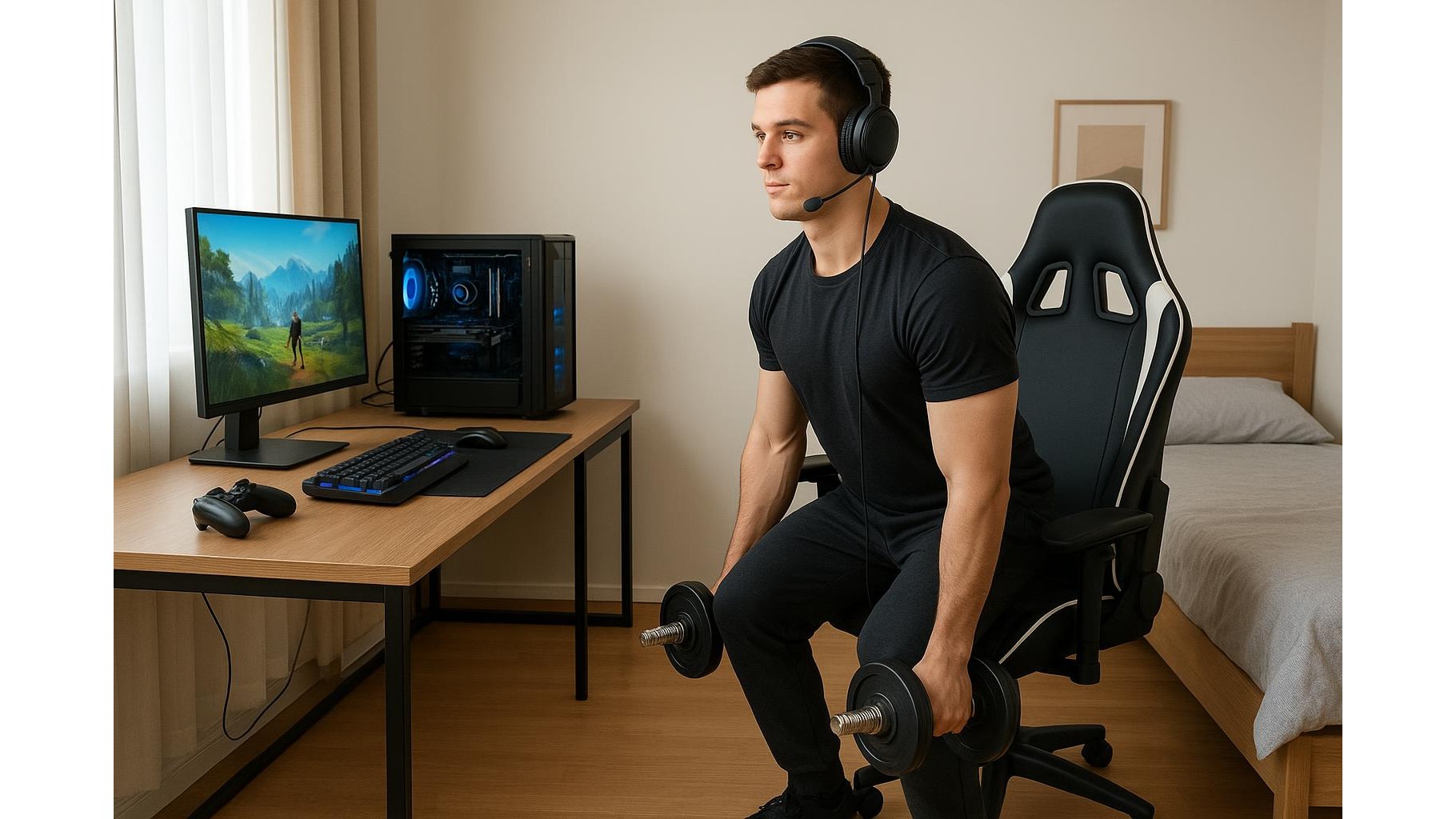
This 30‑minute routine is built around adjustable dumbbells and your own bodyweight. A compact dumbbell set lets you train every major muscle group without filling your gaming space with bulky machines. Choose a pair you can comfortably press overhead for 8–12 reps, and a lighter pair if needed for shoulder work. Combine these with simple floor space and you have everything required for a complete home workout for gamers. If you do not have dumbbells yet, you can start with bodyweight only and slowly add load later. Focus first on smooth, controlled reps and pain‑free ranges of motion before chasing heavier weights or longer sessions.
The 30-minute full body strength circuit
Structure your full body strength workout as a simple circuit you can run between matches. Warm up for 3–5 minutes with arm circles, bodyweight squats and gentle neck turns. Then perform the following exercises back to back, resting 30–45 seconds between them and 2 minutes between circuits. Aim for 2–3 total rounds:
- Bodyweight or dumbbell squats – 10–12 reps to train quads and glutes
- Dumbbell hip hinge or Romanian deadlift – 10 reps to target hamstrings and lower back stability
- Dumbbell row (one arm, supported on a chair) – 10–12 reps per side for upper back and posture
- Push-ups (hands on a desk or floor) – 8–12 reps for chest, shoulders and core
- Dumbbell overhead press – 8–10 reps to strengthen shoulders and triceps
- Plank – hold for 20–30 seconds to build core endurance
Move at a controlled pace, breathe steadily and keep your focus on clean technique instead of rushing to finish the set before the next queue pops.
Joint-friendly posture fixes for long gaming sessions
Because gaming posture tends to round your shoulders and collapse your chest, this routine emphasises posture-friendly strength work. When you row, imagine squeezing a pencil between your shoulder blades to activate the mid‑back instead of shrugging the shoulders toward your ears. In squats and deadlifts, keep your spine neutral, chest gently up and core braced, as if someone is about to poke your stomach. Between matches, add quick mobility snacks: stand up, perform 10–15 bodyweight squats, a 20‑second chest stretch in a doorway and some gentle wrist circles. These small habits, combined with your full body workout, reduce stiffness, wrist pain and neck tension that often build up during marathon gaming nights.
Progression, frequency and fitting it between matches
For most gamers, doing this home strength workout 3 times per week is enough to see improvements in posture, strength and energy. Start with two circuits if you are new to training and build up to three as it gets easier. Progress by adding a little weight to your dumbbells, increasing reps within the 8–12 range or shortening rest times slightly. Keep sessions strictly capped at around 30 minutes so they slot neatly between gaming sessions. Over time, you will notice your back feels more stable in the chair, your shoulders stay open, and you recover faster from long nights at the PC or console. Treat this workout like an essential part of your gaming setup, just like your headset or controller.
By combining a short, focused full body strength workout for gamers with small posture tweaks during play, you can protect your joints, build muscle and boost your in‑game performance without leaving home. You do not need a full commercial gym or complicated machines—just a pair of dumbbells, your own bodyweight and 30 minutes of intent. Make this routine a regular part of your weekly schedule and your body will feel more resilient, your mind sharper and your gaming sessions more enjoyable.