Designing a bodyweight home gym in a small space is all about choosing equipment that does more than one job. A compact wall-mounted pull-up ladder can work as a pull-up bar, a vertical climbing station and an anchor for resistance bands and core training, all while taking up very little floor area. This guide will help you understand what to look for, how to mount it safely and how to get the most from it in a tight home gym.
Key features of a compact wall-mounted pull-up ladder
When choosing a wall-mounted pull-up ladder, start with the overall design and dimensions. Look for a ladder that sits close to the wall with slim but sturdy rungs so it does not eat into your training area. Steel frames are usually best for strength, while wooden ladders can be more comfortable to grip and visually warmer in a living space. Check the maximum user weight rating; for serious bodyweight work you want at least 120 kg capacity, preferably more. Pay attention to the finish as well: powder-coated steel and smooth, lacquered wood resist sweat, protect against rust and reduce splinters. Finally, if you plan to attach bands and suspension trainers, make sure the rungs or top bar have enough clearance from the wall to let accessories move freely.
Mounting, wall type and safety considerations
Safe installation is critical with any wall-mounted gym ladder. Before buying, confirm what kind of wall you have: solid brick or concrete is ideal, while plasterboard or hollow partition walls usually require specialist anchors, extra backing boards or professional help. The ladder should ship with rated fixings for masonry; if not, budget for quality anchor bolts. Measure your ceiling height and leave enough space above the top rung for full pull-ups without hitting your head. Always use a spirit level so the frame is perfectly vertical, and tighten all bolts after a few test sessions because metal can settle. For households with children, consider adding floor padding and making clear rules to avoid unsupervised climbing. A properly installed ladder should feel rock solid—no wobble, no flex—before you trust it with dynamic exercises like kipping pull-ups or band-assisted sprints.
Using a wall ladder as a multifunctional anchor
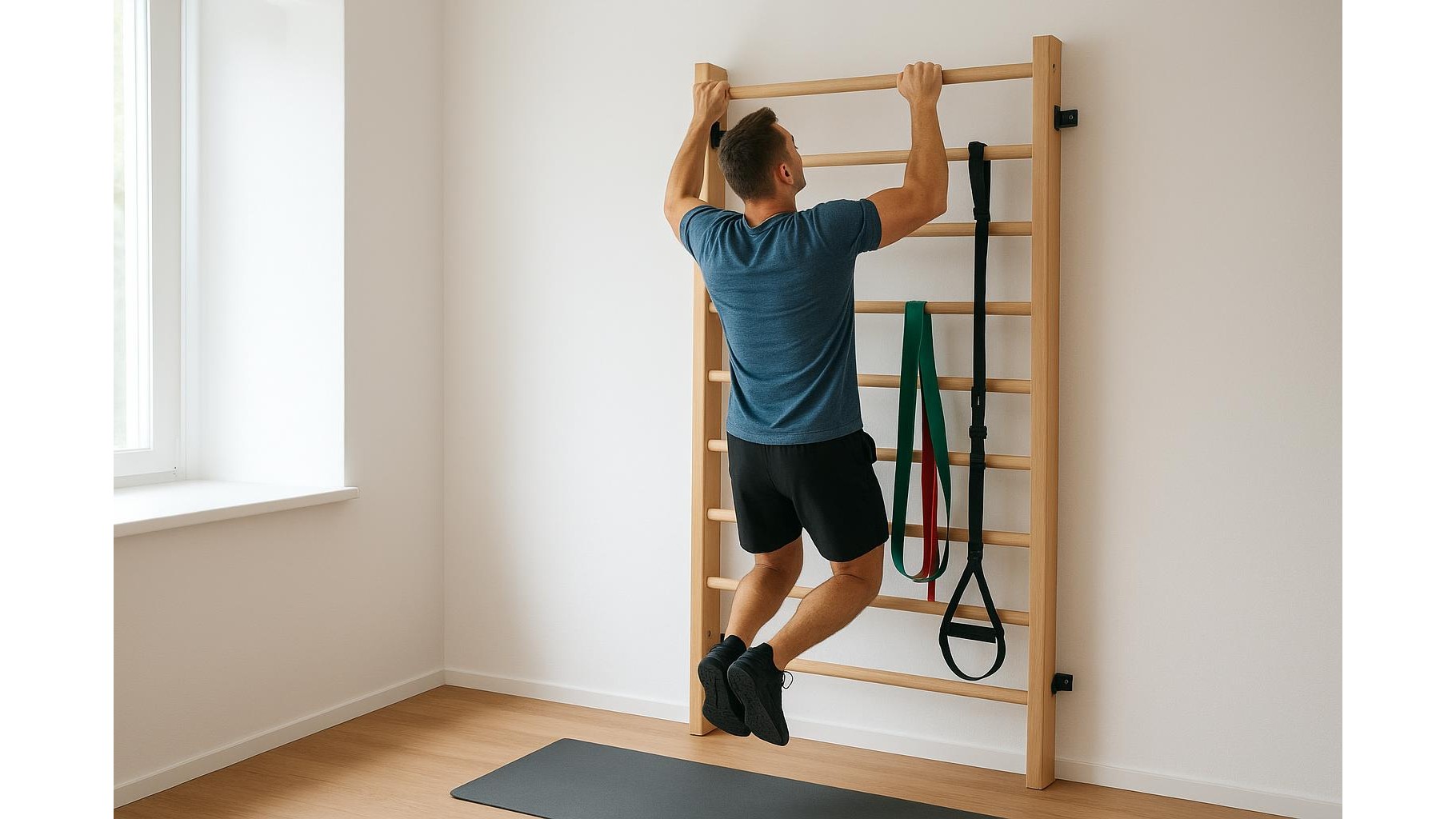
One of the biggest advantages of a compact wall ladder is how many exercises it unlocks in a small footprint. The horizontal rungs are ideal anchor points for resistance bands, tubes and suspension trainers. You can loop light bands at chest height for rows and presses, set a heavy band low for hip thrusts or deadlift variations, and attach ab straps or a suspension system at the top for core and upper-body work. Because the rungs are stacked vertically, you can quickly change angles and resistance just by moving the carabiner or loop up or down. Add a simple yoga mat or foldable bench in front of the ladder and you have a complete bodyweight and mobility station for pull-ups, hanging knee raises, assisted squats, row variations and stretching, without cluttering your room with separate machines.
Choosing the right configuration for your home gym
Different homes need different setups, so think carefully about how the wall ladder will fit into your space. Measure the available wall width and height, then compare with the ladder’s specs, including any overhang of a top pull-up bar. If your ceiling is low, look for a slightly shorter frame that still offers enough rungs for band work and mobility exercises. Consider whether you want integrated extras like dip bars, detachable pull-up handles or a fold-out bench; these features can increase versatility but also add bulk. If your home gym doubles as a living area, a minimalist, clean-lined ladder will visually blend better. Plan your training flow: can you move from pull-ups to band rows to core work without shifting other furniture? The most effective compact home gym setups keep everything reachable while maintaining a safe, uncluttered training zone.
Programming bodyweight and core training on a wall ladder
Once your wall-mounted pull-up ladder is in place, build simple, repeatable routines around it. For upper body strength, combine pull-ups or band-assisted pull-ups with inverted rows using a low rung and band-resisted push-ups anchored to the frame. Core work can include hanging knee raises, supported leg raises with a light band, anti-rotation holds using bands, and incline planks with feet on a higher rung. Use lighter bands for shoulder health drills like face pulls and external rotations, taking advantage of precise rung heights to match your joint angles. Because everything is anchored to the wall, you can keep rest periods short and move quickly between exercises, which is ideal when you have limited time and space. Treat the ladder as the central hub of your bodyweight training program, adding only a few portable extras like a kettlebell or ab wheel if you want extra variety.
In a small home gym, a well-chosen compact wall-mounted pull-up ladder can replace multiple bulky machines while giving you a stable base for pull-ups, band work and core training. Focus on solid construction, safe installation and smart use of vertical space, and you will have a versatile training station that supports progressive strength work without overwhelming your room. With clear safety habits and thoughtful programming, this single piece of equipment can serve as the backbone of a highly effective, minimalist bodyweight home gym.