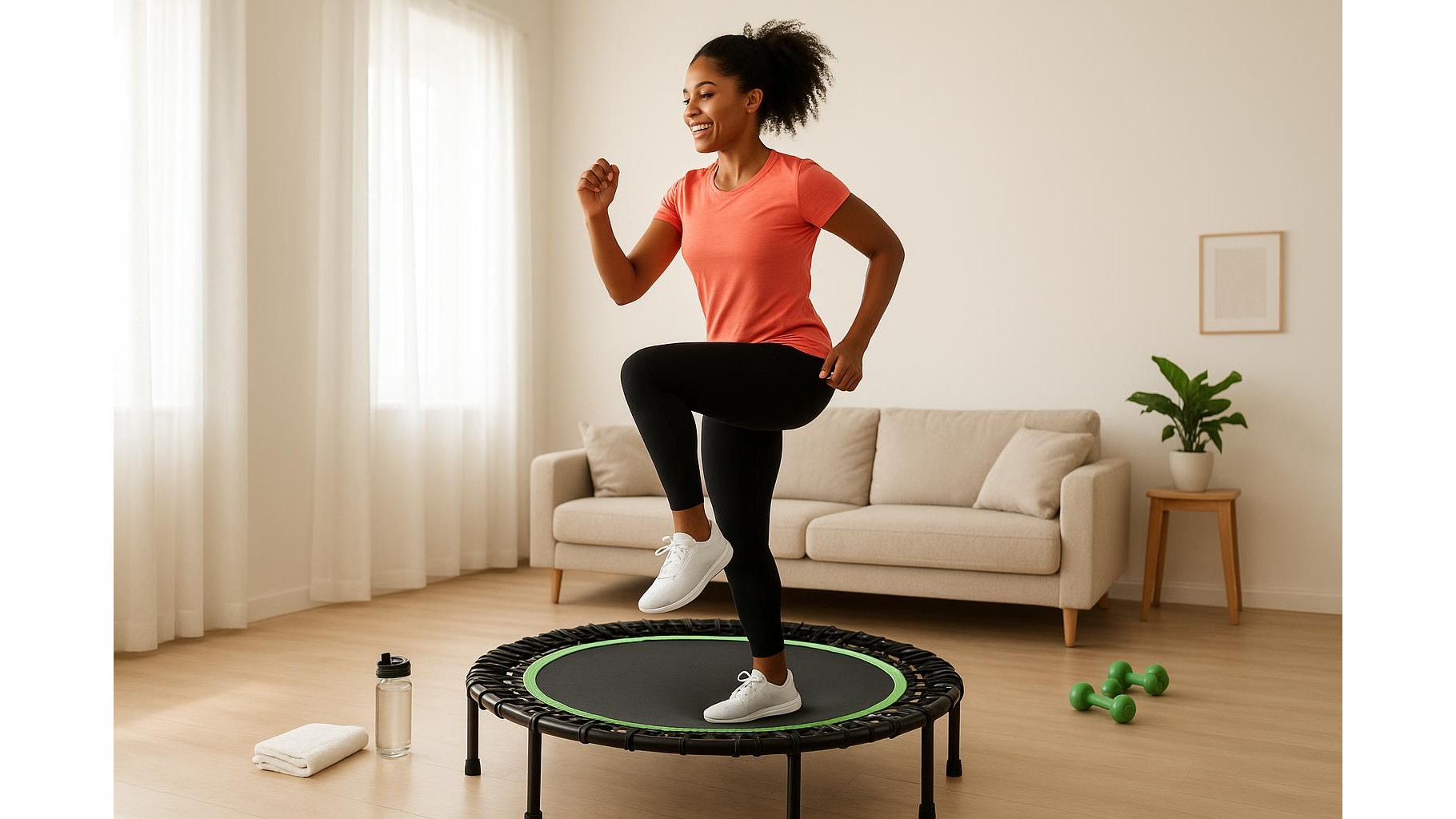
If you’re looking for a low‑impact cardio machine that fits easily into a small apartment, a foldable fitness trampoline (also called a rebounder) can become the centrepiece of your home gym. Unlike a bulky treadmill or noisy exercise bike, a compact rebounder folds away under the bed or behind a door, yet still delivers effective aerobic training, coordination work and even a bit of strength. With smart programming, attention to safety and a clear progression plan, you can use it as your primary cardio tool from beginner to advanced level.
Why a foldable fitness trampoline works as main cardio
A good foldable rebounder provides a forgiving, elastic surface that reduces joint stress compared with concrete or treadmill decks, making it ideal for low‑impact home cardio. The vertical bounce improves lymphatic circulation, challenges your balance and engages stabiliser muscles around the ankles, knees and hips. Because it’s compact and quiet, you can train while watching TV or listening to podcasts without disturbing neighbours. Foldable frames and removable legs mean storage is simple, so the trampoline can realistically replace larger machines as your everyday cardio solution.
Beginner setup and safety essentials
Before pushing intensity, prioritise safety and setup. Place the trampoline on a flat, non‑slip surface with at least an arm’s length of clearance on all sides. Train in cross‑training shoes with good grip and start by holding a wall, chair or stable surface if your balance feels uncertain. Begin with gentle health bounces: feet stay in light contact with the mat while your heels lift only a few centimetres. Aim for 5–10 minutes, 3–4 times per week, focusing on a soft knee bend and landing through the mid‑foot. Keep your core lightly braced, eyes forward and shoulders relaxed. Stop immediately if you feel dizzy, and avoid advanced moves until you can bounce confidently for at least 15 minutes without losing form.
Sample weekly programs from beginner to intermediate
Once you’re comfortable, structure your rebounder cardio just like other forms of training. A simple beginner week might include three 15‑minute sessions: 5 minutes of easy health bounce, 5 minutes of alternating basic bounce (gentle jog on the spot) and side‑to‑side steps, then 5 minutes of cooldown. Progress to 20–25 minutes by adding intervals: 30 seconds of higher‑energy jogging or jumping jacks on the trampoline followed by 60 seconds of light bounce. After a few weeks, move to four weekly sessions and introduce simple combinations such as knee lifts, heel digs and lateral shuffles. Treat the rebounder as your main cardio machine by tracking total weekly minutes of moderate/vigorous work, aiming for 150–200 minutes spread across the week.
Advanced routines, strength and coordination work
For advanced users, a foldable fitness trampoline supports intense HIIT and coordination‑rich drills while remaining lower impact than road running. Try 8–10 rounds of 40 seconds hard / 20 seconds easy, rotating moves such as fast high knees, sprint‑style runs, narrow‑to‑wide squat jumps and 180‑degree turns (only if balance is solid). You can also blend strength and cardio: perform 45 seconds of bounce squats or split‑stance bounces on the trampoline, then step off for push‑ups, rows or core work, cycling through a 20–30 minute circuit. This keeps your heart rate elevated while building muscular endurance. Because the unstable surface challenges coordination, you’ll also sharpen proprioception and agility, valuable for everyday movement and sports.
Progression, recovery and long‑term consistency
To turn the rebounder into your main home cardio machine long term, think in months, not days. Progress by adjusting one variable at a time: increase total weekly duration, add an extra session, or make a small jump in interval intensity, but avoid changing everything at once. Use an easy‑moderate‑hard structure across the week to balance training stress and recovery, and take at least one full rest day. If your feet, knees or lower back feel sore, dial back impact and return to health bounces and step patterns until symptoms settle. Pair trampoline sessions with light mobility work for the calves, hips and spine. With a gradual plan, the foldable fitness trampoline can replace traditional cardio machines and provide a sustainable, joint‑friendly way to stay fit at home.
Used thoughtfully, a foldable fitness trampoline can evolve from a fun novelty into your core cardio platform. By starting with safe basics, following structured programming and progressing intensity over time, you’ll build aerobic capacity, coordination and leg strength without sacrificing living‑room space. Whether you’re a beginner seeking gentle, low‑impact exercise or an experienced trainee chasing efficient HIIT, a compact rebounder can anchor your entire home cardio routine while keeping training enjoyable and accessible.