Oversized T-shirts have become a staple for home workouts, offering easy movement, airflow and a laid-back look. But there is a fine line between comfortably loose and completely swamped in fabric. The right oversized training T-shirt should let you squat, press and stretch without twisting, riding up or catching on your home gym equipment. Focusing on fabric weight, shoulder seams, length and breathability helps you choose a top that feels relaxed, not messy.
Choosing the right fabric weight
When you train at home, you want an oversized T-shirt that feels soft but not heavy. Look for medium-weight cotton or cotton blends (around 160–200 gsm) that drape without clinging. Very light, flimsy fabric can twist and bunch during push-ups or burpees, while thick heavy cotton can trap heat in a small home gym. A balanced fabric weight keeps the T-shirt hanging straight so it is less likely to flap into your face during inverted moves or get in the way when you adjust dumbbells or resistance bands.
Shoulder seams and sleeve fit for real mobility
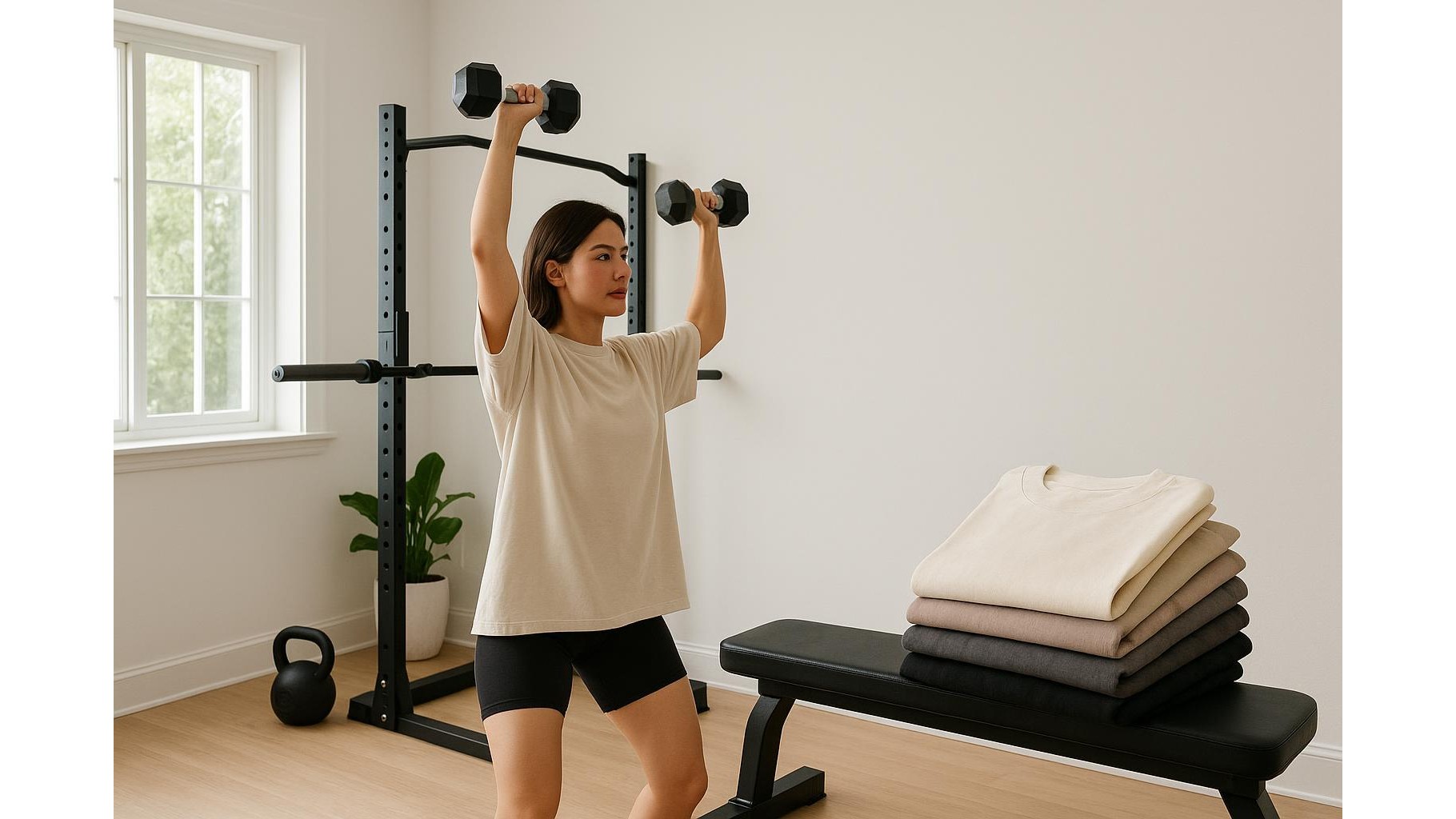
Good shoulder construction is key for comfortable overhead work, especially with dumbbells, kettlebells or suspension trainers. Look for dropped or relaxed shoulder seams that sit slightly off the shoulder without sliding halfway down your arm. This gives you the oversized look while keeping the T-shirt stable. Sleeves should be wide enough not to squeeze your biceps, but not so wide that they flap excessively during high-intensity intervals. A gentle taper and mid-bicep length helps prevent the sleeves from rolling up during presses or rows.
Getting the length right to avoid riding up
Length is where many oversized T-shirts go wrong for home workouts. If the hem is too long, it can bunch around your hips when you sit on a bench, bike or rower, or get trapped under resistance bands. Aim for a length that hits roughly mid-fly on shorts or just below the waistband of leggings. This is long enough to keep you covered during stretching and core work but short enough not to interfere with your range of motion. Side slits or a slightly curved hem can also help the fabric move with your body rather than riding up or twisting.
Breathability and sweat management in a home gym
Even if your home gym is small or lacks strong ventilation, the right breathable T-shirt can keep you comfortable. Natural fibres like cotton and bamboo blends feel soft and allow air to circulate, while technical fabrics with mesh panels or micro-holes are great for very sweaty HIIT or cardio sessions. If you tend to overheat, avoid dense, non-stretch materials. Look for tops labelled as moisture-wicking or quick-drying so they do not cling when wet. A slightly oversized cut improves airflow around your torso, helping you regulate temperature during longer sessions.
Preventing twisting, catching and discomfort
To stop your oversized training T-shirt from twisting or getting caught on equipment, focus on clean, simple designs. Avoid huge side splits, excessive drawstrings or decorative straps that can tangle with cables and handles. Flat seams and minimal embellishments reduce friction against your skin when you lie on a bench or mat. Try a few functional tests: raise your arms overhead, perform a deep squat and lie back as if on a bench. If the T-shirt stays roughly in place without needing constant adjustment, it is well-suited to home workout use.
Balancing style and performance at home
The best oversized workout T-shirts combine relaxed streetwear style with gym-ready practicality. Choose neutral colours or simple graphics that you are happy to wear around the house as well as in your workout corner. Prioritise fabric quality, breathable construction, sensible length and secure shoulder seams over extreme bagginess. When those elements line up, you get a top that looks casual, moves freely and never feels like it is drowning you in fabric, letting you stay focused on your training instead of fighting with your clothes.