Training in a home gym often means you have to manage small aches and niggles on your own. One of the most common DIY solutions is self-taping ankles and wrists with elastic or rigid sports tape. Used correctly, tape can add a sense of support, remind you to move better and help you get through light sessions. Used badly, it can hide serious injuries, cut off circulation or even make joint mechanics worse. This guide walks you through basic rules before you wrap, the limits of taping and when you really need a professional instead.
When taping can actually help at home
Sports tape is not a cure, but it can be useful in a few specific cases. Light elastic kinesiology tape around a mildly sore ankle or wrist can offer gentle feedback and help you feel more stable during low‑impact exercises such as bodyweight squats, light dumbbell work or mobility drills. Rigid zinc oxide tape is sometimes used by experienced athletes to limit excessive joint motion after a minor sprain that has already been assessed by a professional. At home, think of tape as a short‑term aid to support pain‑free movement, not as a way to push through sharp pain or to keep training at full intensity after an acute injury.
When taping is risky or the wrong solution
There are clear situations where self-taping is a bad idea. If you have sudden, sharp pain, visible deformity, strong swelling, bruising that spreads quickly, or you cannot put weight on your ankle or grip with your wrist, tape is not the answer: you need urgent medical assessment. Avoid taping over open wounds, skin infections, eczema flare‑ups or areas with reduced sensation (for example after nerve injury or in diabetes). Very tight rigid tape can compromise blood flow and nerve function, causing numbness, tingling or cold, pale fingers and toes. Using tape to mask pain so you can attempt heavy lifts, sprints or plyometrics at home increases the risk of serious damage to ligaments, tendons and cartilage.
Basic principles before you wrap ankles and wrists
Before you reach for the roll, follow some simple rules. Clean and dry the skin and, if needed, trim excess hair to reduce irritation when removing tape. Test a small patch first if you have sensitive skin or allergies, and remove immediately if you feel burning or see redness. For ankle taping, the foot should be relaxed at a right angle; for wrist taping, keep the hand in a neutral, straight position. Apply tape with only light tension, especially elastic tape, and avoid wrapping fully around a limb more than once with strong stretch. Check circulation: your skin should stay warm and pink, and you should be able to move toes or fingers. If you feel throbbing, pins and needles or see colour changes, remove and re‑apply more loosely.
Simple home taping ideas, not full medical techniques
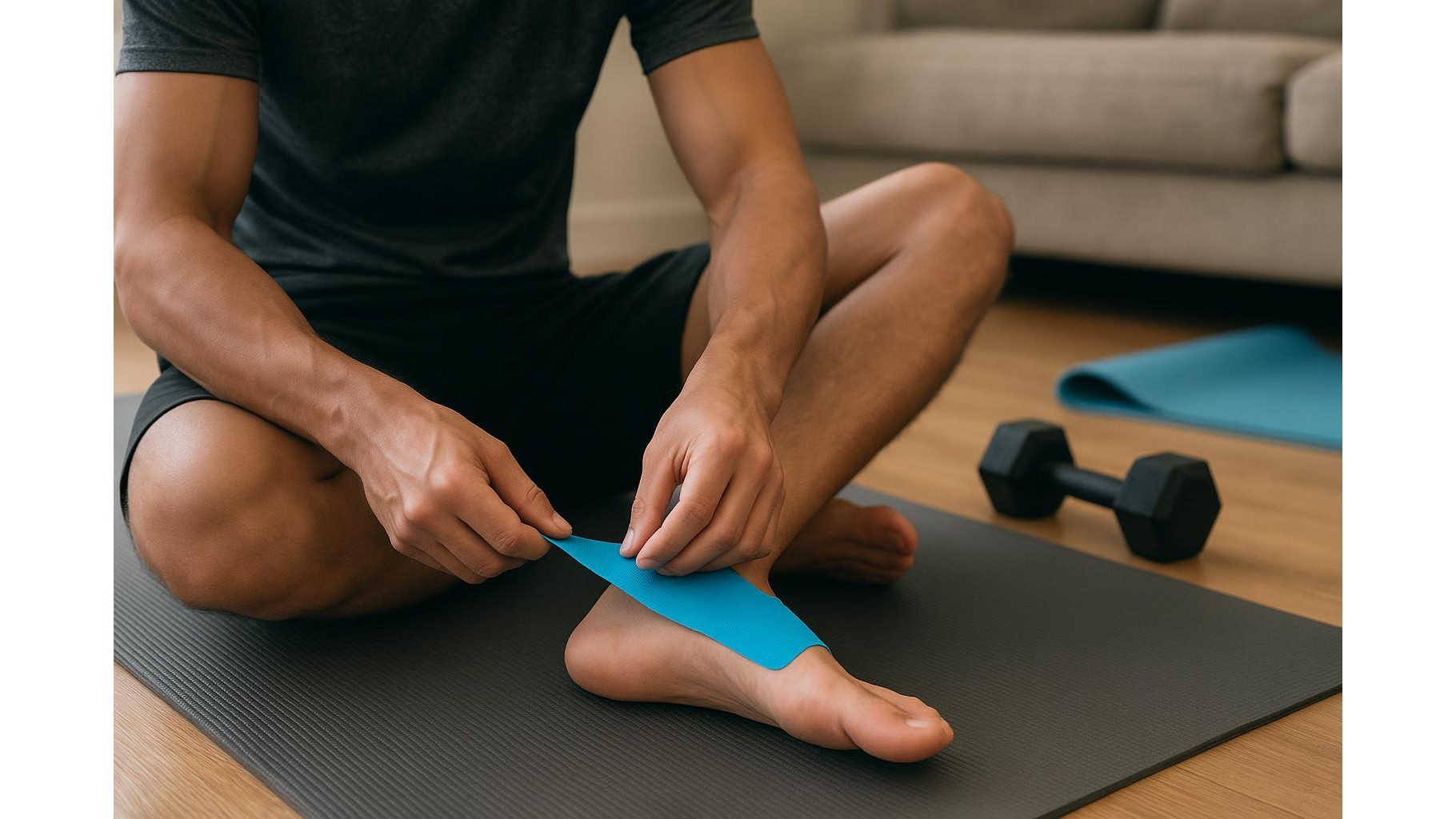
At home, stick to very simple, low‑risk applications. For a mildly sore ankle, two short strips of elastic tape in a criss‑cross pattern under the joint can provide a sense of support without locking the joint or compressing it too hard. For the wrist, one or two strips placed along the forearm and onto the back of the hand can remind you not to over‑extend during push‑ups or pressing movements. Avoid complicated strapping patterns you have seen on professionals unless you have been personally taught by a physio or sports therapist. Remember that tape should never replace proper warm‑up, strength work and mobility. If you constantly feel like you “need” tape for everyday training loads, that is a sign to reassess your programme and technique, not just your taping skills.
Red flags: when to stop taping and see a professional
Listen carefully to your body once the tape is on. If pain increases, spreads or changes from a dull ache to a sharp, catching sensation, stop your session and remove the tape. Watch for skin reactions such as itching, blistering or intense redness, which may indicate an allergy to the adhesive. Loss of strength, loss of range of motion or a feeling of joint instability despite taping are strong indicators that you need a professional evaluation. Persistent swelling around an ankle sprain or wrist injury that does not improve over a few days, or repeated injuries to the same joint, should be checked by a sports doctor or physiotherapist. Taping can be part of a rehab plan, but that plan has to be designed around your specific situation, not improvised in the home gym.
Used with respect and caution, self-taping for home athletes can offer light support and confidence for minor, well‑understood issues while you train. The key is to recognise that tape is only a temporary aid, never a substitute for proper diagnosis, structured rehabilitation and smart programming. Keep your applications simple, avoid excessive tension, watch for warning signs and be willing to stop and seek help when something feels wrong. That way, your home gym becomes a safer place to build strength and resilience, instead of a space where injuries are simply covered up with a layer of tape.