Staying active during pregnancy can boost energy, support mood and help manage common aches, but not every piece of home gym kit is bump-friendly. The goal is to choose low-impact cardio machines that are gentle on joints, support changing posture and can be adjusted as your pregnancy progresses. Below, we look at bikes, ellipticals, walking pads and mini steppers, with practical tips to make them safer and more comfortable in every trimester.
How to think about cardio in each trimester
Before you buy, it helps to map your pregnancy cardio around typical trimester changes. In the first trimester, many people can continue familiar workouts, but fatigue and nausea may mean shorter, more frequent sessions. By the second trimester, your bump grows and ligaments loosen, so joint-friendly, supported positions become more important. In the third trimester, balance and breathing can feel harder, so machines with stable support, easy access and simple controls are usually best. Across all trimesters, aim for light to moderate intensity where you can still talk, skip over-heating, stay well hydrated and stop immediately if you feel dizzy, short of breath, experience pain, bleeding or contractions. Always clear any exercise plan with your midwife or doctor first.
[pregnancy-friendly home cardio]
Recumbent and upright bikes: seated support for changing bumps
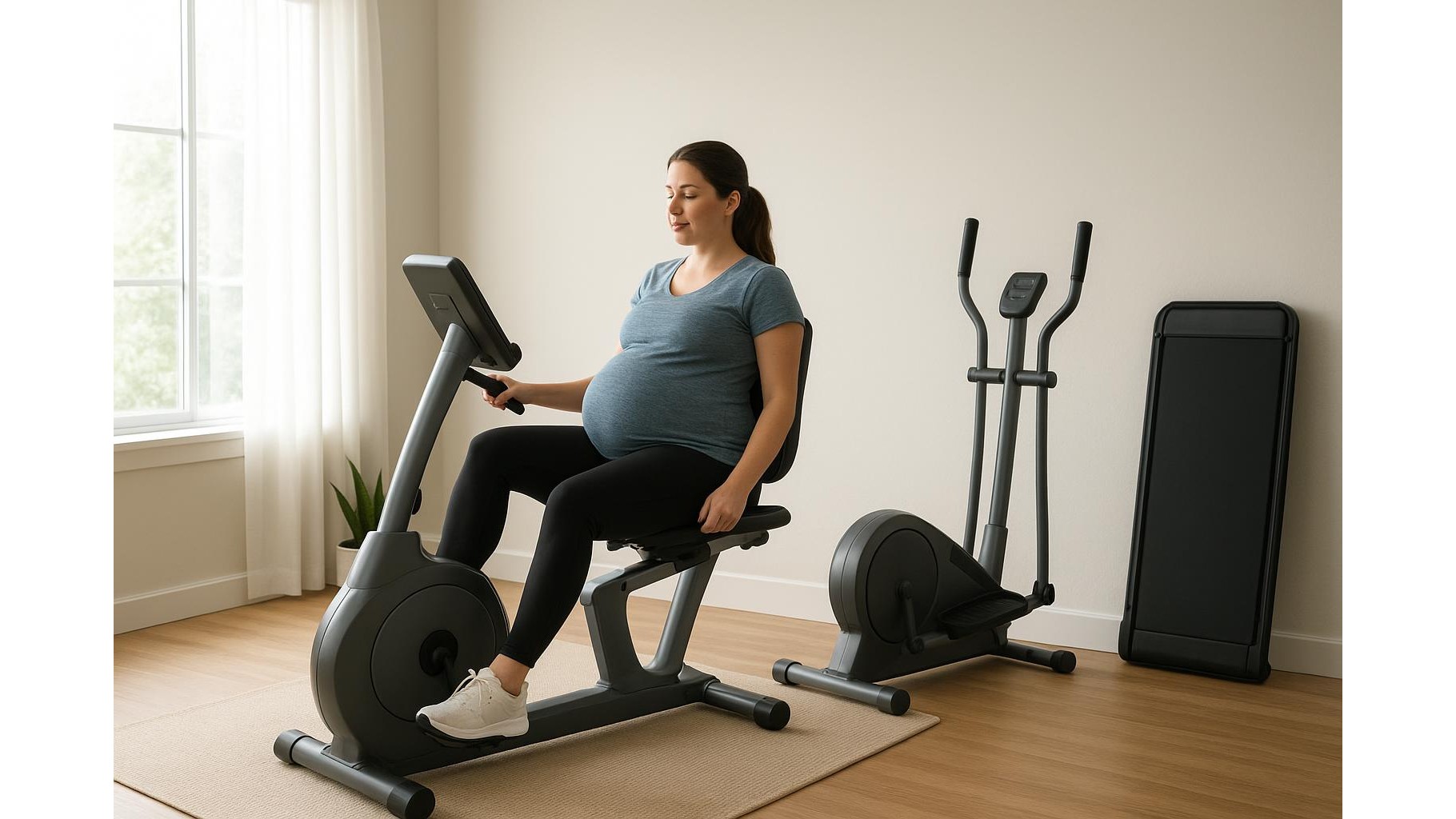
For many, a recumbent exercise bike is the most comfortable pregnancy-friendly cardio option because it offers a reclined, supported seat and low impact pedalling. Compared with upright bikes, the backrest reduces strain on the lower back and encourages a more open hip angle as your bump grows. Look for an adjustable seat that slides easily so you can maintain a slight bend in the knee at the bottom of the pedal stroke, and wide, padded seating to reduce pressure points. An upright bike can also work well early on if you’re already used to cycling, but as balance and pelvic discomfort change you may prefer a recumbent style to avoid leaning forward over the handlebars. Keep resistance light to moderate, avoid standing climbs and focus on smooth, steady pedal strokes rather than high-intensity intervals unless specifically approved by your healthcare provider.
Elliptical trainers: full-body, low-impact movement
A compact elliptical cross trainer creates a walking or jogging motion without the impact of running, which can be easier on pregnancy-sensitive joints. The moving handles can help with posture, encouraging an upright chest and reducing the tendency to hunch as your centre of gravity shifts. When choosing an elliptical, prioritise sturdy handrails, a low step-up height and a smooth, not-too-long stride that doesn’t force the pelvis into over-stretch. As your bump grows, keep resistance moderate and speed controlled to protect balance. If you feel unsteady, use the fixed handles (if available) and shorten your workouts into manageable 10–15 minute blocks. Ellipticals can raise heart rate quickly, so use the talk test rather than chasing numbers, and be prepared to reduce duration in the third trimester if breathlessness increases.
Walking pads and compact treadmills for gentle indoor walks
For those who love walking, a walking pad or compact treadmill lets you log comfortable steps indoors without weather or traffic concerns. These low-profile machines are typically best used at slower speeds, which fits well with pregnancy-safe cardio. Models with an integrated or optional handrail offer extra security as balance changes, and a wide belt gives more room for a naturally slightly wider stance later in pregnancy. Keep incline modest to avoid excessive calf and pelvic floor strain. Instead of long, continuous sessions, try several short walks spread through the day, focusing on relaxed, upright posture and easy breathing. Because walking can feel deceptively gentle, watch for over-heating, especially in warmer rooms, and place the machine where you have good airflow and easy access to water.
Mini steppers and under-desk options: when (and when not) to use them
Mini steppers and compact under-desk pedals can be tempting if you have very little space, but they’re not ideal for every pregnancy. Steppers load the calves and knees and can challenge balance, so they may be more suitable for early pregnancy and for people without pelvic girdle pain or knee issues. If you use one, keep the resistance low, hold on to a stable support such as a sturdy chair or wall, and stop at the first sign of joint or pelvic discomfort. Under-desk pedal machines mimic a small bike and may be more comfortable if you prefer to stay seated and supported, for example when working from home. However, any device that encourages long, continuous sessions while you’re distracted should be used with care: schedule short, mindful bouts, maintain good chair and back support, and take regular breaks to stand, stretch and check in with how your body feels.
Essential safety checks and setup tips to discuss with your doctor
Whatever home cardio machine you choose, setup and safety matter as much as the equipment itself. Place the machine on a stable, non-slip surface with enough clearance to mount and dismount easily, and make sure controls are simple to reach and adjust without twisting. Wear breathable layers and supportive footwear, and consider a fan if your exercise room gets warm. Build in a gentle warm-up and cool-down, and avoid any moves that cause pain, pelvic heaviness, leaking or pronounced abdominal doming. It’s wise to review your plan with your midwife or doctor, particularly if you have a high-risk pregnancy, anaemia, high blood pressure, a history of miscarriage, or have been advised to limit activity. Used thoughtfully, low-impact machines can help you stay active and connected to your changing body through every trimester.
Pregnancy-friendly cardio doesn’t require a full gym or intense sessions. By choosing low-impact equipment that suits your space and symptoms, and by listening closely to your body, you can create a simple home routine that supports circulation, mood and mobility while respecting your growing bump. Think in terms of comfort, safety and flexibility rather than performance, adjust your expectations each trimester, and keep your healthcare team involved so that your home workouts remain a positive part of your pregnancy journey.