High‑intensity home workouts can be empowering, but for some people the racing heart, fast breathing and muscle tension of HIIT feel uncomfortably close to anxiety or even panic attacks. When your nervous system can’t tell the difference between “I’m sprinting” and “I’m in danger”, training in your living room may suddenly feel like an ambush. Learning how to work with your body instead of fighting it helps you keep the fitness benefits of HIIT while reducing fear, dizziness and that urge to quit mid‑session.
Why HIIT can mimic anxiety or panic
During high‑intensity intervals, your body naturally triggers a fight‑or‑flight response: heart rate spikes, breathing becomes shallow and fast, sweat increases and your vision may narrow. These are also classic anxiety symptoms. If you’ve had panic attacks in the past, your brain may interpret normal exercise sensations as a threat, creating a feedback loop: you notice your heart pounding, think “something is wrong”, your fear rises and the body responds with even more adrenaline. At home, without the grounding presence of a coach or gym environment, this loop can feel even louder. Understanding that these sensations are a predictable physiological response, not proof of danger, is the first step to breaking the cycle.
Paced breathing: your built‑in brake pedal
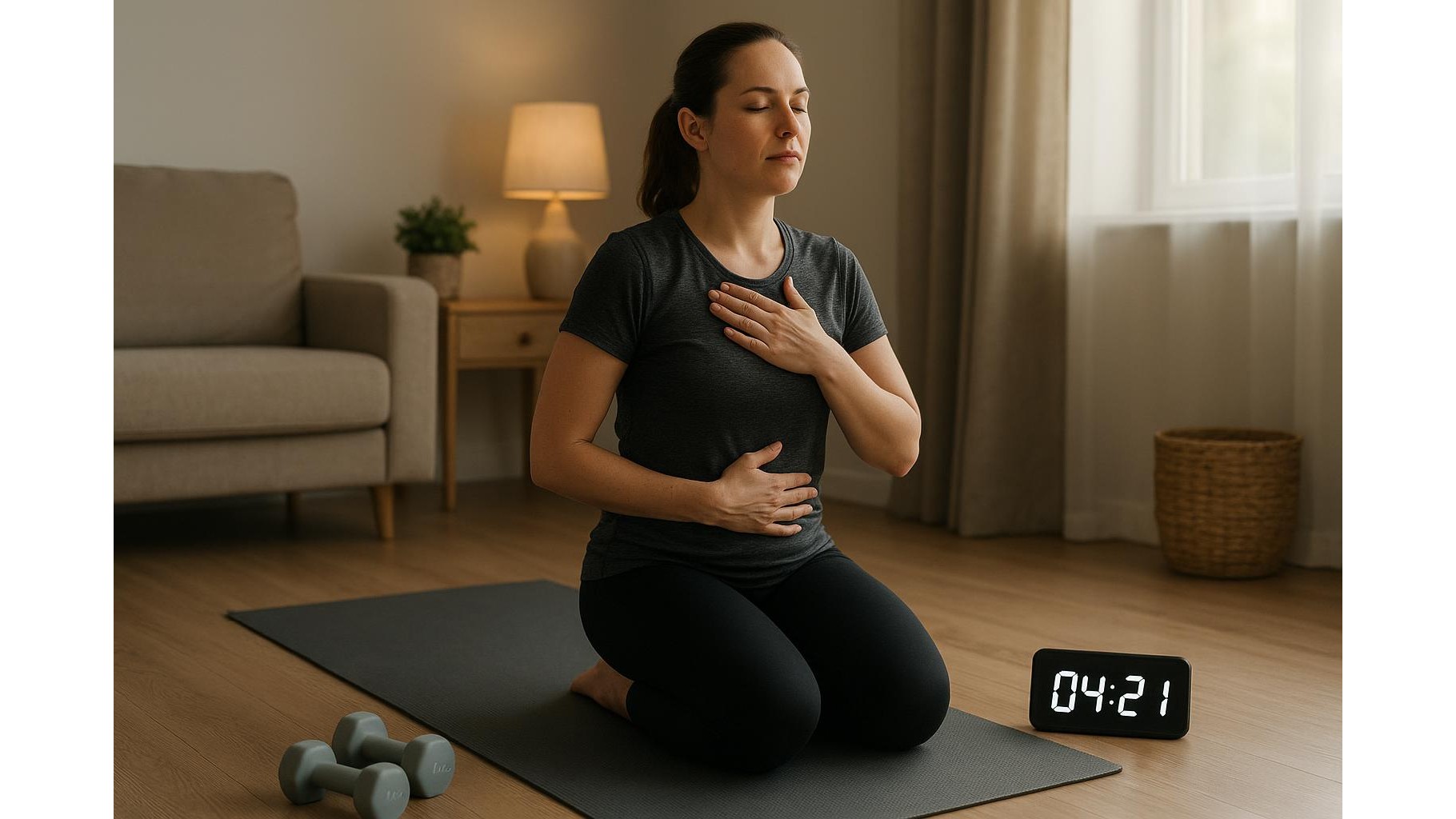
Intentional paced breathing is one of the fastest ways to signal safety to your nervous system during and after HIIT. Between intervals, switch from mouth‑only gasping to a 1:2 rhythm: inhale through the nose for 3–4 seconds, then exhale through the mouth for 6–8 seconds, as if gently fogging a mirror. This longer out‑breath activates the parasympathetic “rest and digest” system and can shorten the recovery time after each sprint. You can also try “box breathing” on your warm‑up and cool‑down: inhale 4 seconds, hold 4, exhale 4, hold 4. Practise these patterns when you’re calm—sitting at your desk or lying on the floor—so they feel familiar when your heart is pounding. Over time, your body learns that intense effort can coexist with a steady, controlled breath.
Adjusting intervals, not abandoning intensity
If HIIT regularly triggers panic feelings, it doesn’t mean you must give up intense training; it means you should adjust the variables. Reduce work intervals (for example from 40 seconds to 20) and extend rest periods until anxiety remains manageable. Use a rate of perceived exertion (RPE) scale from 1 to 10 and cap your sprints at 7–8 instead of going to an all‑out 10. Choose movements that feel technically safe—marching fast, low‑impact step‑ups, shadow boxing—instead of exercises that make you feel out of control, like jump‑squats or burpees. Training 2–3 times a week with this gentler structure can still deliver cardio fitness gains without repeatedly overwhelming your nervous system, helping your confidence rebuild gradually.
Grounding rituals before and after your home workout
Simple grounding rituals around your home workout can dramatically change how your brain interprets intensity. Before you start, take one minute to scan your body from feet to head, noticing any tension and gently shaking out your shoulders and hands. Set a clear intention: “I’m training my heart, not testing my safety.” After your last interval, resist the urge to stop abruptly. Walk slowly around the room for 2–3 minutes, then spend another 3–5 minutes on a cool‑down: light stretching, gentle spinal twists on the floor and slow breathing. You can finish with a short “5–4–3–2–1” grounding exercise: silently name five things you can see, four you can feel, three you can hear, two you can smell and one you can taste. These practices anchor you in the present and help your nervous system down‑shift from high alert.
Creating a safer home training environment
Your home gym setup also influences anxiety. A cluttered, overstimulating room makes it harder for the brain to relax. Whenever possible, clear a dedicated space, dim harsh lights and keep a stable temperature to avoid feeling overheated, which can mimic panic. Prepare your session in advance—exercise list, intervals and music—so you’re not making stressful decisions mid‑workout. Use a simple interval timer on your phone rather than constantly checking the clock. Consider training earlier in the day if evening sessions leave you wired. If you share your home, let others know you’ll be unavailable for 20–30 minutes so you’re not bracing for interruptions. All these small environmental tweaks reduce background stress, so the normal discomfort of HIIT feels more tolerable.
When to seek professional support
While self‑regulation tools are powerful, some situations call for professional help. If you frequently avoid movement because you fear your heart racing, or your home workouts trigger intense panic attacks (chest pain, choking sensations, terror of dying or losing control), it’s important to talk to a healthcare professional. A GP can rule out medical issues and, if appropriate, refer you to a therapist experienced in anxiety disorders or exercise‑related panic. Cognitive‑behavioural strategies, interoceptive exposure (gradually practising uncomfortable body sensations) and, where indicated, medication can all play a role. Combining these approaches with the breathing, pacing and grounding techniques above helps you reclaim movement as a source of strength rather than fear, so your home HIIT sessions become a tool for resilience instead of a trigger.
Managing anxiety during home HIIT is about cooperation, not confrontation: understanding why your body reacts, practising paced breathing, adjusting intervals, building grounding rituals and, when needed, involving professionals. With patience and consistent practice, you can teach your nervous system that a pounding heart is a sign of training—not a threat—and enjoy the physical and mental benefits of high‑intensity exercise in the safety of your own space.