Training at home during perimenopause comes with a unique challenge: one minute you are shivering, the next you are drenched in sweat from a hot flash. The right home workout outfit can make the difference between cutting a session short and finishing strong. By focusing on smart layering strategies, breathable fabrics and quick‑change pieces, you can stay comfortable through every temperature swing without losing the support you need for safe, confident movement.
Start with a breathable, sweat‑savvy base layer
Your base layer should feel almost invisible while still giving you structure. Look for moisture‑wicking, fast‑drying fabrics that pull sweat away from the skin to reduce that clammy feeling after a hot flash. A fitted short‑sleeve or tank top in lightweight polyester or a nylon‑spandex blend works well, especially when it has mesh zones under the arms or across the upper back. Avoid heavy cotton, which tends to trap moisture and stay wet. At home, you can also size slightly looser than you would for outdoor training; a bit of airflow under the fabric helps your body cool down faster when your temperature suddenly spikes.
Add a quick‑change mid‑layer you can ditch in seconds
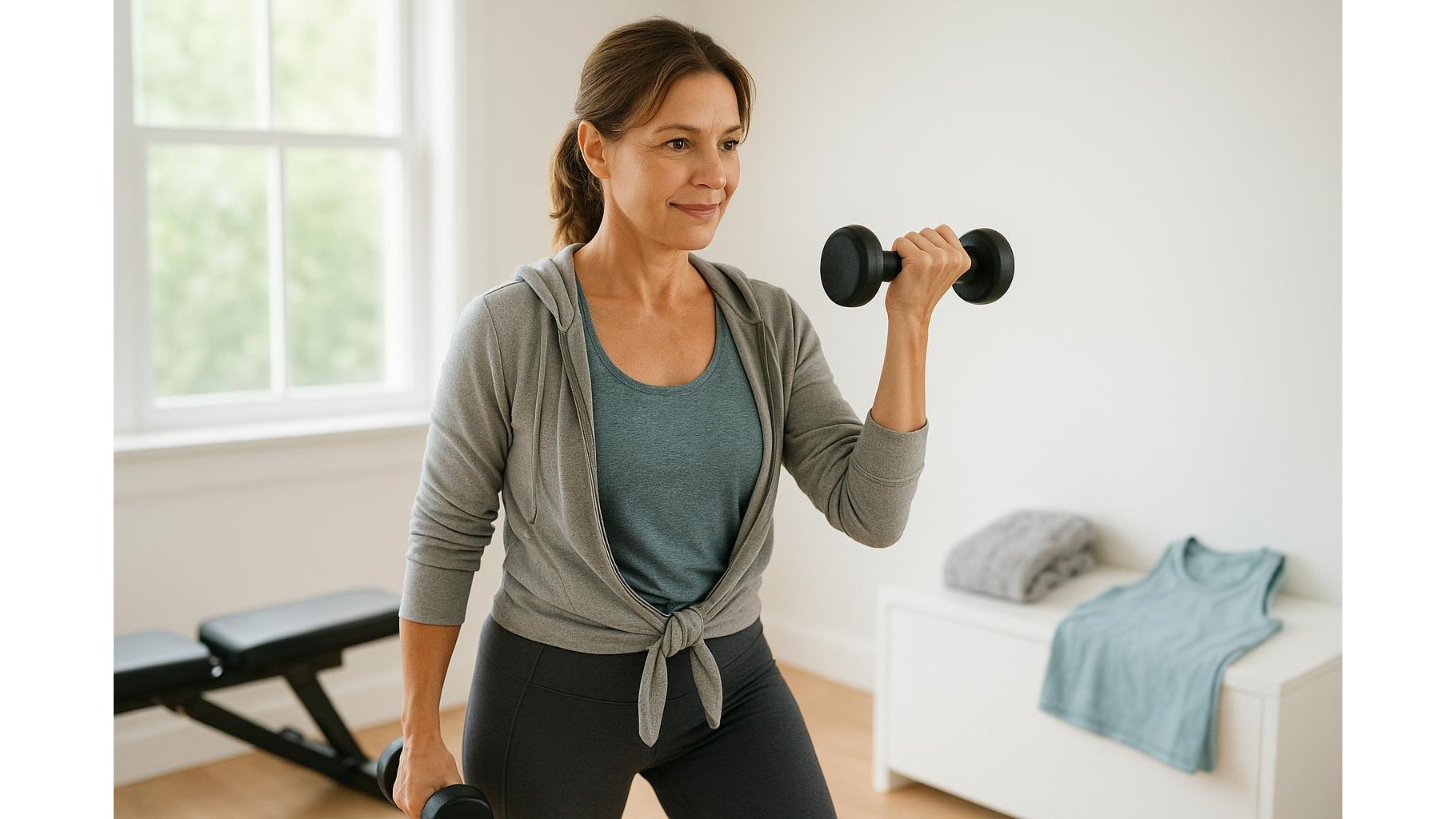
The secret weapon for managing temperature swings is a mid‑layer you can remove the moment you feel a hot flash coming on. Prioritise pieces with a full‑length zip or very loose, wide necklines so you do not have to wrestle them over your head when you are overheated and sweaty. Lightweight workout hoodies, zip‑front jackets or longline cardigans in thin technical fleece or brushed jersey are ideal. Keep this layer unzipped for warm‑ups and zip it up only when you start to feel chilled again between sets. Because you are training at home, you can choose softer, lounge‑friendly fabrics while still focusing on breathability and easy on‑off access.
Choose sports bras that balance support and cooling
For many women in perimenopause, the sports bra is the make‑or‑break item. You need enough support for jumping or dynamic strength work, but you also need maximum airflow to avoid feeling trapped in your own outfit during a hot flash. Look for medium‑to‑high support bras with mesh panels, cut‑out designs or keyholes on the back to let heat escape. Racerback or cross‑back straps help distribute weight without digging in, which is useful if hormonal changes are causing breast tenderness. Removable padding is a plus: you can take pads out on high‑heat days to reduce bulk, then pop them back in when you want more coverage. A wide elastic band that stays in place without feeling tight will let you breathe and move freely through your whole home session.
Bottoms that breathe: leggings, capris and shorts
Your lower half can also drive comfort during home workouts in perimenopause. Opt for high‑waisted leggings or capris made from thin, four‑way stretch fabric that wicks sweat and dries fast. A wide waistband offers gentle compression around the midsection, which can feel grounding when bloating or body changes are on your mind. For days when you expect intense hot flashes, keep a pair of lightweight workout shorts nearby so you can swap quickly mid‑session if needed. At home you can easily layer: start with thin leggings, then remove them to train in shorts if you begin to overheat. Avoid heavy seams and thick brushed fabrics unless your training space is very cold; these can trap heat and make post‑flash chills even more uncomfortable.
Smart fabric choices and small details that matter
When you build a home gym wardrobe for perimenopause, fabric content is as important as fit. Prioritise technical materials like polyester and nylon blends with added elastane for stretch; look for labels that mention quick‑dry, moisture‑wicking or breathable. Natural fibres such as bamboo and lightweight merino can also work well because they manage moisture and odour while staying soft against sensitive skin. Pay attention to details: flat seams reduce chafing when your skin feels extra reactive, and wide, soft waistbands or bra bands prevent digging when you are a bit bloated. At home, have a small “temperature kit” ready next to your mat: spare tank top, extra bra, and a light zip‑up. Being able to change layers in under a minute keeps your focus on movement, not discomfort.
Putting your layering system into daily practice
Think of your perimenopause workout outfit as a flexible system rather than a single fixed look. Start every session with a breathable base layer and supportive bra, add a light mid‑layer for the warm‑up, and keep an extra pair of shorts or a fresh top nearby. As your body signals a hot flash or a chill, respond by unzipping, peeling off or swapping layers without pausing your workout altogether. Over time you will learn which combinations work best for morning strength sessions versus evening yoga or cardio. With a small, well‑chosen selection of breathable, quick‑change pieces, you can move through perimenopause with more comfort, confidence and consistency in your home training routine.