Creating a small home gym around heavy kettlebells is a balancing act: you want weights to be easy to grab for swings and squats, but you also need a clear, safe floor. Smart kettlebell storage reduces clutter, protects your equipment and keeps your training space motivating instead of messy. In a compact room or corner gym, the right mix of stands, shelves and hidden storage lets you fit more gear into fewer square metres without compromising safety.
Why kettlebell storage matters in a small home gym
Loose kettlebells rolling around a tiny training area are a trip hazard and a fast way to chip floors or damage the bells themselves. Purposeful kettlebell organisation keeps heavy weights at a comfortable lifting height and avoids awkward bending and twisting. It also helps you see exactly which loads you have, making it easier to plan progressive workouts. In a shared space like a living room corner or garage, tidy storage is the difference between a gym that blends into your home and one that feels like constant clutter.
Free‑standing kettlebell stands and vertical racks
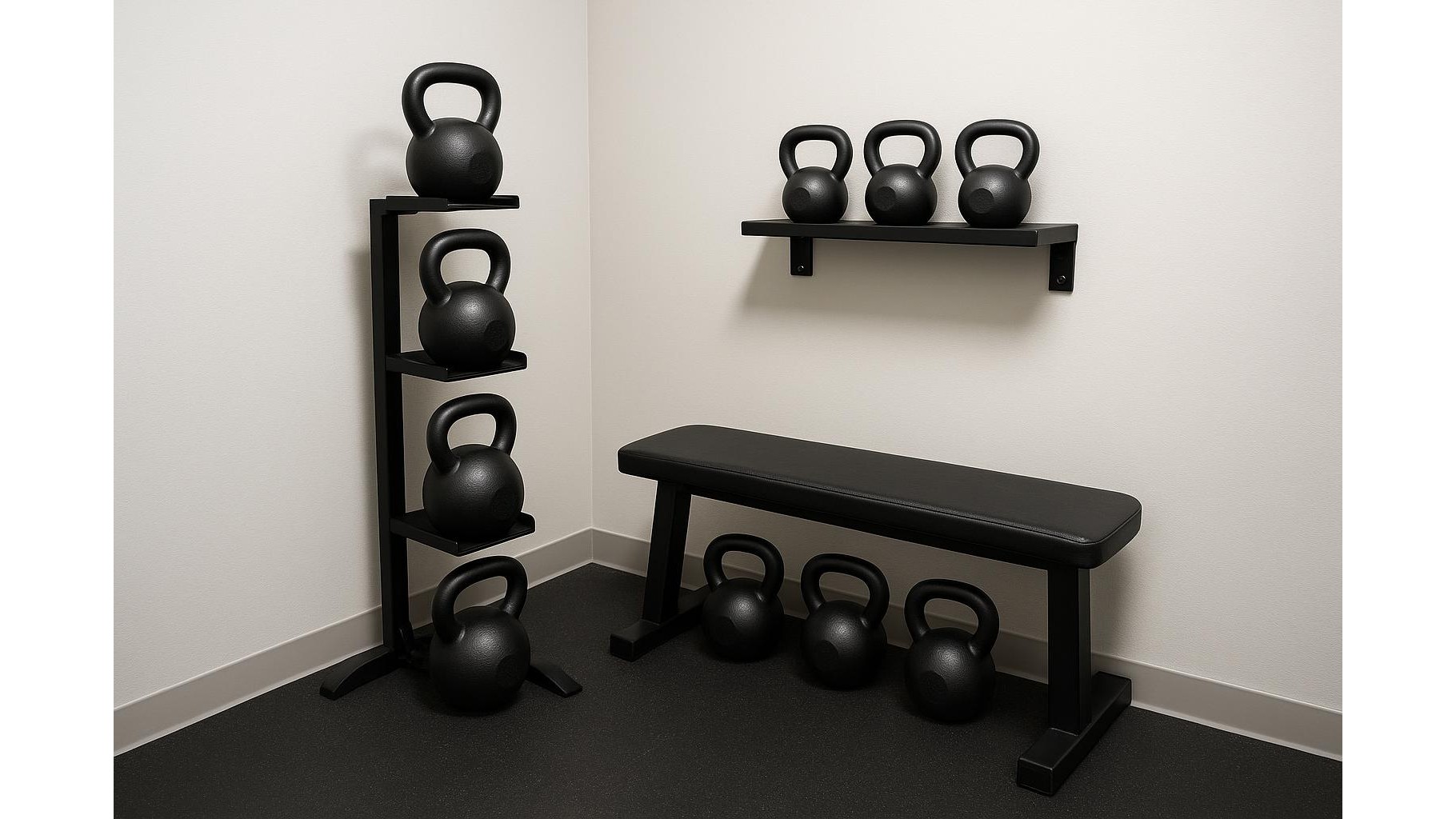
For renters or anyone who cannot drill into walls, a compact free‑standing kettlebell rack is usually the most convenient option. Look for a vertical design with a small footprint so it fits beside a squat rack, desk or sofa. Stands with tiered shelves let you separate light, medium and heavy kettlebells, improving safety when you’re training fast. Prioritise sturdy steel construction, non‑slip feet and a quoted maximum load that comfortably exceeds the total weight of your bells. In very small rooms, place the rack in a corner: this keeps the heaviest equipment out of walking paths while still letting you approach it from the front with a neutral spine.
Wall‑mounted shelves to free up precious floor space
If your walls can take fixings, wall‑mounted kettlebell shelves are one of the best upgrades for a cramped gym. Robust steel shelves, installed with heavy‑duty anchors, move your bells off the floor and open up space for swings and Turkish get‑ups. Mount them at hip to waist height so you can load and unload bells without excessive bending. Always check the manufacturer’s maximum weight rating and keep the heaviest bells closest to the wall brackets. In multi‑purpose rooms, a low, wide wall rack can double as general weight storage for dumbbells, medicine balls and small accessories as well as kettlebells.
Under‑bench and “dead space” storage solutions
One of the easiest wins in a small home gym is using the “dead space” under existing furniture and equipment. A sturdy flat bench or folding weight bench can hide a row of kettlebells beneath it, keeping weights accessible but visually tidy. You can slide a low metal tray or wooden board under the bench to protect floors from dents. Similarly, the gap under a wall‑mounted desk, TV unit or even a sturdy hallway console can become a discreet kettlebell parking zone. Just be sure there is enough clearance to lift bells out safely and that the surface above can handle any accidental bumps.
Creative DIY and multi‑purpose kettlebell storage ideas
When budget or space is tight, DIY kettlebell storage can work brilliantly. Heavy‑duty garage shelving, short bookcases or repurposed shoe racks can be transformed into kettlebell stations as long as they are rated for the load and sit on a stable, level surface. Add rubber mats or cut‑to‑size plywood on each shelf to distribute weight evenly and protect the frame. Stack lighter bells on upper levels and keep the heaviest on the bottom for stability. Multi‑purpose pieces, such as a low storage bench or media unit in a living room gym, can conceal bells behind doors while the top serves as seating or a TV stand, helping your home gym equipment blend elegantly into everyday spaces.
In a small home gym, thoughtful kettlebell storage is as important as the bells themselves. Combining a compact stand, wall‑mounted shelf or two, and smart use of under‑bench and hidden spaces lets you keep weights close at hand without sacrificing safety or floor space. Whether you buy a dedicated rack or build a DIY solution, focus on stability, load capacity and easy access. With the right setup, even the tiniest corner can become a clean, efficient and inspiring kettlebell training zone.