Building a simple home fitness dashboard is easier than it looks, and you do not need paid apps or monthly plans. By combining a basic fitness tracker, your smartphone or laptop and a few free tools, you can track steps, heart rate and calories every day. This setup works both for general activity and home workouts, helping you stay accountable and see progress without locking yourself into subscriptions.
Choose a tracker that works without subscriptions
The core of your dashboard is a simple fitness tracker that does not force you into premium plans. Look for devices that track steps, heart rate and calories burned, and sync via Bluetooth to a free companion app. Many budget bands offer an always‑free app with basic graphs and daily summaries, which is all you need for a home dashboard. Focus on long battery life, a clear display you can read during workouts and reliable step counting, rather than advanced coaching features that are often locked behind paywalls. Check carefully that all essential metrics are available without any subscription.
Use your phone as the central hub
Your smartphone can act as the main hub for your home fitness dashboard. Install the free app that pairs with your tracker and make sure it records daily steps, heart rate trends and estimated calorie burn. Most apps let you export or at least view weekly and monthly summaries for free. You can also enable your phone’s built‑in health platform, such as Samsung Health or Apple Health, to consolidate data from multiple sources like a smart scale or other sensors. Keep notifications from the app minimal so you are not pushed toward paid features; your goal is simply to collect and visualise your core activity metrics without distractions.
Create a simple visual dashboard at home
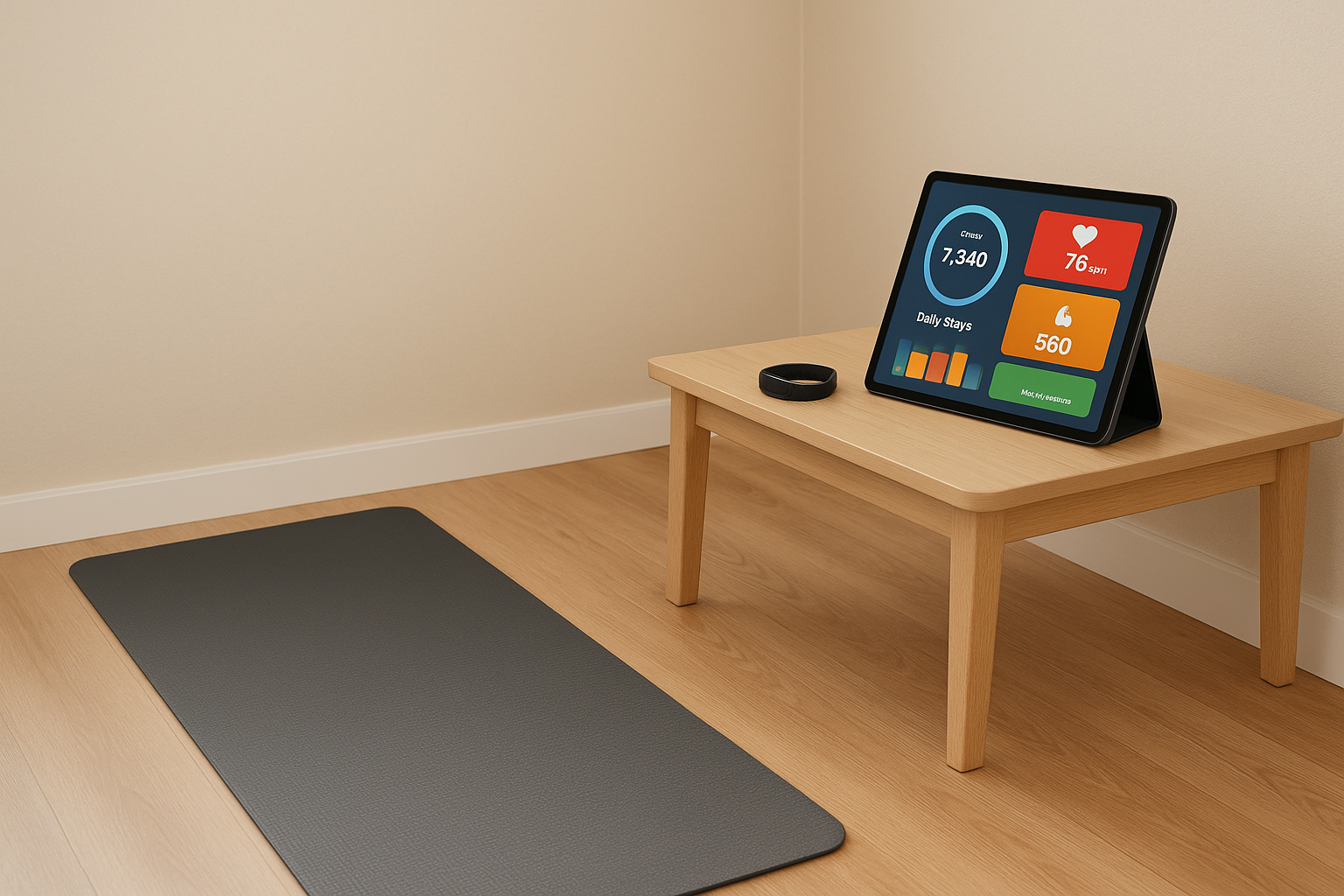
To turn raw numbers into a real dashboard, use a screen you already have at home. One option is to dedicate an old tablet or phone to display your daily stats: open the app’s main summary page and place the device on a stand in your home gym corner. Another approach is to use a laptop or desktop and build a basic spreadsheet dashboard with columns for steps, resting heart rate, workout duration and calories burned. Update it once a day in the evening by reading values from your tracker app. Colour‑code good days in green and low‑activity days in red so you can see trends at a glance. This low‑tech solution gives you a powerful overview for free.
Add heart rate and calorie awareness to your workouts
Once your dashboard is in place, use it to make each home workout more effective. Before starting a session, check your current heart rate on your tracker to ensure you are starting from a comfortable baseline. During cardio exercises like brisk walking, cycling or step‑ups, glance at the display to stay within your desired training zone, usually a moderate intensity that you can maintain. After training, review the total calories burned and compare them with your daily target, adjusting workout length or intensity if needed. Over time, patterns in your dashboard will show which routines deliver the best mix of effort and recovery, all without guidance from paid coaching apps.
Track consistency and build sustainable habits
The real power of a home fitness dashboard lies in tracking consistency. Use your spreadsheet or daily summary view to mark whether you hit your step goal, stayed active for at least 30 minutes and kept your resting heart rate within a healthy range. After a few weeks, you will see streaks and gaps that tell the story of your habits. This visibility helps you set realistic goals, such as adding 500–1,000 extra steps per day or including two structured workouts per week. Because your system runs entirely on free tools and devices you already own, you can focus on building sustainable routines instead of worrying about cancelling trials or managing yet another subscription.
By choosing a subscription‑free fitness tracker, using your phone as a data hub and creating a simple visual dashboard with tools like spreadsheets, you can monitor steps, heart rate and calories every day at home. This low‑cost, low‑friction setup gives you the essential feedback you need to improve your health and fitness, turning numbers into motivation—without ever paying for premium app plans.