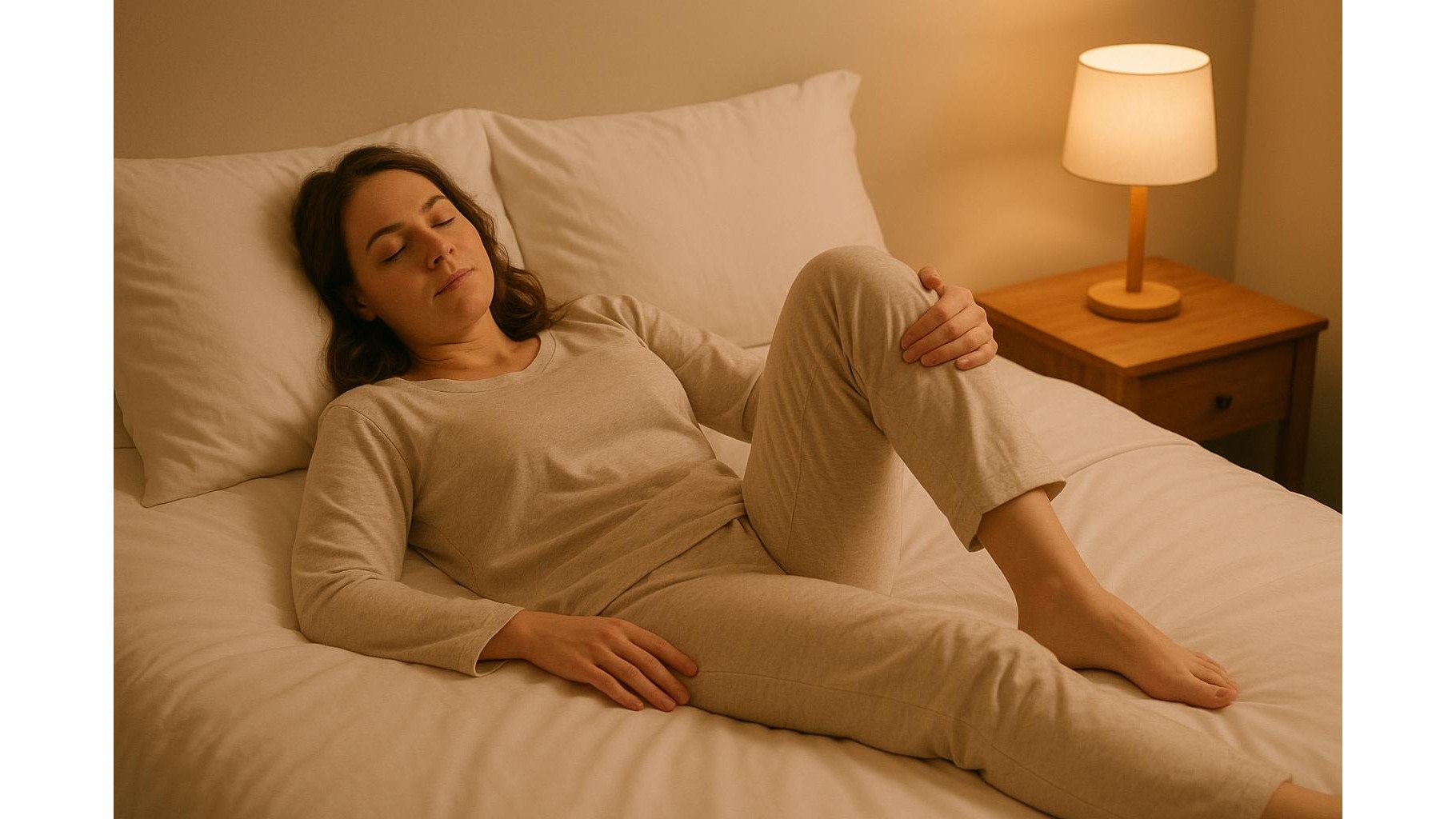
Even the best home workout can leave you wired, tight and glued to your screen long after you’ve racked the weights. A short, mattress‑friendly bedtime mobility routine helps you downshift from training mode into recovery mode, easing joint stiffness while gently calming your nervous system. In just 10 minutes, you can use your bed, your breath and a couple of small tools to signal “time to sleep” and wake up less sore the next day.
Set the scene: breathe before you stretch
Before you move, dim the lights and lie on your back with knees bent, feet flat. Place one hand on your chest and one on your belly. Inhale through your nose for four seconds, feeling the lower hand rise; exhale slowly for six seconds, letting your ribs soften into the mattress. Aim for 8–10 cycles. This simple nasal diaphragmatic breathing tells your body that the hard work is over and nudges you into a more parasympathetic, recovery‑friendly state. If your lower back feels tight, slide a firm pillow under your knees to reduce tension through the lumbar spine while you breathe.
Gentle spinal mobility from head to hips
Stay on your back and draw your knees above your hips. Slowly rock them side to side, keeping your shoulders heavy on the bed; take 6–8 rocks per side to massage the lower back. Then place your feet down again and perform mini posterior pelvic tilts: exhale as you gently press your lower back into the mattress, inhale as you release. This helps restore subtle motion to a spine that may have been compressed by squats, deadlifts or long hours at a desk. Move slowly enough that you can sync each repetition with your breathing rather than chasing a rep count.
Hip and glute release for lifters and runners
Hips often hold residual tension from lunges, running and cycling. Lying on your back, cross your right ankle over your left knee for a relaxed, in‑bed figure‑four stretch. Instead of yanking your leg closer, use gentle, sustained pressure: exhale and lightly press your right knee away, inhale and soften. Hold for 45–60 seconds per side. Follow with an easy lying hamstring stretch: extend one leg toward the ceiling, keep a slight bend in the knee and flex your foot. The goal is a mild, pleasant stretch rather than a max‑effort pull; this style of static stretching is ideal before sleep because it encourages your muscles to let go rather than brace.
Upper‑body unwinding for desk shoulders
Home training sessions often pile on pressing, pulling and push‑ups over a base of all‑day computer work. To decompress your upper body, lie on your back with arms out to the sides, palms up. Gently slide your hands overhead as far as is comfortable, then back down to hip level, tracing a slow snow‑angel pattern along the mattress for 8–10 repetitions. Focus on keeping your ribs heavy so the movement comes from your shoulders and upper back, not from arching your spine. Finish by hugging one knee to your chest and rotating it across your body for a light spinal twist, holding for 3–5 breaths per side to ease through the mid‑back.
Isometric holds to finish and signal sleep
To round off your bedtime mobility circuit, add a few gentle isometric holds that lightly engage your muscles without spiking your heart rate. Lying on your back, squeeze your glutes together for 5 seconds, then fully relax for 10 seconds; repeat 5 times. Next, make soft fists and press your arms down into the mattress for 5 seconds before letting them melt. These low‑intensity contractions help release residual tension and improve your sense of body awareness, which supports better sleep quality. Close with two minutes of quiet nasal breathing, scanning from feet to forehead and consciously relaxing each area into the bed.
Built into your evenings, this 10‑minute in‑bed routine becomes a simple ritual that links your home workouts with true recovery. By pairing conscious breathing with gentle stretches and light isometric holds, you reduce post‑training tightness, calm a wired nervous system and make it easier to drift off. Over time, this consistency can translate into better mobility, less morning stiffness and a stronger foundation for whatever tomorrow’s training session brings.