If you love gaming but also want a stronger, fitter body, a structured weekly home workout plan can bridge both worlds. This four-session template combines VR cardio, simple bodyweight exercises and one-dumbbell strength work, all designed for small spaces. You’ll rotate through fun VR sessions, muscle-building moves and joint-friendly mobility so you can level up your fitness without sacrificing your play time.
Session 1: VR cardio and core focus
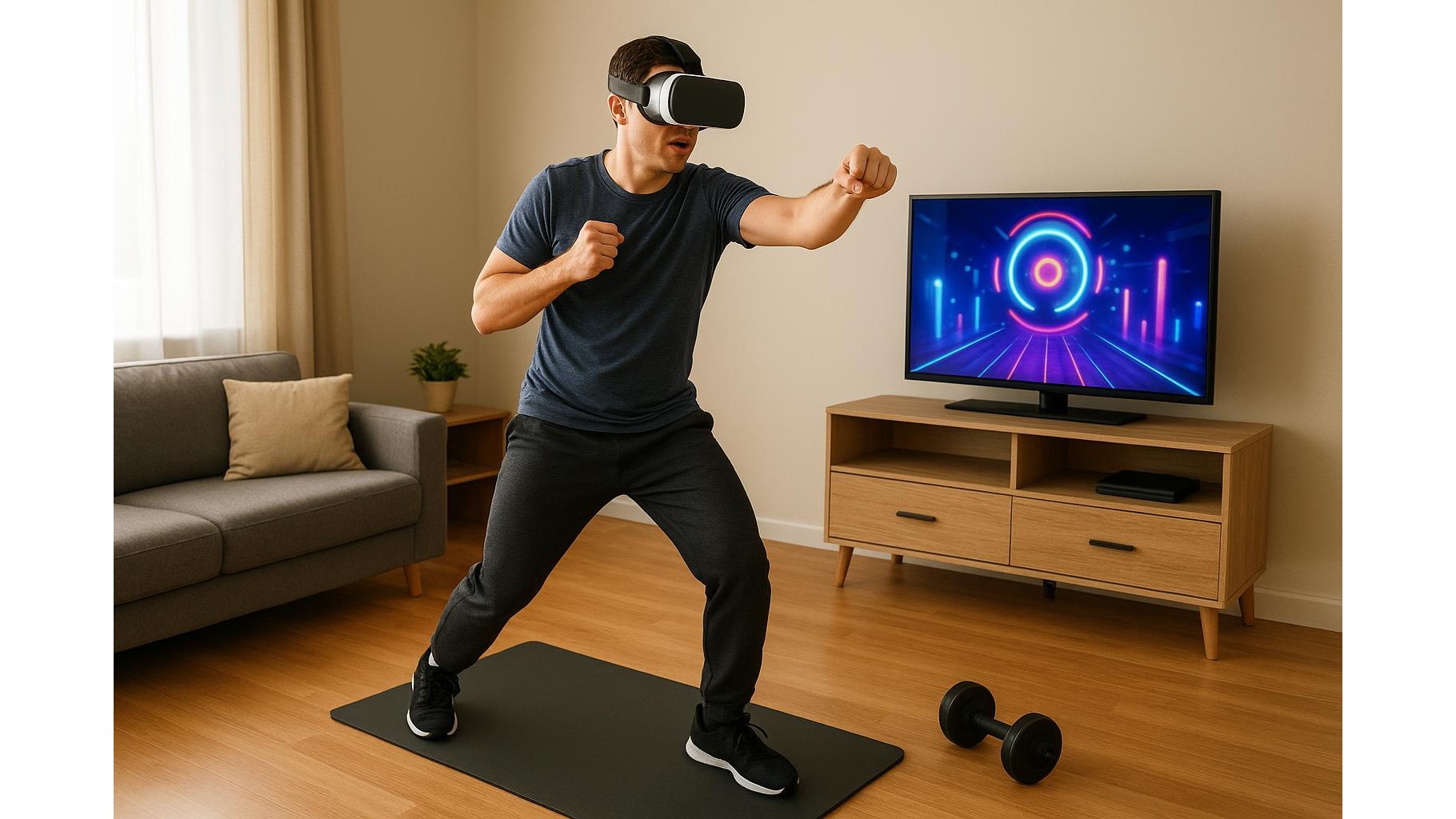
Your first session centres on VR-based cardio to get your heart rate up in a way that feels like play, not punishment. Use your favourite headset and pick rhythm, boxing or dance games that keep you moving non-stop for 15–20 minutes. Think in terms of “songs” or “rounds” rather than minutes so it stays engaging. After VR, drop into the real world for a simple bodyweight core series: 3 rounds of 30 seconds of dead bug, 30 seconds of glute bridge and 30 seconds of side plank per side, with 30–45 seconds rest between rounds. This blend builds endurance and trunk stability so you move better and react faster in every game.
Session 2: One-dumbbell strength for the whole body
Session two uses a single dumbbell to hit all major muscle groups while staying apartment-friendly and quick. Choose a weight that feels moderately challenging for 10–12 reps. Build a circuit of five moves: goblet squat, one-arm floor press, one-arm row, Romanian deadlift and one-arm overhead press. Perform 8–12 reps per side for each exercise, moving smoothly from one to the next, then rest 60–90 seconds. Aim for 3 rounds. This style of one-dumbbell workout boosts total-body strength, improves posture and supports the muscles you need for longer, more comfortable VR and desk sessions.
Session 3: Bodyweight conditioning and balance
The third workout focuses on bodyweight training so you can move freely without equipment. Start with 5 minutes of gentle dynamic warm-up: arm circles, leg swings and hip circles. Then try a 15–20 minute circuit of squats, incline push-ups on a table or wall, reverse lunges, hip hinges and bear crawls. Work for 30–40 seconds per exercise with 20 seconds rest, cycling through 3–4 rounds. Finish with 5 minutes of balance work, such as single-leg stands and slow heel-to-toe walks. This improves joint stability, coordination and control, which pay off when you’re dodging, ducking and turning quickly in VR.
Session 4: VR intervals and mobility reset
The fourth session combines VR interval training with a much-needed mobility reset. Choose a physically demanding VR game and alternate 2 minutes of intense play (punching, dodging, jumping) with 1 minute of slow, low-effort movements or pausing the action. Repeat this 8–10 times for a 24–30 minute workout that feels like a gaming marathon but acts like structured cardio. Afterward, spend 10 minutes on mobility: deep breathing, gentle neck rolls, cat-cow, hip flexor stretches and chest-opening stretches against a doorway. This balances all the forward-leaning, arm-swinging positions that come from both gaming and desk work.
How to schedule and progress your week
To make this weekly home workout plan sustainable, spread the four sessions across your week: for example, Session 1 on Monday, Session 2 on Wednesday, Session 3 on Friday and Session 4 on Sunday. Keep at least one rest or light-activity day between strength-focused sessions. Progress gradually by adding 5 minutes to VR segments, increasing dumbbell weight when 12 reps feel easy and trimming rest periods in bodyweight circuits. Track your sessions like game levels: tick off completed days, note your best scores or highest weights and aim to “beat” last week. With consistent effort, you’ll build strength, stamina and confidence while keeping your workouts as engaging as your favourite games.
This four-session structure gives you clear guidance without feeling rigid. You can swap in different VR titles, adjust exercise difficulty and shorten or lengthen sessions based on your schedule. Over time, you’ll develop a balanced blend of cardio, strength and mobility that fits neatly into your living room and your lifestyle, proving that home workouts can be both effective and genuinely fun.