
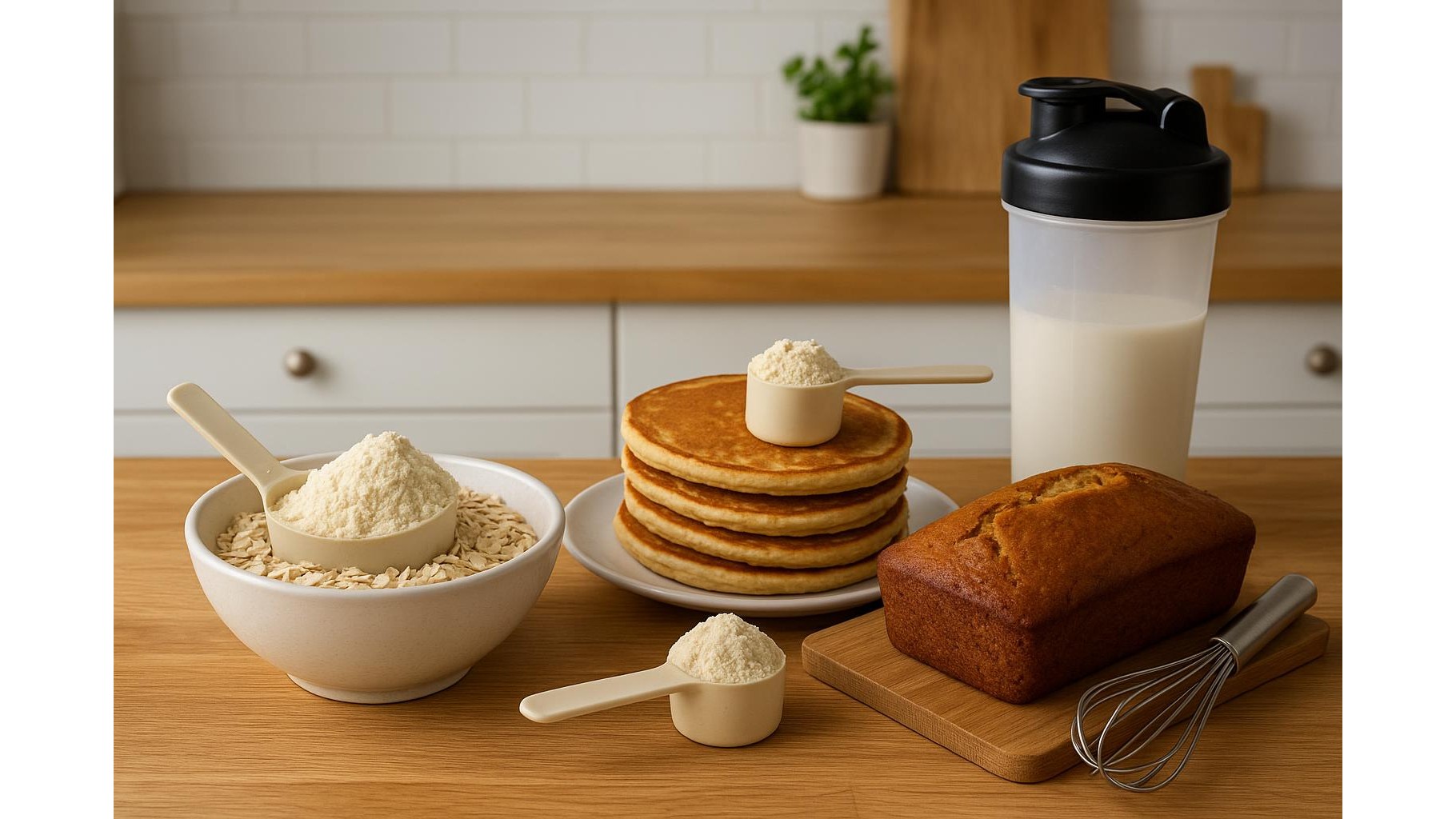
Using protein powder at home is an easy way to increase your daily protein without living on shakes. When you use unflavoured or lightly flavoured protein in normal recipes – pancakes, oats, soups or baked goods – the challenge is keeping good taste, texture and digestion. With a few simple rules on how much to add and how heat affects the powder, you can turn everyday meals into high-protein options that still feel like real food.
Choosing the right protein powder for cooking
The best starting point for cooking is an unflavoured whey or plant-based protein. Unflavoured powders blend into both sweet and savoury dishes without leaving an artificial aftertaste. Light vanilla or neutral flavours also work in pancakes and oats. Look for products with short ingredient lists, minimal sweeteners and no added gums if you have a sensitive stomach. A typical 30 g scoop of quality whey provides around 22–25 g of protein, while plant-based blends (pea, rice, hemp) give roughly 20–24 g, which is ideal for boosting a single meal without overloading your digestion.
How heating affects protein and when to add it
Many people worry that cooking protein powder will “destroy” it. Heat can denature protein – changing its structure – but this does not remove the amino acids your body needs. Baking or gently simmering protein in recipes is safe and still supports muscle recovery and satiety. Problems arise more with texture than nutrition: overheating can make baked goods dry or rubbery. To avoid this, keep oven temperatures moderate (around 160–180°C), avoid prolonged boiling, and if you are adding protein to hot soups or oats, stir it in off the heat, whisking well to prevent clumps.
How much protein powder to add to pancakes, oats and soups
When you add protein powder to recipes, start modestly. For pancakes, replace about 25–30% of the flour with protein powder – for example, in a recipe with 60 g of flour, use 40–45 g flour and 15–20 g protein. In oats, add half to one scoop per serving: cook the oats with extra water or milk, then stir the protein in at the end to keep them creamy. For soups, blend in 10–20 g of unflavoured powder per portion and adjust liquid to maintain a smooth texture. The goal is to raise protein content without turning the meal chalky or too thick.
Avoiding gritty texture and baking disasters
The common complaint with protein recipes is a dry, spongey or gritty texture. Protein behaves differently than flour: it absorbs liquid and sets more firmly when heated. To fix this, always increase moisture (extra milk, yoghurt, egg whites or mashed fruit) when you add protein. In baked goods, do not replace all the flour; keep at least half as normal flour or oats for structure. Mix dry ingredients thoroughly before adding wet, and avoid overbaking, checking a few minutes early. In oats and soups, whisk or blend vigorously to prevent lumps, and if needed, let the mixture sit for a few minutes so the powder can hydrate before serving.
Protecting digestion and avoiding stomach issues
If you experience bloating or stomach discomfort from protein powder, the issue is often dose and ingredients, not the cooking method. Start with smaller amounts (10–15 g per meal) and increase gradually. Choose powders with clear labelling, low lactose if you are sensitive (such as whey isolate or plant-based blends), and minimal artificial sweeteners, which can cause gas in some people. Drinking enough water and pairing protein with fibre (oats, fruit, vegetables) also supports digestion. By adjusting serving size and recipe hydration, protein-enriched meals can feel just as light on your stomach as the originals.
Used thoughtfully, protein powder in everyday cooking is a powerful tool to raise your protein intake without living on shakes or bars. By choosing unflavoured or lightly flavoured powders, respecting how heat changes texture, and adjusting moisture and portion sizes, you can turn pancakes, oats, soups and baked goods into satisfying, high-protein meals that still taste like your favourites and sit well in your stomach.









