Creating a safe home cardio corner for an older adult or rehab user with weak grip is less about max speed and more about thoughtful details. The right treadmills, exercise bikes and ellipticals can support balance, protect joints and build confidence, but only if their handles, frames and consoles are designed for limited hand strength and slower reaction times. Below you’ll find the key features to prioritise when choosing cardio machines that are safer and more comfortable for seniors to use every day at home.
Why grip-friendly treadmills matter for seniors
For seniors, especially those with arthritis, neuropathy or post-stroke weakness, a standard treadmill can feel intimidating. Look for models marketed as walking treadmills or rehab treadmills with extended side rails that run almost the full deck length, so the user can rest their forearms rather than clenching with the fingers. Rails with thicker, padded tubing are easier to rest on than thin, slippery bars. A low starting speed (around 0.5–1 km/h) and fine speed increments allow safe progression, while a low step-up height makes it easier to get on and off without tripping. When evaluating any treadmill on Amazon, check photos and specs for side rail length, deck height and minimum speed before you buy.
Harnesses, safety keys and emergency stop systems
For users with balance issues or a history of falls, a good safety system is non‑negotiable. Many home treadmills include a basic magnetic safety key that clips to clothing and stops the belt if pulled; for seniors, this feature should be easy to see, reach and reattach. Some rehab‑style treadmills can be paired with an overhead bodyweight support harness or frame, which reduces impact on joints and offers an extra layer of fall protection; this is especially helpful for post‑surgery or neurological rehab. Even if a full harness isn’t available, choose machines with a large, clearly labelled emergency stop button positioned front and centre. Bright colours, simple icons and firm but easy-to-press buttons all help users with weaker hands react quickly if they feel unsteady.
Step-through frames and recumbent bikes for limited mobility
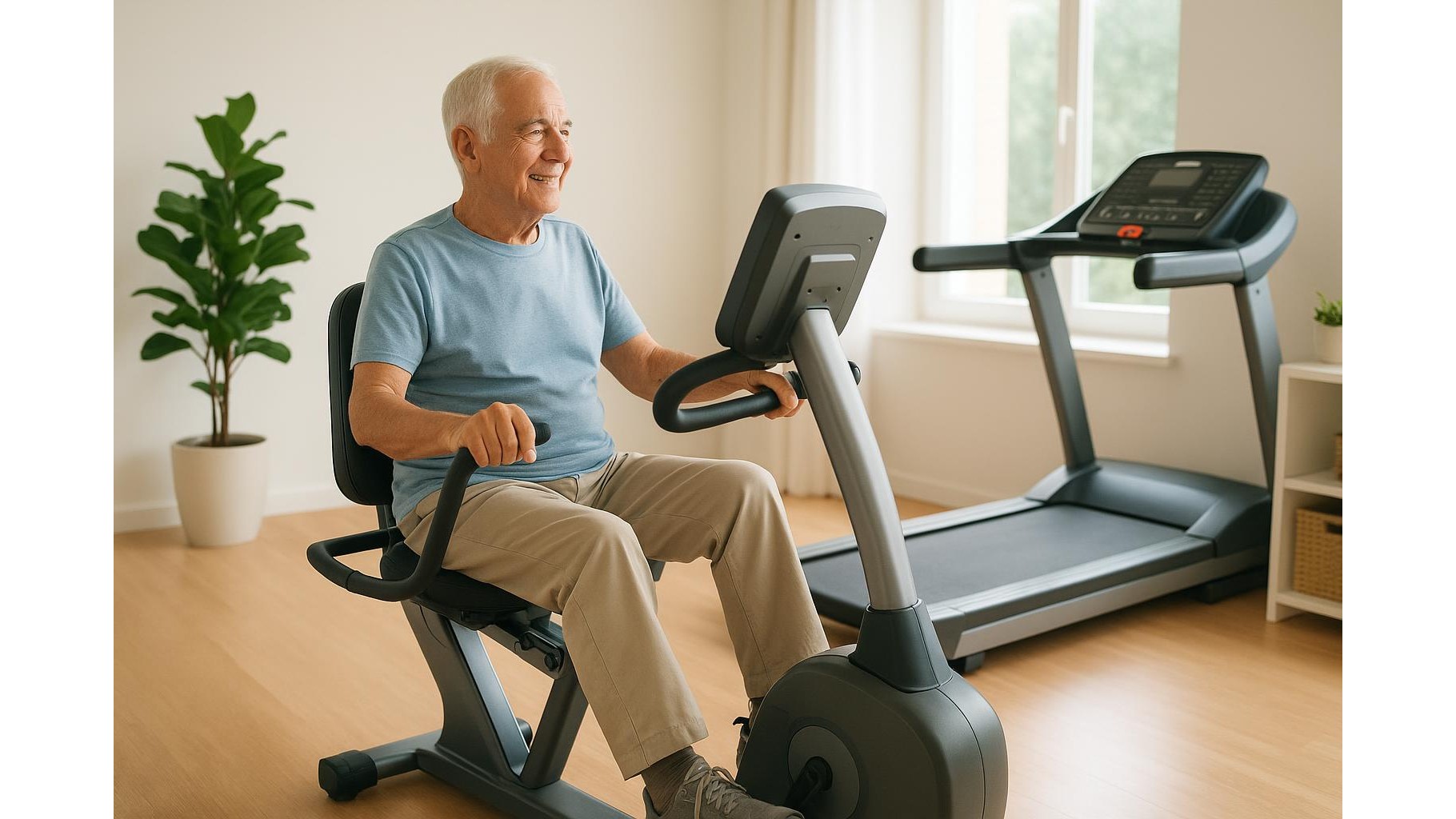
When hand strength is limited, lower body cardio is often the safest way to maintain fitness. Recumbent exercise bikes with a step-through frame are ideal: the user can sit down from the side without having to swing a leg high over the frame, reducing the risk of losing balance. A high-backed, padded seat with lumbar support and wide, stable foot pedals with adjustable straps keeps the body secure even if grip is weak. Side handles near the seat should be thick, softly contoured and positioned so forearms can rest comfortably without constant squeezing. When browsing products such as a recumbent bike on Amazon, inspect images for the size of the step-through gap, the adjustability of the seat slide and the presence of stabiliser bars that make getting on and off feel solid and predictable.
Ellipticals and cross-trainers with safer handles
Ellipticals can be joint-friendly for seniors but only if the handles and stride mechanics are forgiving. For weak grip, prioritise models with fixed inner handles in addition to moving arms, so the user has a stable point to hold when starting or stopping. Handles should have non-slip rubber or foam coverings and a diameter large enough to rest the palm rather than pinch with the fingers. A low step-on height and short to moderate stride length make it easier for shorter or less mobile users to maintain control. Some compact ellipticals or under-desk-style trainers remove the need to grip at all, relying on a nearby chair or rail for balance. For home setups, consider placing the machine near a wall bar or solid support so users can steady themselves without relying solely on the onboard hand grips.
Console ergonomics, buttons and daily usability
Even the safest frame can become frustrating if the console is difficult to see or operate. Seniors with weak grip benefit from large, high-contrast displays with simple data: speed, time, distance and heart rate are usually enough. Look for big, spaced-out buttons that give clear tactile feedback and don’t require precision finger strength—flat, touch-sensitive panels can be harder to use. A dedicated start/stop button, quick-access speed controls and clear labels reduce confusion. If vision is limited, backlit screens and bold fonts are important. Finally, ensure power switches, incline levers and resistance dials are reachable from a seated or stable standing position, so the user never has to lean or twist while the machine is moving, which could compromise balance and safety.
Choosing home cardio machines for seniors with weak grip is about matching safety features with real-world abilities. Prioritise extended, padded handles, secure safety systems, step-through designs and user-friendly consoles over high top speeds or complex training programs. Whether you opt for a treadmill, recumbent bike or elliptical, spending time on these design details will help older adults feel more confident, stay active consistently and use their equipment daily without fear or frustration.