Long after your last burpee, a brutal home HIIT session can leave you buzzing, restless and tight. A smart cooldown routine does far more than tick a box: it helps downshift your nervous system, ease muscle tension and set you up for better recovery and sleep. Below you’ll find a simple, floor-based sequence that blends breathing drills and mobility work you can do in 10–15 minutes with minimal home gym equipment.
Set the stage for recovery
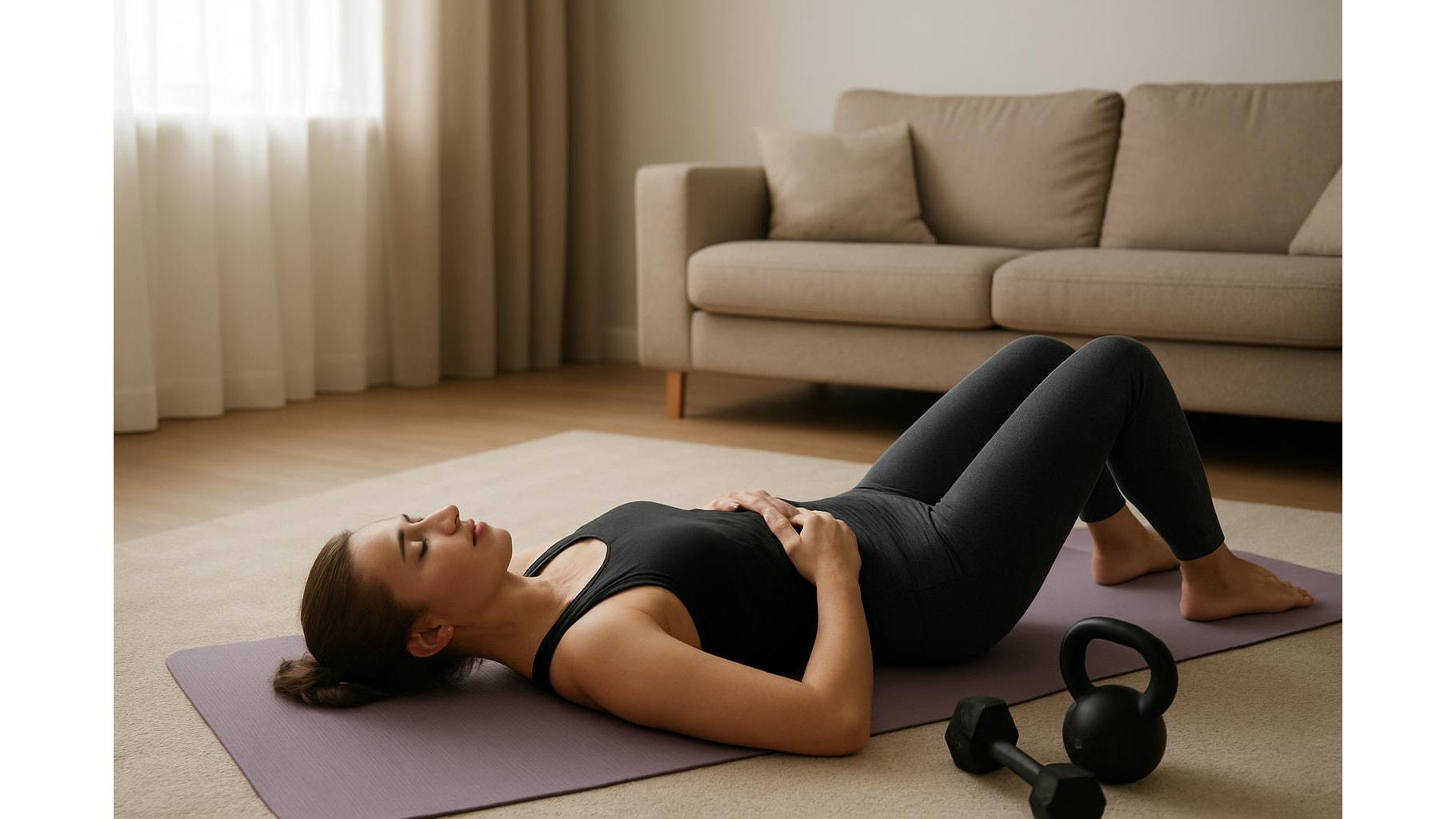
Before you drop straight from sprints to the sofa, create a deliberate transition into recovery. Dim the lights if you can, silence notifications and lie down on a comfortable surface such as a thick exercise or yoga mat. Slowing down starts with your environment: fewer stimulants mean it’s easier for your body to shift from a fight-or-flight state into a rest-and-digest mode. Think of this phase as telling your brain the hard work is over and it’s safe to relax. A calm setting also makes it more likely you’ll actually stick to your cooldown instead of skipping it.
Breathing drills to calm the nervous system
Begin with 3–5 minutes of focused diaphragmatic breathing. Lie on your back, knees bent, feet flat, one hand on your chest and one on your belly. Inhale slowly through your nose for a count of four, feeling the belly rise, then exhale through your nose or softly through pursed lips for a count of six. The longer exhale signals your parasympathetic nervous system to kick in, helping reduce post-workout jitters and racing thoughts. Keep your jaw loose and shoulders heavy on the floor. If your mind drifts back to your workout, gently bring attention to the feeling of your ribs expanding and relaxing with each breath.
Spinal and hip mobility on the floor
Once your breathing has slowed, move into gentle mobility exercises for the spine and hips, which take a beating during home HIIT. Try 8–10 slow cat-cow movements from a hands-and-knees position, syncing motion with your breath: inhale as you arch and open the chest, exhale as you round and gently draw the ribs in. Follow with 90/90 hip rotations seated on the floor, rotating your knees side to side without forcing range. Focus on smooth, pain-free motion, not stretching to extremes. This type of controlled mobility restores joint comfort and circulation while keeping your nervous system in a calmer state.
Gentle stretches for legs and glutes
After intense squats, lunges and jumps, your quads, hamstrings and glutes benefit from slow, floor-based static stretches. Lying on your back, loop a towel or band around one foot and ease into a supine hamstring stretch for 30–45 seconds per side, stopping well before sharp discomfort. Follow with a figure-four glute stretch, crossing one ankle over the opposite knee and gently drawing the legs toward you. Use your exhale to release tension rather than pulling harder. The goal is to downregulate, not to chase max flexibility; when the nervous system feels safe, muscles naturally let go of excess tightness.
Upper-body release and posture reset
HIIT often involves pushing, pressing and supporting your bodyweight, which can leave your chest tight and upper back fatigued. Incorporate a simple chest-opening stretch by lying on your side with your hips and knees bent, arms straight out in front, then slowly opening the top arm into a book-opening rotation to stretch the chest and upper spine. Hold the open position for a few breaths before returning and repeating 6–8 times per side. Then sit tall and perform gentle neck and shoulder stretches, such as ear-to-shoulder holds and cross-body shoulder stretches, again paired with slow exhalations. This sequence helps reset posture after lots of plank and push-up variations.
Closing the cooldown and building the habit
Finish by returning to 1–2 minutes of calm nasal breathing in a comfortable position, noticing how your heart rate and overall energy feel compared with the end of your last interval. Mentally label the session as complete: acknowledge the work you’ve done and the recovery you’ve earned. Building a consistent post-workout cooldown habit will not only reduce soreness and stiffness but also improve sleep quality and readiness for your next training day. Over time, this short breathing and mobility practice becomes the bridge that carries you from wired and amped up to genuinely relaxed, both in your body and in your mind.