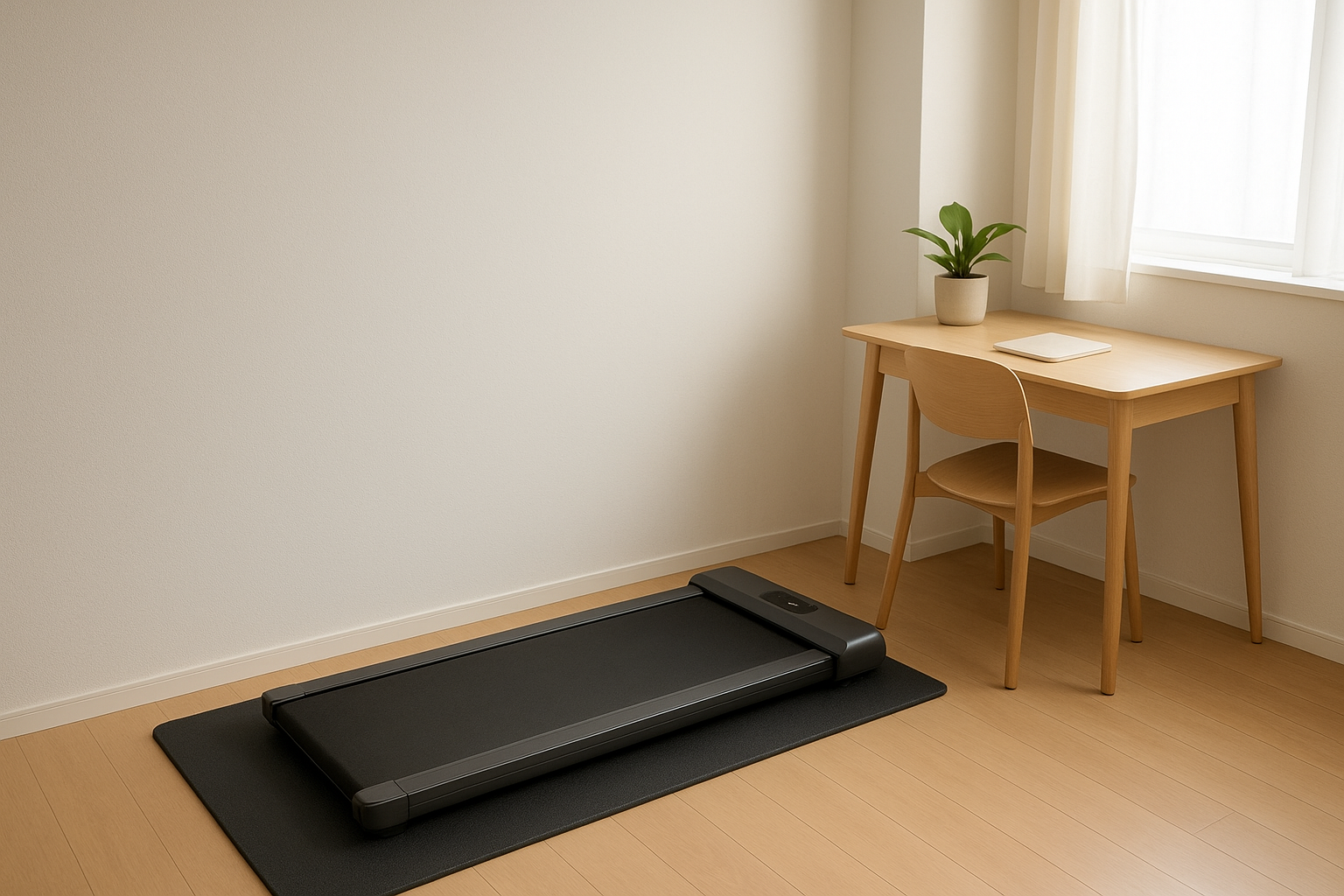
Creating a quiet home cardio corner is possible even in small flats, thin‑walled buildings and homes with kids. The key is choosing low‑impact machines, controlling vibration and planning smart placement. With the right set‑up, you can walk or jog late at night, train during naps or squeeze in steps while working, without upsetting neighbours or waking the family.
Choosing low-noise cardio equipment
For apartments and shared spaces, start by favouring low‑impact, low‑vibration machines. Under‑desk treadmills and walking pads are ideal because they use smaller motors and encourage walking or light jogging instead of pounding sprints. A good example is the THERUN Folding Treadmill for Home, which offers a 2.5HP motor, a 1–10 km/h speed range and is specifically designed to run quietly in home environments. Look for specs like continuous‑duty motors around 2–2.5HP, cushioned decks and user reviews that mention low noise and smooth operation.
Technical criteria to minimise noise and vibration
To keep noise and vibration under control, check a few technical details before buying. A heavier steel frame helps absorb movement instead of transferring it into the floor. A multi‑layer, non‑slip running belt with shock absorption cushions – like the six shock pads on the THERUN walking pad – reduces impact on both your joints and your building structure. Aim for maximum speeds between 6–10 km/h if you mostly walk or lightly jog; high‑speed motors can be louder and encourage noisier running styles. Finally, confirm the weight capacity is well above your body weight, as an overloaded machine tends to rattle, flex and transmit more vibration.
Best placement for quiet home cardio corners
Even the quietest treadmill can disturb others if badly positioned. Whenever possible, avoid placing cardio machines directly on shared walls or above a neighbour’s bedroom. Corners near internal walls, away from radiators and doors, usually perform better acoustically. If you live in a flat, try to position the treadmill over a supporting wall rather than in the middle of a flexible floor area. Compact models like the THERUN Folding Treadmill for Home are perfect for turning a home office, box room or hallway into a low‑noise training zone, then folding and sliding under a bed or sofa when not in use.
Floor protection and sound-damping solutions
The right floor protection can make a dramatic difference to perceived noise. At minimum, place your treadmill or walking pad on a thick rubber mat or a set of interlocking gym tiles to decouple it from hard floors. This reduces both impact sound and low‑frequency vibration travelling into the structure. For extra protection in flats, add a second layer – for example, a dense rubber mat under the machine and a softer foam or carpet layer beneath that. Check that the machine’s transport wheels and feet sit fully on the mat and that the surface is level; an uneven base can cause rocking, rattling and extra mechanical noise.
Training routines suited to shared spaces
Once your quiet cardio corner is ready, adapt your training routines to the environment. Focus on walking workouts, incline‑style intervals (if available) and light jogging rather than all‑out sprint sessions. Gradually accelerate and decelerate to avoid sudden thumps on the deck. If you are training late at night or early in the morning, keep speeds moderate and choose steady‑state sessions or gentle intervals within the 4–7 km/h range. Compact, quiet units such as the THERUN Folding Treadmill for Home let you walk while working, binge‑watching series or supervising children, making daily movement easier without disturbing the household.
By combining a quiet, shock‑absorbing cardio machine with smart placement and proper floor damping, you can build a home cardio corner that is neighbour‑friendly and family‑friendly. Choosing a compact folding treadmill like the THERUN under‑desk model, using rubber mats and moderating your workout style will significantly cut noise and vibration. The result is a sustainable, low‑stress way to stay active at home, whatever your building type or training schedule.