Using a percussion massage gun in your home gym can be a game changer for recovery, stiffness and everyday aches. However, these powerful devices need to be used with care, especially on the neck, back and legs. In this guide, we’ll focus on safe technique, ideal settings, areas to avoid and simple routines you can follow around your workouts to boost recovery without risking injury.
Understanding how a percussion massage gun works
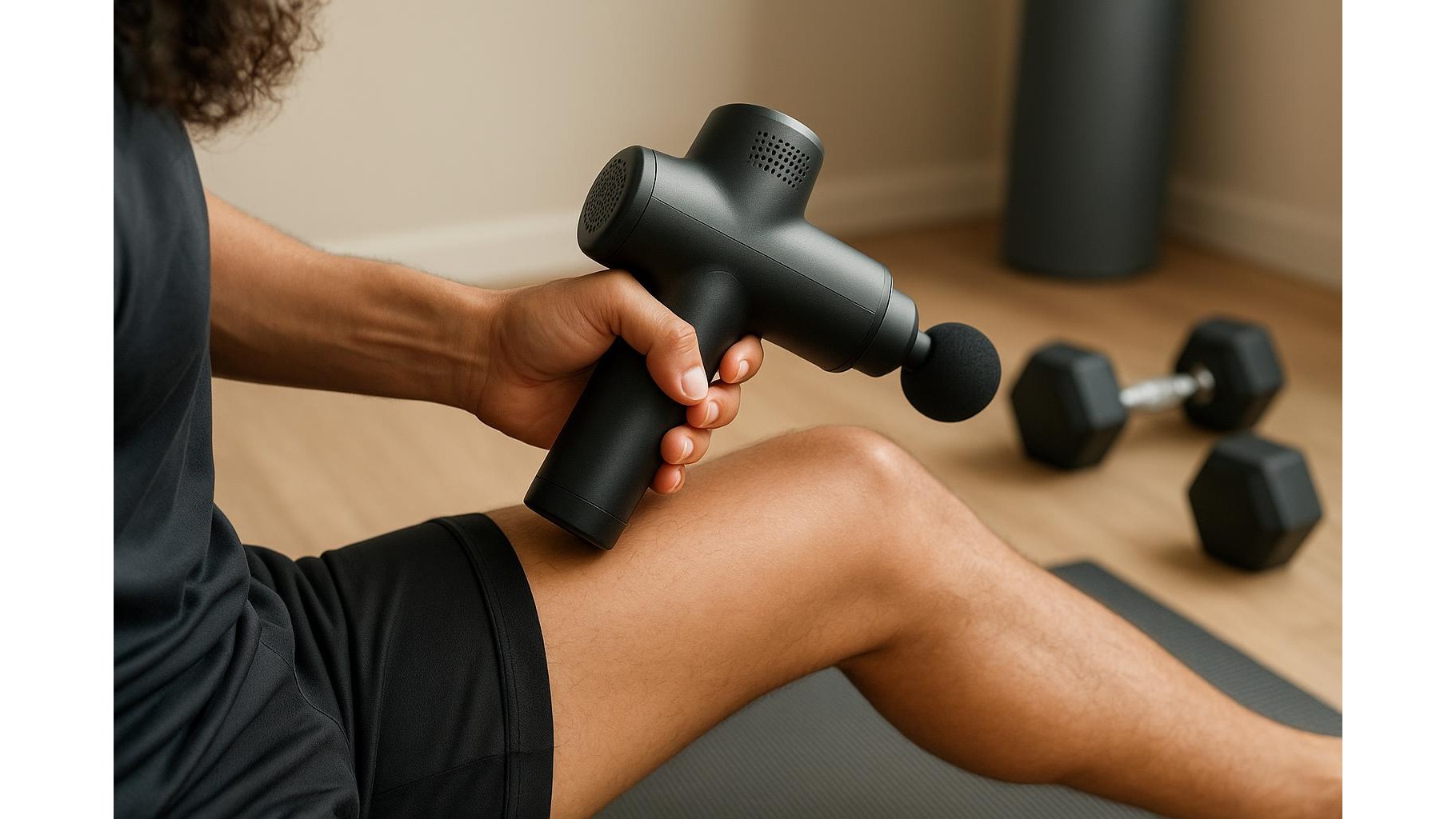
A percussion massage gun delivers rapid pulses deep into the muscle tissue, helping to improve blood flow, reduce muscle tension and support recovery after training. Most devices offer multiple speed levels and interchangeable massage heads, from softer, cushioned tips to firmer, bullet-shaped attachments. For home use on the neck, back and legs, start with a low to medium speed and a soft or ball-shaped head rather than hard, pointed tips. Move the gun slowly over the muscle belly and avoid pressing directly on bones, joints or the spine. Sessions should feel intense but never painful, sharp or numbing.
General safety rules and body areas to avoid
To use a massage gun safely at home, there are a few non‑negotiable rules. Never use it on the front or side of the neck, over the throat or carotid arteries, and never over the spine itself – only the muscles running alongside it. Avoid using a massage gun on bruises, open wounds, recent sprains, varicose veins or areas with reduced sensation. If you have blood clotting issues, heart conditions, are pregnant or have had recent surgery, consult a medical professional before using it. Limit each muscle group to around 1–2 minutes, keep the gun moving and stop immediately if you feel dizziness, tingling, sharp pain or unusual discomfort. Children should not use a massage gun unsupervised.
Safe routines for legs: quads, hamstrings and calves
For lower body recovery in a home gym, a simple routine for legs can target quads, hamstrings and calves. Sit or lie comfortably and choose a soft round head on a low speed. On the quadriceps (front of the thigh), start just above the knee cap and glide up toward the hip, staying in the middle of the muscle and avoiding the knee joint itself. Spend about 60–90 seconds per leg. For the hamstrings, support your leg on a bench and move the gun from just above the back of the knee towards the glutes, without going onto the back of the knee. For the calves, sweep from the Achilles area upward, without pressing on the Achilles tendon. Use shorter, gentle passes before and after a workout, and slightly longer sessions on rest days.
Safe routines for back and shoulders
When working on the back and shoulders, good positioning is crucial for safety. Never place the massage gun directly on the spine; instead, work the muscles on either side, such as the erector spinae and upper back muscles. Lean against a wall or lie on your side so you can relax the target area while keeping control of the device. Use a low to medium setting and a rounded head, gliding slowly over the upper back, traps and rear shoulders for 30–60 seconds per area. Avoid the shoulder joint itself and the bony parts of the shoulder blade and neck. If you cannot comfortably reach certain spots, ask a partner to help, making sure they avoid directly hammering bony areas or the lower back near the kidneys.
Timing and integration with your home workouts
To get the most from a percussion massage gun in your home gym routine, think about timing and frequency. Before training, use very short, light passes (around 20–30 seconds per muscle group) to increase blood flow and prepare the tissues – this works well on quads, glutes, calves and upper back. After workouts, extend to 1–2 minutes per major muscle to reduce tightness and support recovery, always on comfortable intensity levels. On rest days, a slightly longer but still gentle session can help with general stiffness from sitting or working at a desk. Combine massage gun work with dynamic stretching, hydration and adequate sleep for the safest and most effective recovery plan at home.
Used correctly, a percussion massage gun can be a powerful ally for managing tension in the neck area, back and legs without leaving your home gym. Respecting basic safety principles – avoiding the front of the neck and spine, limiting time on each muscle and keeping intensity comfortable – allows you to enjoy better mobility and faster recovery. Integrate short, focused routines before and after your workouts, listen to your body and when in doubt, reduce pressure and duration. This balanced approach lets you benefit from modern recovery technology while keeping your training both effective and safe.