After a heavy round of kettlebell swings, goblet squats and dumbbell complexes in your living room, it is tempting to just collapse on the sofa. Yet those first post-workout minutes are the perfect window to guide your body back to balance. A simple breathing ladder cool-down can lower your heart rate, improve recovery and calm your nervous system in under 10 minutes, using nothing more than your own breath and your existing home gym equipment.
What is a breathing ladder cool-down?
A breathing ladder is a structured way of pairing your breath with light movement after intense kettlebell and dumbbell circuits. Instead of stopping abruptly, you perform very easy reps of familiar exercises while progressively extending your exhale or the number of breaths between sets. For example, you might do 5 light kettlebell deadlifts, then take 3 slow breaths; next round, 5 deadlifts and 4 breaths; then 5 and 5, and so on. The “ladder” is the gradual change in breathing, not intensity. Because the load is light and the pace is slow, your heart rate drops steadily while your mind focuses on the rhythm of inhaling through the nose and exhaling softly through the mouth.
Setting up your home space for breathing ladders
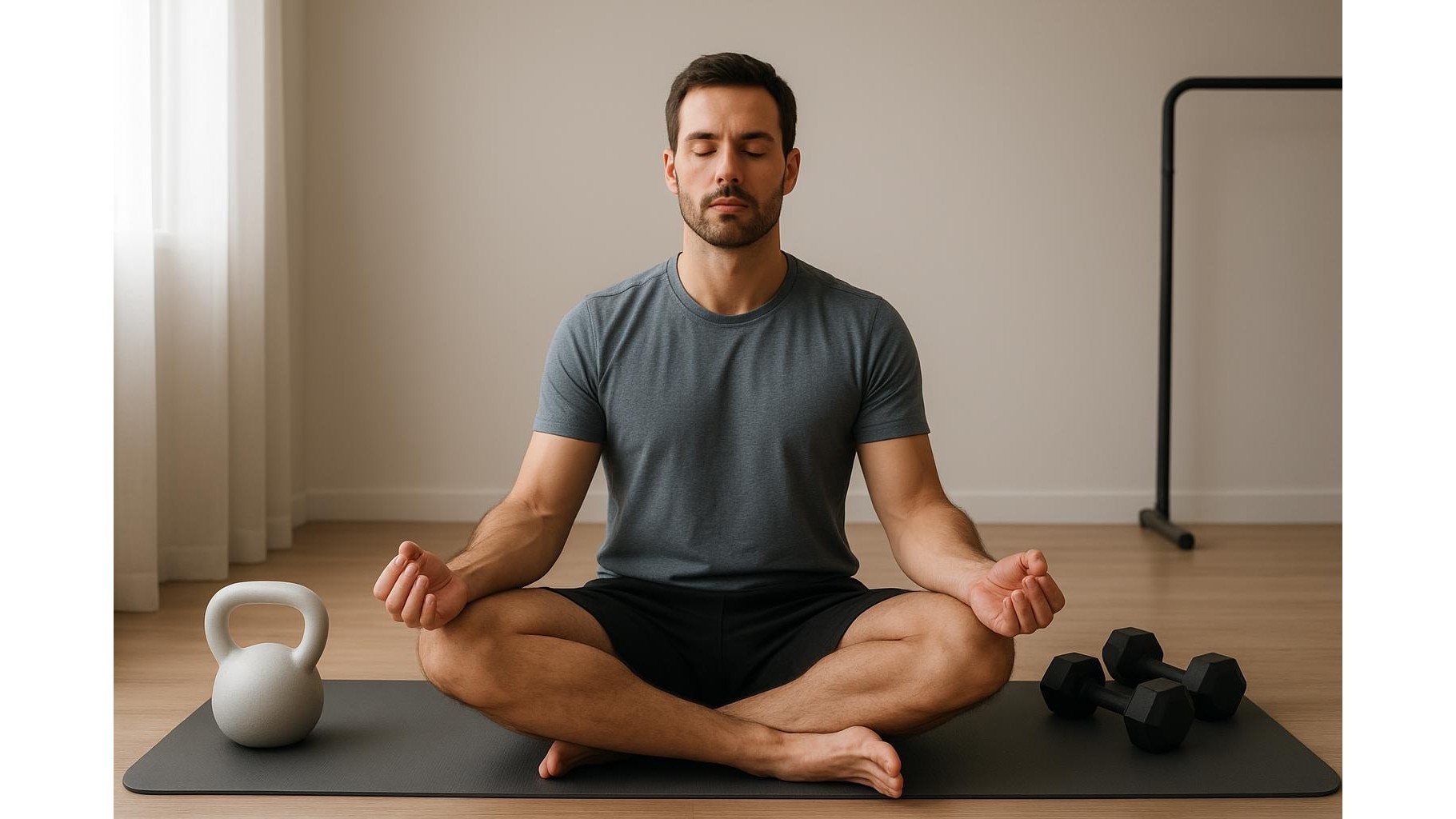
To get the most from a breathing ladder, you want a safe, uncluttered corner of your home gym. Place your favourite kettlebell or dumbbells on a mat so you can transition smoothly from your main circuit to your cool-down without breaking flow. Keep the weight selection modest: if you used a 16 kg kettlebell for swings, you might drop to 8–10 kg for the ladder. The goal is technique and relaxation, not more fatigue. Dim the lights if possible, silence notifications and stand barefoot to increase your sense of grounding. A simple timer on your phone can help you keep the cool-down to 5–10 minutes so it is easy to repeat after every session.
Sample breathing ladder after a kettlebell circuit
After your main kettlebell workout (for example, swings, goblet squats and presses), set one light kettlebell on the floor and follow this 6-minute cool-down protocol. Round 1: perform 5 slow kettlebell deadlifts, then stand tall, close your mouth and take 3 nasal breaths, emphasising a long, gentle exhale. Round 2: repeat 5 deadlifts, then take 4 breaths. Continue adding one breath per round until you reach 8 breaths, then walk slowly for 1–2 minutes while breathing quietly through the nose. If your heart rate is still elevated, lie on your back in a 90/90 position (feet on a chair, knees bent) and take 10 more slow breaths. This sequence keeps your movement familiar but shifts the focus squarely to recovery and nervous system down-regulation.
Breathing ladder with dumbbells and floor work
If you prefer dumbbell circuits, you can use the same idea with upper- and lower-body patterns. Choose a light pair of dumbbells and perform 6–8 controlled dumbbell Romanian deadlifts, then set the weights down and take 4 slow breaths. Next, do 6–8 light dumbbell rows, followed by 5 breaths. Continue alternating the two movements for 4–6 rounds, adding one breath each time while keeping the reps and load constant. For the final 2–3 minutes, move to the floor for a box breathing ladder: inhale for 3 seconds, hold for 3, exhale for 3, hold for 3; then gradually extend to 4 or 5 seconds per phase. This blend of easy muscular work and structured breathing accelerates the shift into a parasympathetic state, helping your body start the repair process sooner.
Key breathing cues to maximise recovery
The power of breathing ladder cool-downs lies in the details. Breathe primarily through the nose whenever possible, keeping the mouth soft and jaw relaxed. Aim for a slightly longer exhale than inhale, as this favours activation of your parasympathetic nervous system and a drop in heart rate. Keep your shoulders relaxed and let the breath expand your lower ribs and abdomen rather than lifting your chest. Move the weights with impeccable technique but minimal effort—if you feel strain, lighten the load or switch to bodyweight variations like air squats or hip hinges. Finish each session by noticing how your body feels: calmer breathing, less tension and a clearer head are signs that the ladder has done its job.
By adding a short breathing ladder cool-down to the end of your kettlebell and dumbbell sessions at home, you bridge the gap between hard training and genuine recovery. In less than 10 minutes, you can guide your heart rate down, calm your nervous system and signal to your body that the workout stress is over. Over time, this simple habit can improve sleep, reduce post-session fatigue and make your home strength training both more sustainable and more enjoyable.