Athletes who live and train with scoliosis or who wear a back brace face specific challenges when choosing home workout outfits. Seams that most people never notice can dig into sensitive areas, waistbands can collide with a brace, and fabrics that don’t stretch correctly can increase pressure instead of supporting movement. Selecting the right clothing can make the difference between a painful session and a productive training routine. This guide focuses on seam placement, waist height, fabric stretch and smart layering so you can move more freely and reduce rubbing and pressure during home workouts.
Prioritising seamless designs and low-friction seams
For athletes with scoliosis or a back brace, seams are often the first source of discomfort. Look for seamless leggings and tops that minimise stitched panels along the spine, ribs and hips, where braces or curves may already create pressure points. If you cannot find fully seamless gear, choose pieces with flatlock seams that lie flat against the skin and avoid bulky overlocked stitching. Place particular attention on the back panel of tops and sports bras: a wide, smooth back free from central vertical seams will rub less under a brace or along a prominent curve. Checking product photos for inside-out images can help you identify designs with the cleanest interior finish and the least potential for friction during dynamic home workouts like bodyweight circuits or resistance band training.
Choosing waist heights that work with your brace
Waist height is crucial when training with a back brace. Many rigid braces end around the lower ribs or high on the hips, so traditional mid-rise leggings or shorts can end up cutting directly across the edge of the brace, leading to pinching or chafing whenever you bend or twist. Experiment with high-waisted leggings that sit well above the brace or, alternatively, low-rise styles that stay beneath it. High-waisted designs are often better for core stability work because they offer gentle compression and help keep any under-brace tank top in place. For home sessions that involve lots of sitting or floor work, choose a wide, soft waistband without drawstrings, buttons or zips, which can dig into the abdomen or interfere with brace straps. The goal is to create a clean, uninterrupted layer over or under the brace that allows free breathing and trunk movement.
Selecting soft, stretchy and breathable fabrics
Fabric choice matters as much as cut. Seek out four-way stretch materials that move easily both horizontally and vertically so they adapt to your posture and brace without pulling. Blends that include elastane or spandex provide the flexibility needed for spine-friendly exercises such as cat–cow, bird dog or gentle strength work. At the same time, prioritise soft, brushed fabrics that feel smooth against sensitive skin, especially in areas where the brace edges sit. Breathable, moisture-wicking textiles help reduce sweat build-up under the brace, which can otherwise increase friction and irritation. For tops, lightweight, quick-drying materials are ideal, especially if you perform higher-intensity home workouts. Avoid very stiff compression garments over the brace: they can restrict chest expansion and may increase pressure over bony landmarks like the ribs or iliac crests.
Layering strategies to reduce rubbing and pressure
Thoughtful layering can significantly reduce rubbing and pressure during home workouts. Start with a thin, seamless base layer tank or T-shirt that covers the full area under your brace; this acts as a barrier between the brace and your skin. Look for longline designs that extend past the brace edges so they do not roll up during movement. Over this, add lightweight leggings or shorts with a smooth waistband and a soft, breathable top that can go either over or under the brace straps depending on your comfort and your clinician’s recommendations. When training in cooler rooms, a stretchy mid-layer like a soft zip-free hoodie can keep muscles warm without adding bulky seams along the spine. Always check that each additional layer does not create new pressure points, especially when performing rotation, side planks or resistance band rows.
Sports bras and support tops for asymmetric torsos
For people with scoliosis, chest and ribcage asymmetries can make standard sports bras uncomfortable. Look for bras with wide, padded straps and a broad underband that distributes pressure more evenly across the shoulder girdle and upper ribs. Racerback designs can work well if the back panel is smooth and sits either completely above or below the top of your brace. Avoid prominent clasps or hooks positioned directly over the spine; pullover styles or front-closure designs often cause less irritation under a back brace. Removable pads can be adjusted or taken out on the more compressed side of the chest, allowing a more balanced feel when you lie on your back for floor exercises. Ideally, the bra should feel secure without cutting into the trapezius muscles or collarbones, so you can focus on form during home strength training rather than on constant readjustment.
Adapting outfits to your specific brace and workouts
Because every scoliosis curve and back brace is unique, consider your typical home workouts when selecting clothing. For sessions dominated by mat work and stretching, prioritise ultra-soft fabrics and seamless designs that remain comfortable under extended contact with the floor. If you do more standing strength or cardio, ensure your waistband and straps stay put during squats, lunges and light impact. Keep a small rotation of tried-and-tested outfits so you can quickly choose combinations you know will not rub at key contact points. Above all, listen to your body: the best home workout outfits are those that support your alignment and breathing while keeping skin irritation to a minimum, helping you build consistency, confidence and strength despite the challenges of scoliosis or brace wear.
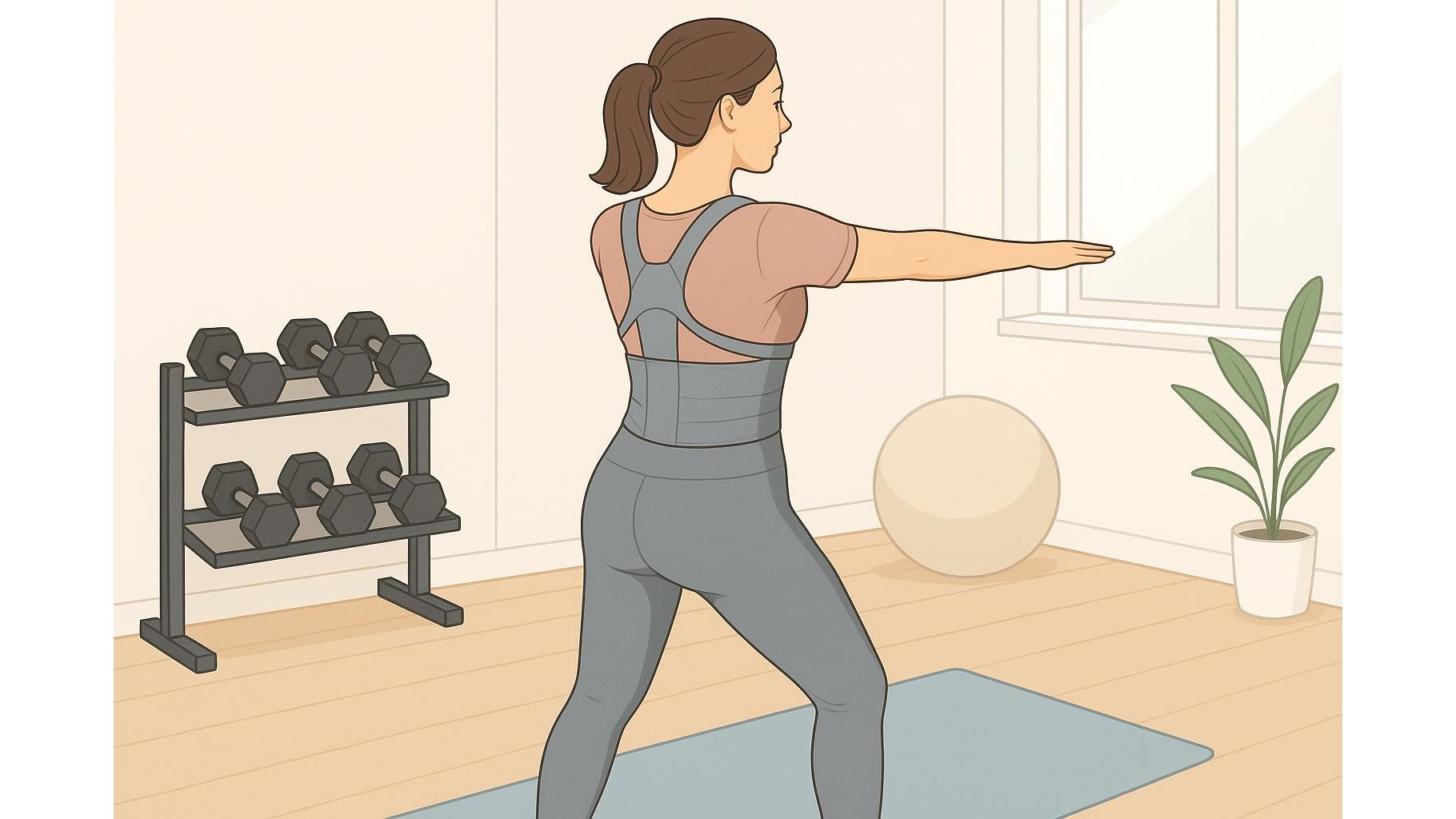
A simple, clean illustration of an athlete wearing a back brace and soft, seamless workout clothes while exercising in a home gym, highlighting smooth seams, high-waisted leggings and layered tops.