Choosing a fan bike for your home gym is not only about resistance and price. The type of drive system – belt drive or chain drive – has a huge impact on noise level, maintenance, feel of the ride and long‑term durability. Understanding these differences helps you pick a quiet air bike that fits your training style and your living situation, whether you are in a flat with neighbours or a house with a dedicated gym space.
Belt drive vs chain drive: what’s the real difference?
Both systems connect the pedals to the fan, but they behave differently. A belt‑drive fan bike uses a reinforced rubber or polyurethane belt, similar to what you find on many modern indoor bikes. It runs smoothly and quietly, with very little vibration. A chain‑drive fan bike uses a bicycle‑style metal chain and sprockets. This gives a more mechanical, “bike‑like” feel with tiny pulses as the chain engages the cogs. Chain systems are generally a bit louder and require more frequent adjustment and lubrication, but some riders enjoy the slightly raw, old‑school training sensation.
Noise levels in small homes and apartments
If your priority is a quiet air bike for home cardio, belt drive almost always wins. The belt absorbs a portion of the fan’s vibration and eliminates the rattling sound that can come from a dry or loose chain. This can make a big difference in apartments, where you may be training early in the morning or late at night. Even on a belt‑drive model, a large fan will generate airflow noise when you sprint, but the underlying mechanical sound is noticeably softer and more consistent. Chain‑drive fan bikes tend to produce a higher‑pitched metallic noise, which can travel through walls and floors more easily, especially on older buildings with poor insulation.
Maintenance, durability and long‑term costs
When comparing belt‑drive vs chain‑drive fan bikes, think about how much time you want to spend on maintenance. A belt drive is effectively maintenance‑light: it does not need lubrication, rarely needs tensioning, and is protected from rust. Over many years, the belt may eventually stretch or wear and need replacement, but this is infrequent for home use. A chain drive requires more hands‑on care: periodic cleaning, oiling and tensioning to prevent skipping or excessive noise. However, chains are robust and inexpensive to replace. For heavy, high‑intensity use in a garage gym, a well‑maintained chain drive can still be extremely durable and reliable.
Training style: intervals, steady cardio and family use
Your training style should guide the drive system you choose. If you mainly do steady‑state cardio while watching TV or listening to podcasts, a belt‑drive air bike will feel smoother and quieter, making long sessions more pleasant for you and everyone in the household. For HIIT and brutal interval workouts, both systems deliver unlimited air resistance, but chain‑drive bikes transmit a bit more vibration and may feel more aggressive, which some athletes like. If multiple people in your home will use the bike – especially beginners – the low noise, low‑maintenance nature of a belt drive usually makes it the more family‑friendly, “set‑and‑forget” choice.
Space, budget and where the bike will live
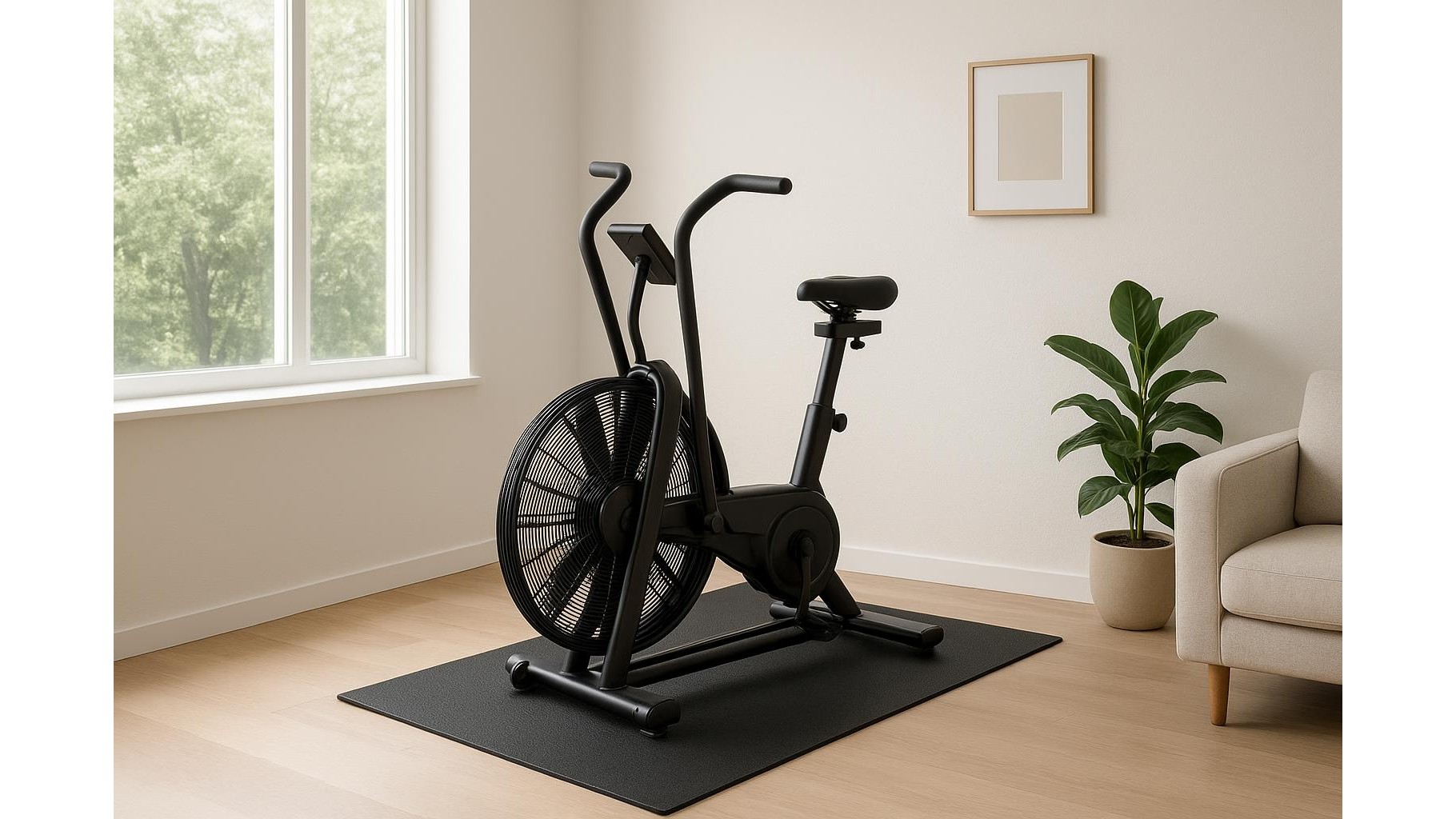
Where you place your home fan bike also matters. In a small flat or a shared living room, a belt‑drive air bike offers a cleaner, quieter profile and typically pairs well with floor mats and basic sound‑dampening measures. For a garage, shed or dedicated gym room where noise is less of a concern, a chain‑drive fan bike can be a good way to save money while still getting tough conditioning workouts. Consider your budget: belt‑drive systems are often found on mid‑ to higher‑end models and may cost more upfront but can reduce long‑term hassle. Also think about how often you will move the bike; both systems come in compact frames, but a quieter belt‑drive model is easier to live with in multi‑purpose spaces.
How to choose the right drive for your home cardio
To choose a quiet fan bike for your home, start by ranking your priorities: noise level, maintenance, budget and training intensity. If you live in an apartment, train when others are sleeping, and want minimal upkeep, a belt‑drive air bike is generally the best match. If you have a separate workout area, do very intense sessions and do not mind basic bike maintenance, a chain‑drive fan bike can still serve you well. Whichever drive you choose, look for solid build quality, a stable frame, a comfortable saddle and adjustable handles so you can focus on your workouts rather than on noise or mechanical issues.
In summary, belt drive vs chain drive is more than a technical detail: it shapes your entire home cardio experience. Belt‑drive fan bikes are quieter and easier to live with in shared spaces, while chain‑drive options can be cost‑effective and rugged for heavy use. By matching the drive system to your home layout, neighbours, schedule and training goals, you can invest in a fan bike that keeps you consistent, comfortable and motivated to ride.