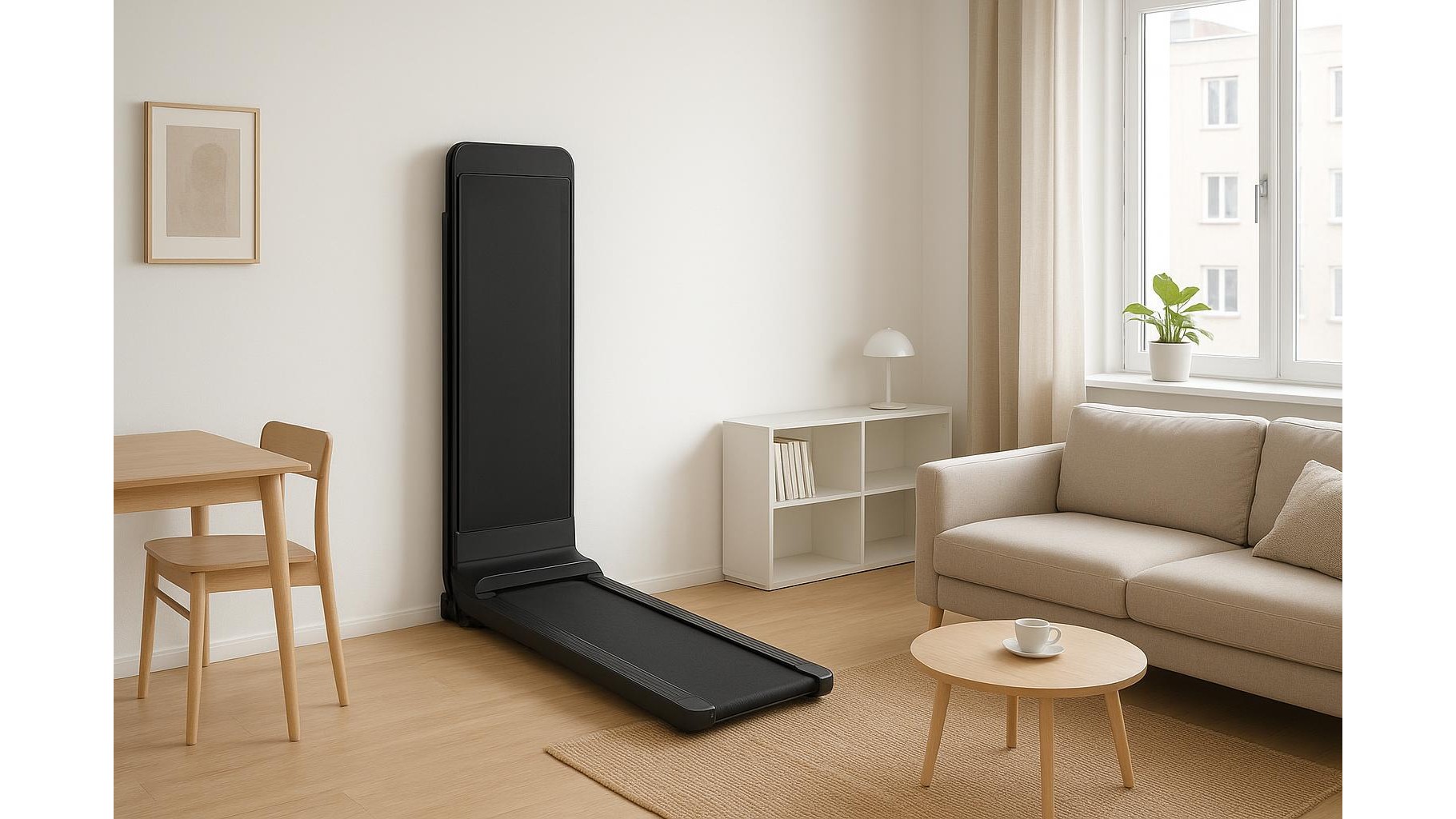
Living in a tiny flat or studio does not mean giving up on indoor cardio. Fold-out wall treadmills promise full-sized running decks that disappear against the wall when you are done. But they are still a niche solution compared with classic folding treadmills on wheels, and they come with very specific demands around mounting, structure and everyday use. This guide looks at who wall-mounted models really suit, what to check before you buy, and how they compare with standard folding options in real apartments.
Who fold-out wall treadmills really suit
Wall-mounted fold-out treadmills are best for users with very limited floor space but a reasonably solid wall and a clear area in front of it. Think studio flats or bedsits where a traditional folding treadmill would still eat into the living area, or long narrow corridors that can host a deck when opened. They suit people who mainly want walking and light jogging, who are happy with a minimalist, semi-permanent setup and who do not mind a bit of DIY or paying for professional installation. If you rent, you need a landlord who accepts heavy-duty wall fixings. Families with active kids, very heavy runners or users who plan to sprint several times a week are often better served by a classic folding treadmill with a stronger frame and thicker deck.
Why most “compact” treadmills are not truly wall-mounted
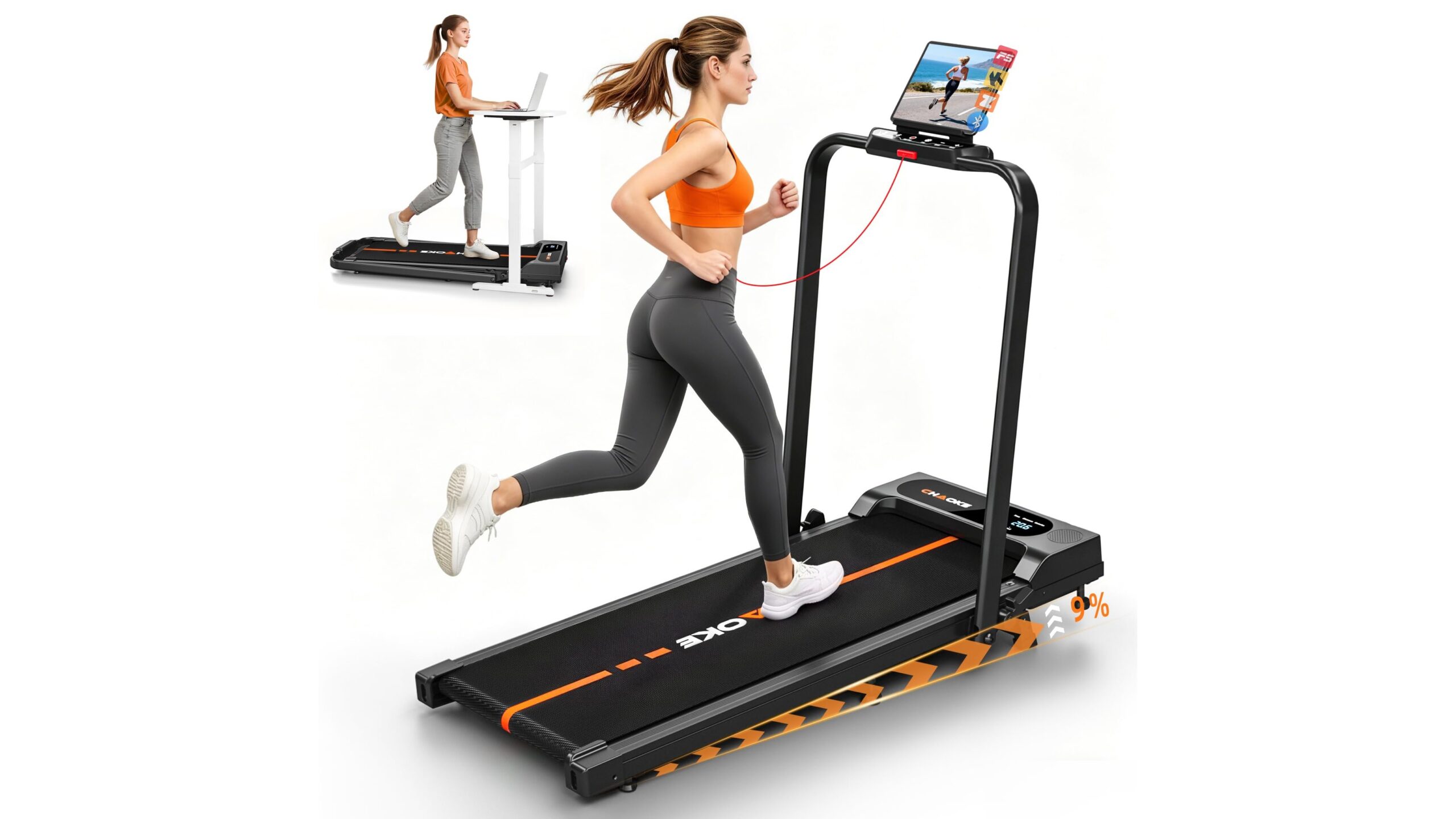
On the UK market, many products marketed as compact or mini treadmills are actually flat folding treadmills designed to slide under a bed or stand against a wall, not true fold-out wall systems. For example, the Citysports Treadmill WP2 (available on Amazon UK) is an ultra-slim under-desk style model that folds almost flat for storage and can be leaned upright behind a door, but it does not bolt to the wall or hinge down like a Murphy bed. The same is true for most under-desk walkers and compact running machines: they save space, but they still occupy floor area when in use and do not require structural mounting. When you shop, read the description carefully: if it does not clearly mention wall mounting brackets or hinge systems, assume it is a standard floor-standing model.
Key safety and mounting checks before you buy
With genuine fold-out wall treadmills, the most important factor is safe mounting. You need a structural wall – brick, block or reinforced concrete – that can handle the combined load of the frame and a user running or walking. Partition stud walls, plasterboard and old crumbly masonry are red flags unless a professional confirms they can be reinforced. Always check the manufacturer’s specified user weight limit and add a safety margin. The bracket system should include multiple heavy-duty anchor points, locking pins or latches to keep the deck stable when in use and secure when stowed. Because these products are relatively rare in the UK, many people end up evaluating imported or DIY-style systems: in that case, factor in the cost of a qualified installer, and never rely on generic wall plugs or guesswork for a device you intend to run on.
Ceiling height, clearance and noise in tiny homes
Before you commit, measure your space with a tape measure, not just your eyes. You need enough ceiling height to stand on the deck at its highest point without hitting your head – add your height, the deck thickness and at least 10–15 cm of safety clearance. Check front and rear clearance too: you should have roughly 50–60 cm free behind the treadmill in case you stumble. Noise is another big factor in flats. Wall-mounted or slim compact treadmills often have smaller motors and thinner frames, which can mean more vibration transferred into the wall and floor. Using a high-density rubber mat under the base and anti-vibration pads on fixings can help, but if you have downstairs neighbours, set realistic expectations: brisk walking is usually acceptable, heavy running at odd hours rarely is. Read reviews for comments on motor hum, belt noise and resonance in small rooms.
Maintenance, everyday usability and realistic expectations
Even the slimmest wall-friendly treadmill needs regular maintenance: belt lubrication according to the manual, occasional tightening of bolts and hinge checks, plus dusting vents so the motor does not overheat inside a confined wall zone. Think about how often you will actually fold it away; if your routine involves quick, daily sessions, a floor-standing compact treadmill that simply rolls out from a corner may be more convenient than lifting or unlatching a hinged deck every time. The control layout also matters in cramped spaces: remote controls or side rail buttons are easier to reach than consoles mounted high up if the unit is flush to the wall. Be honest about your training style: if you mostly walk while watching TV, a low-profile under-desk style model that stores against the wall might give you 90% of the benefit with far less installation hassle than a true wall-hinged system.
Comparing wall-mounted concepts with classic folding treadmills
Against a standard folding treadmill, the main edge of a wall-mounted or ultra-slim design is visual and spatial minimalism: once stowed, the footprint is close to zero, which is ideal in micro-apartments. However, traditional folding treadmills on wheels usually offer better shock absorption, sturdier handrails, higher top speeds and more training programs, because they are not limited by the need to lie flat against a wall. They are also simpler to set up: no drilling, quicker assembly and easier resale if you move home. For most tiny-home users, the best compromise is often a compact, flat-folding treadmill (that can stand vertically or slide under furniture) rather than a true wall-hinged system. You still gain back your living room when you are done, but you avoid the structural, safety and installation questions that come with hanging your cardio machine off the wall.
In summary, fold-out wall treadmills and ultra-compact alternatives can be smart solutions for very small homes, but they are not magic. They demand careful checks on wall strength, ceiling height, clearance and neighbour-friendly noise, plus consistent maintenance. Weigh those factors against the simplicity and robustness of a classic folding treadmill. Choose the option that fits your space, your building and your training style, and you will be far more likely to actually use it – instead of letting it become just another awkward object in a tiny room.