Choosing the right home workout base layers for sensitive skin can make the difference between a focused session and a frustrating itch-fest. When you’re training at home, you often wear your kit for longer, in warmer rooms and through higher-rep routines, so any rough seam or scratchy fabric shows up fast. This guide looks at the best fabrics, seam constructions, labels, fits and laundry habits to keep irritation, redness and chafing to a minimum.
Choose gentle, breathable fabrics first
The base layer sits directly on your skin, so its fabric matters more than any other part of your outfit. For sensitive skin, look for soft, breathable and moisture-wicking fibres. High-quality polyester and polyamide blends engineered for sports usually pull sweat away rapidly, helping to prevent heat rash and that prickly, damp feeling. If you react to synthetics, try ultra-fine merino wool or smooth bamboo-viscose blends; both breathe well and resist odour. Avoid rough cotton that stays wet, as prolonged moisture against the skin can worsen redness and friction. Scan product descriptions for phrases like “for sensitive skin”, “moisture managing” and “soft touch” and be wary of cheap, stiff-feeling polyester tops.
Prioritise seamless construction and flatlock seams
Even the softest fabric can irritate if the seams are bulky. For home workouts involving a lot of bending, twisting or floor work, focus on seamless or flatlock-stitched base layers. Seamless designs minimise joins that can rub under the arms, across the shoulders and around the waistband. Flatlock seams lie flat against the skin, so you’re less likely to experience hot spots and chafing during high-rep circuits or yoga flows. Avoid thick, overlocked seams with hard ridges, especially on tops you’ll wear with resistance bands or under tighter mid-layers. When browsing, check product photos around the armholes and sides: clean, low-profile stitching usually equals better comfort for irritation-prone skin.
Lose the scratchy tags and rough trims
Labels are a small detail that can cause big problems for sensitive skin. Scratchy neck or side tags can create patches of redness just where sweat collects. Prefer base layers that use printed care labels directly onto the fabric or very soft, heat-bonded tags that don’t have sharp edges. If your favourite top still has a woven label, carefully trim it as close to the seam as possible, avoiding cutting the stitching itself. Also check for other irritants: stiff logos, rubbery chest prints and decorative tape at the neck can all rub during burpees or skipping. A minimalist design with soft, flexible branding is usually kinder to reactive skin and better for longer home training sessions.
Get the right fit to reduce rubbing and hot spots
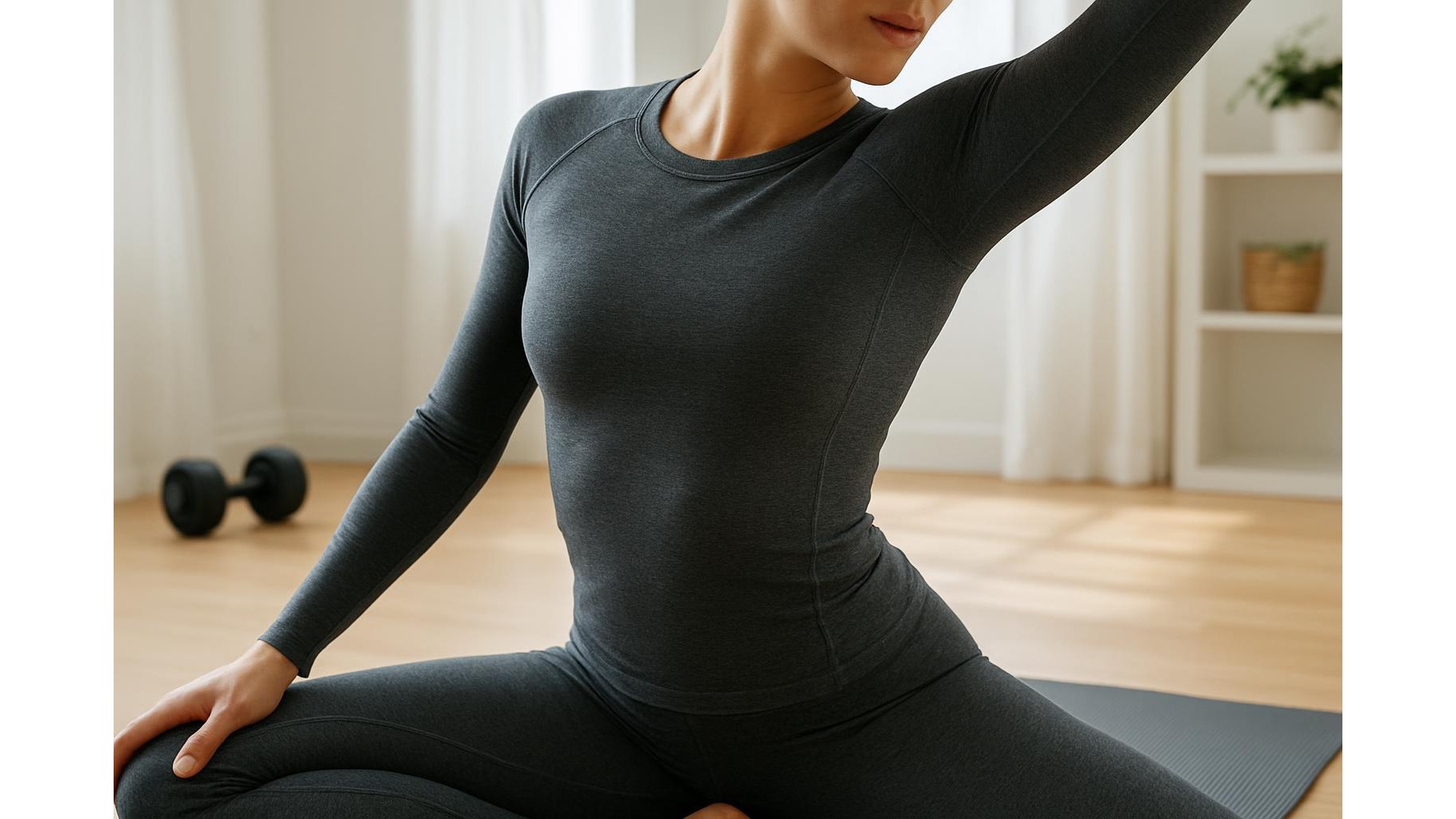
The fit of your home workout base layer is as important as the fabric. Too tight and you may get pressure marks, digging hems and extra friction; too loose and the material can bunch and rub. Aim for a second-skin fit: close enough to move with you, but not restrictive. Pay special attention to underarm, shoulder and inner-thigh areas, which are high-friction zones in bodyweight workouts and stationary cycling. For tops, raglan sleeves and ergonomic paneling tend to reduce pulling and rubbing when you reach overhead. For leggings, a wide, soft waistband is a safer choice than narrow, hard elastic that can dig into sensitive stomach or lower-back skin while you’re on the mat.
Smart laundry and care habits for calmer skin
Even a perfectly designed base layer can irritate if it’s not cared for correctly. Use a gentle, fragrance-free detergent and avoid fabric softeners, which can leave residues that upset sensitive skin and reduce moisture-wicking performance. Rinse thoroughly, especially if you wash at low temperatures. Before wearing a new top or leggings, always wash them once to remove finishing chemicals from production. Air-dry when possible to preserve the fabric’s softness and elasticity. If you’re particularly reactive, consider a second rinse cycle and avoid overloading the machine so garments can move freely. Good laundry habits help your base layers stay softer for longer and keep itching and redness at bay during your home workouts.
Comfortable home workout base layers for sensitive skin come from the right mix of fabric choice, seam design, tag-free details, supportive fits and skin-friendly care. By paying attention to these factors, you can build a small rotation of tops and leggings that feel almost invisible, letting you focus on training, not scratching. Treat each new piece as an experiment: test it on shorter sessions first, note any pressure points or irritation, and keep what truly disappears on your body. Over time, you’ll know exactly which constructions and materials keep your skin calm while your home workouts get progressively harder.