Setting up a freestanding punching bag in your home gym is one of the easiest ways to level up your boxing or kickboxing training. But if you live in a flat, share a house, or have delicate flooring, the wrong bag can mean noise, wobble and scuffs on your floorboards. This guide walks you through how to choose a stable, low-noise freestanding bag that fits your space, protects your floors and lets you train hard in comfort.
Understanding freestanding punching bag bases
The base is the heart of any freestanding boxing bag: it determines how stable, noisy and floor‑friendly the setup will be. Most modern bags use a wide, rounded plastic base that you fill with water or sand. Larger, heavier bases spread weight over a bigger footprint, reducing pressure on one point of the floor and cutting down on wobble. Look for models with a low centre of gravity and a broad base, rather than tall, narrow designs that can tip more easily under heavy kicks. A flat contact area on the underside also helps distribute load and minimises dents on softer floors like laminate.
Water vs sand: what to fill the base with
Most freestanding punching bags give you the choice between filling the base with water or sand. Water is convenient, quick to fill and easier to empty if you need to move the bag, but it is lighter and can slosh, which slightly increases movement and noise. Sand is much denser and provides maximum stability with less rocking, making it the better choice for powerful kickboxing combinations or heavier users. For apartments and shared houses, sand usually wins: a heavier, more planted base means less vibration transferred into the floorboards and fewer complaints from neighbours below.
Protecting your floor and reducing noise
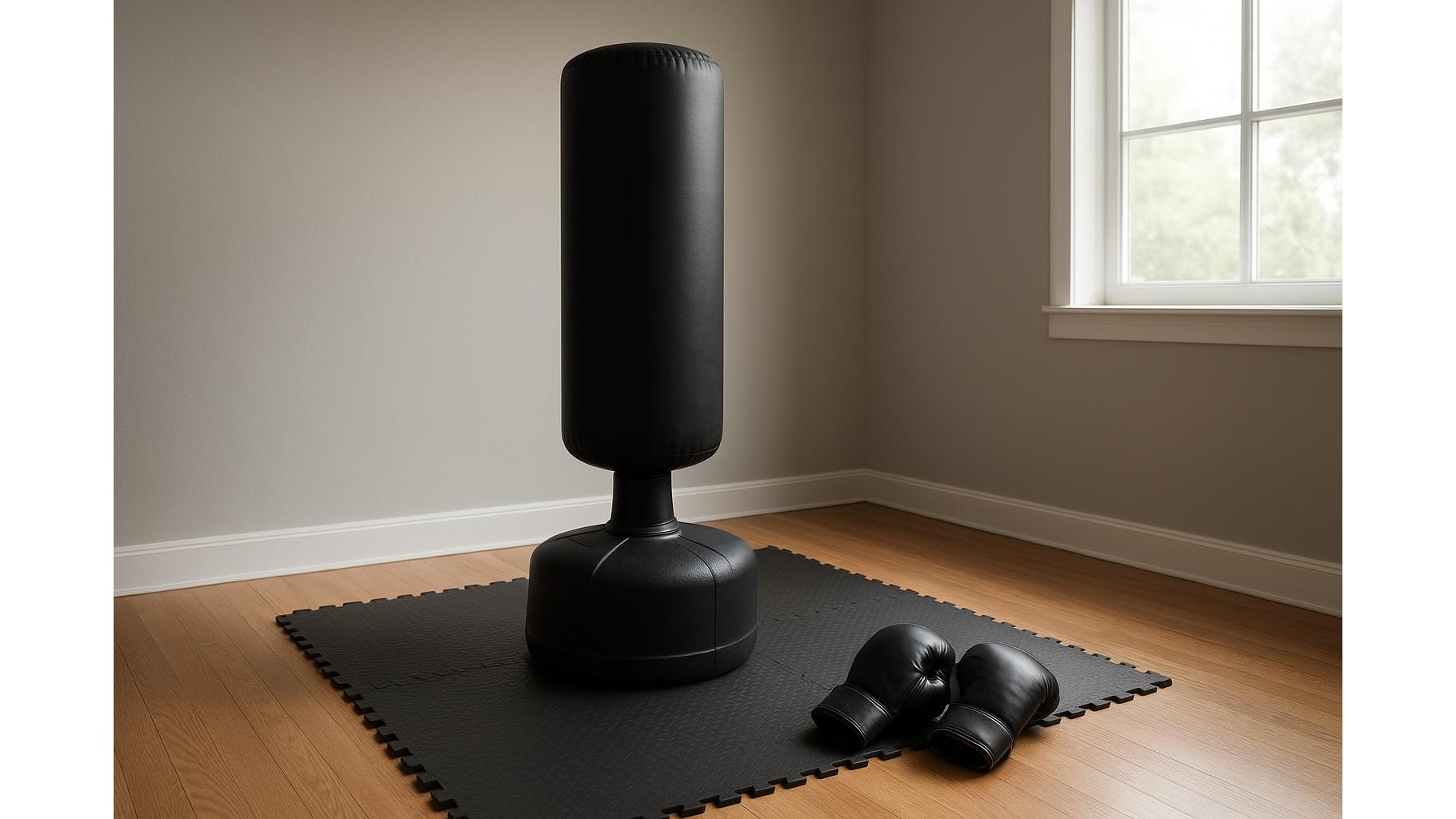
Even the best home punching bag can cause issues if you place it directly on bare wood or tiles. To protect your floor, always use a thick protective layer under the base. Interlocking EVA foam gym tiles, a dense rubber gym mat or a double yoga mat layer all work well to cushion impact and spread the load. This extra layer cuts friction noise as the base shifts slightly and dampens vibration travelling into the structure of the building. Train in boxing shoes or barefoot rather than outdoor trainers, and avoid dragging the base across the floor: lift and shuffle it instead to prevent scratches.
Space planning and placement in your home gym
A common mistake is underestimating the space requirements of a freestanding bag. You need room not just for the footprint of the base, but for your movement and rotation around it. Aim for at least 1.5–2 metres clear around the bag in all directions so you can step, pivot and throw kicks without hitting walls, furniture or mirrors. Place the bag away from shared walls if possible, and avoid spots directly above bedrooms or living rooms on lower floors. Corners tend to amplify sound; a position nearer the centre of a room, on top of a mat, usually produces less noise and vibration while you train.
Safety and training comfort for apartments and shared houses
Training safely on a freestanding punching bag at home is about more than just stability. Make sure the height is adjustable or roughly matched to your shoulder level so you can punch with correct form without overreaching. Check that the striking surface has thick, even padding to reduce hand and shin impact, and always use proper gloves and wraps. In shared houses, set agreed training windows to avoid late‑night noise issues, and keep sessions focused and time‑bound. Periodically check the base for leaks or settling of sand, and top it up when needed to maintain stability and keep the bag from rocking excessively during combinations.
Choosing the right freestanding punching bag for your home gym comes down to a stable, well‑designed base, the right filling, smart floor protection and realistic space planning. By pairing a heavy, sand‑filled base with quality mats underneath and positioning your bag thoughtfully, you can enjoy intense boxing and kickboxing sessions with minimal noise and zero damage to your floors. Set your home gym up correctly once, and you will have a reliable training partner ready whenever you are.