If you already have some training experience and a pair of dumbbells at home, a structured push pull legs home workout is one of the most efficient ways to gain strength and muscle in just three weekly sessions. This 3‑day dumbbell workout plan is tailored for intermediates who know the basics of lifting and want a clear progression route without needing a full gym.
How the 3‑day push, pull, legs split works
The classic push pull legs split divides your training by movement pattern so you hit every major muscle group with enough volume and recovery. Day 1 is push (chest, shoulders, triceps), Day 2 is pull (back, biceps), and Day 3 is legs (quads, hamstrings, glutes, calves). For intermediates, aim for 3–4 sets of 8–12 reps per exercise, resting 60–90 seconds between sets. Train three non‑consecutive days each week, such as Monday, Wednesday and Friday, to maximise muscle growth and performance. This simple structure keeps your home workout focused, time‑efficient and progressive.
Day 1 – Push workout with dumbbells and bodyweight
Your push day focuses on chest, shoulders and triceps using just dumbbells and the floor or a bench if you have one. A solid intermediate session could look like this: dumbbell floor press or bench press, standing dumbbell shoulder press, dumbbell incline press (set your torso against a sofa or step), dumbbell lateral raises, and close‑grip push‑ups for triceps. Perform 3–4 sets of 8–12 reps on each lift. Emphasise controlled lowering (a 2–3 second eccentric) and a strong lockout at the top for maximum tension. If you reach 12 reps easily on all sets, increase weight next session or add a fourth set to continue progressing.
Day 2 – Pull workout for back and biceps
The pull day targets your upper back, lats and biceps, vital for posture and balanced strength. Build your session around one‑arm dumbbell rows braced on a chair or sofa, bent‑over dumbbell rows, dumbbell reverse flyes for rear delts, and dumbbell biceps curls plus hammer curls. Again, stick to 3–4 sets of 8–12 reps. If you have somewhere safe to do them, add inverted rows under a sturdy table for extra bodyweight pulling volume. Focus on driving your elbow back, squeezing your shoulder blades together and avoiding momentum. For progression, slow the lowering phase or add an isometric 1–2 second hold at peak contraction when weights are limited.
Day 3 – Leg workout to build lower‑body strength
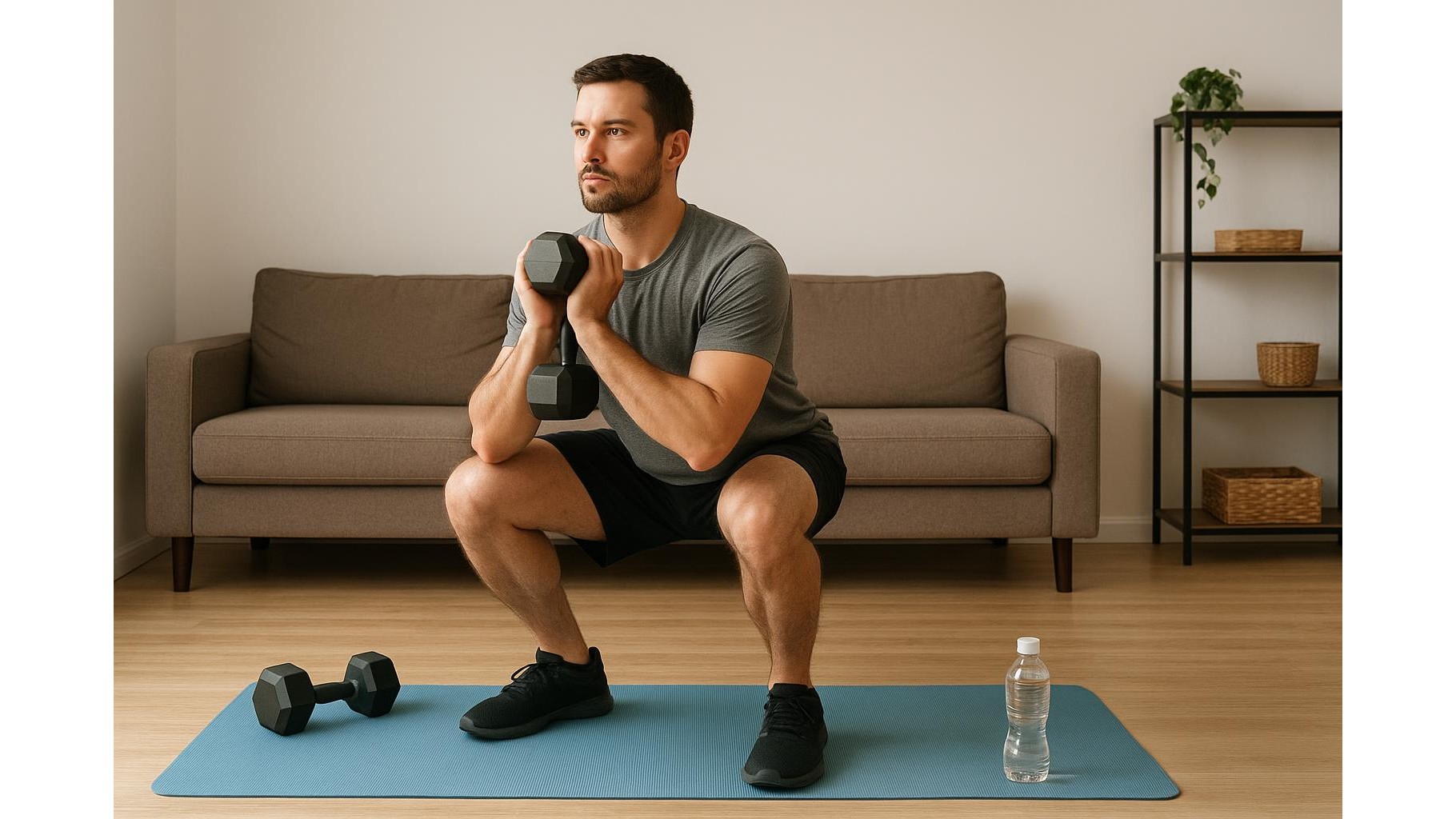
Leg day brings everything together, challenging your quads, hamstrings and glutes with unilateral and bilateral moves. Start with dumbbell goblet squats, then move to Romanian deadlifts for your posterior chain, reverse lunges or split squats for single‑leg strength, and finish with dumbbell calf raises. Use 3–4 sets of 8–15 reps, pushing higher reps on calf work. To make things harder without heavier dumbbells, pause for 2–3 seconds at the bottom of squats and lunges, or use 1.5 reps (down, halfway up, down, then all the way up). This keeps tension high and ensures your home leg workouts remain challenging as you advance.
Progression, scheduling and recovery for intermediates
As an intermediate, your progress depends on consistent progressive overload. Track every workout in a notebook or app and aim to beat your last session by increasing reps, sets or load. A simple rule: once you hit the top of the rep range on all sets with clean form, increase weight next time. Schedule your push, pull and legs sessions across the week with at least one rest day between them, and use light active recovery such as walking or mobility work on off‑days. Prioritise sleep, hydration and sufficient protein intake to support recovery and muscle growth so your home program keeps delivering gains.
By following this structured 3‑day push pull legs home workout, you can build serious strength and muscle with nothing more than dumbbells and bodyweight. The clear division of push, pull and legs, combined with targeted set and rep ranges and smart progression, makes it ideal for intermediates training at home. Commit to three focused sessions each week, track your numbers and adjust intensity as you improve, and your home gym will be more than enough to drive steady, long‑term progress.