For many home athletes, energy, motivation and recovery feel like a rollercoaster. While training plans and nutrition usually get the spotlight, two quiet micronutrients – selenium and iodine – are essential for keeping your thyroid working properly. Because thyroid hormones strongly influence metabolism, body temperature and how energetic you feel, understanding these minerals can help you train smarter and avoid unnecessary or risky supplementation.
Why the thyroid matters for home training
The thyroid gland, a small butterfly-shaped organ in your neck, produces the hormones T4 (thyroxine) and T3 (triiodothyronine). These hormones act like a master dimmer switch for your body’s metabolic rate. When thyroid function is optimal, most people experience stable energy, easier weight management and good heat tolerance during workouts. When it is underactive (hypothyroidism), symptoms can include fatigue, feeling cold, slower heart rate, weight gain and difficulty recovering from training. Overactive thyroid (hyperthyroidism) can cause anxiety, rapid heartbeat, heat intolerance and muscle weakness. Selenium and iodine are core building blocks in this system, so consistently low intake can impact how you feel in your home workouts.
Iodine: building block of thyroid hormones
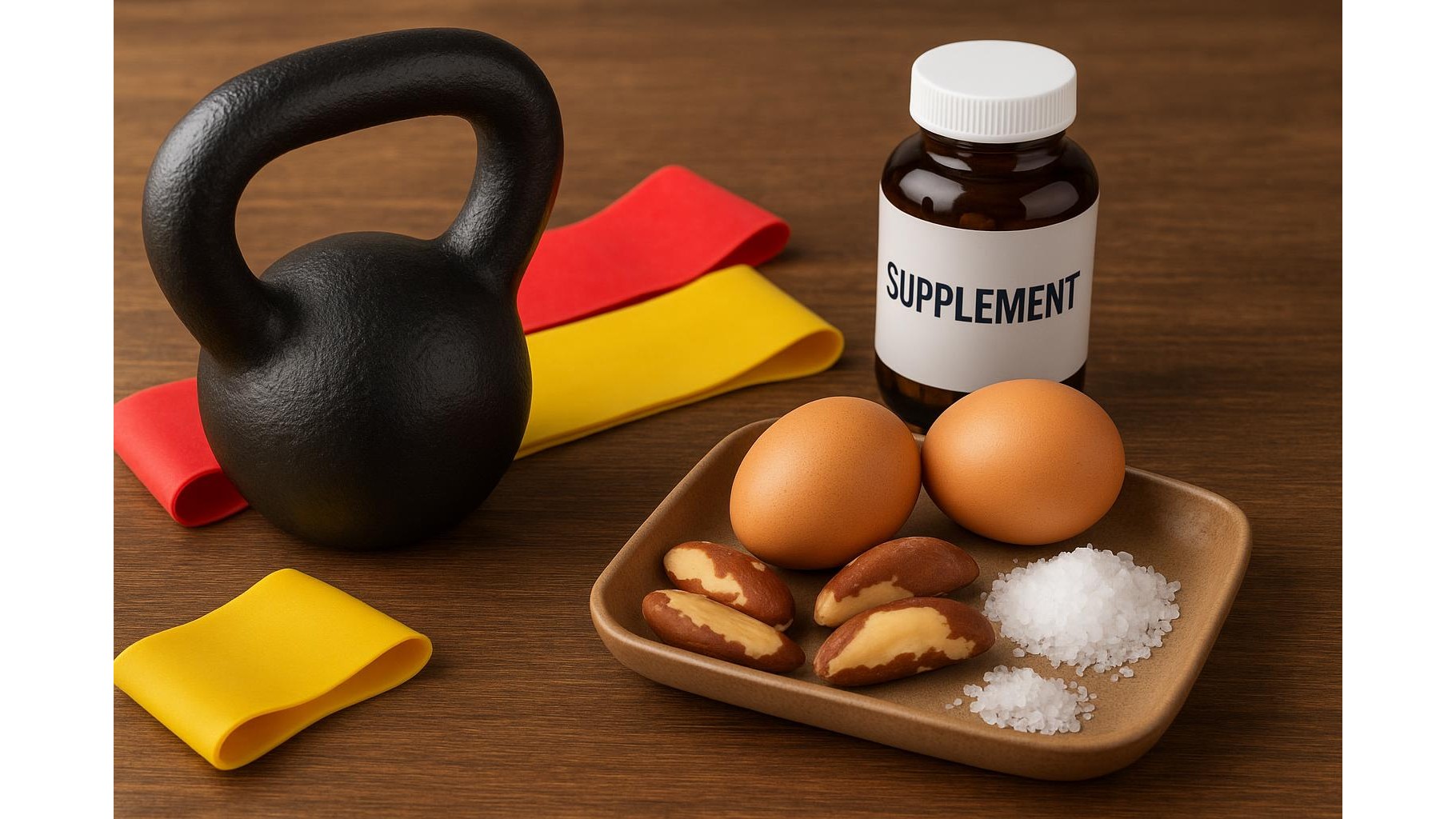
Iodine is literally part of the structure of T3 and T4; without enough, the thyroid cannot produce adequate hormone. In many countries, iodised salt and dairy products are the main sources. Natural food sources include white fish, seafood, eggs and moderate portions of seaweed. For most adults, the typical safe intake is around 150 µg per day from all sources. Problems arise both from too little and too much. Very high intakes, especially from concentrated kelp or high-dose iodine drops, can actually trigger thyroid dysfunction. For a home athlete, the first step is to check your diet: if you rarely eat fish, avoid dairy and use non-iodised specialty salts, an iodine gap is possible. In that case, a low-dose supplement, ideally discussed with a healthcare professional, may make sense rather than megadoses of seaweed products.
Selenium: protector and regulator of the thyroid
Selenium supports enzymes that convert the relatively inactive T4 into the metabolically active T3, and it also helps neutralise oxidative stress inside the thyroid gland. Typical dietary sources include Brazil nuts (very rich, so portion control is important), fish, meat, eggs and whole grains. Many adults reach adequate selenium through food, but restrictive diets or low overall food intake can lead to marginal deficiency. For people training at home, this might show up as persistent tiredness, more frequent illnesses or poor adaptation to training – symptoms that overlap with many other issues. Because selenium has a relatively narrow safety margin, most clinical guidelines suggest staying around 50–200 µg per day from all sources and avoiding high-dose supplements unless prescribed. Rather than chasing large doses, think of selenium as a fine-tuning micronutrient that works best in the right range, not in excess.
When supplements really make sense (and when they don’t)
For generally healthy home athletes, a balanced diet featuring fish, eggs, dairy or fortified alternatives, plus occasional Brazil nuts, will usually cover selenium and iodine needs. A low-dose multivitamin that provides around 100–150 µg of iodine and 50–100 µg of selenium can be reasonable if your intake is uncertain, but it should complement, not replace, whole foods. You should be cautious with standalone high-dose iodine or selenium products marketed for “thyroid boost” or “metabolism support”. People with diagnosed thyroid disease, on thyroid medication, pregnant or breastfeeding, or with autoimmune conditions like Hashimoto’s thyroiditis or Graves’ disease should always consult a doctor or endocrinologist before starting these supplements. Blood tests and thyroid function tests are the gold standard to guide dosing, not guesswork based on fatigue or weight fluctuations alone.
Practical tips for home athletes
To support your thyroid health and training at home, start with a food-first strategy. Build a weekly plan that includes 2–3 servings of fish or seafood, regular eggs and either milk, yoghurt or fortified plant drinks. Use iodised table salt in cooking if appropriate, instead of relying only on gourmet salts that are often iodine-free. If you like nuts, 1–2 Brazil nuts a few times per week can help with selenium without pushing intake too high. Combine this with solid lifestyle basics: enough sleep, structured strength and cardio sessions, and managing chronic stress. Track how you feel over weeks, not days – sustainable energy and stable performance are better indicators than short-term fluctuations. If, despite these efforts, you experience persistent symptoms suggestive of thyroid issues, seek professional evaluation rather than self-prescribing supplements.
In summary, selenium and iodine are small but crucial players in keeping your thyroid, metabolism and training energy on track. Most home athletes can cover their needs through smart food choices and, where appropriate, a modest, well-formulated supplement. Problems arise when people jump to high-dose pills or seaweed products without medical guidance, hoping for quick fat loss or an energy surge. Treat thyroid health as you would your training plan: base it on evidence, individual assessment and consistency. When in doubt, testing and professional advice are far safer and more effective than experimenting alone with potent micronutrients.