A consistent Sunday kitchen reset can be just as important as your squat rack or resistance bands. When you spend a little time batch‑cooking on Sunday, you set up a whole week of easier decisions: high‑protein meals ready in minutes, steady energy for busy workdays, and fewer excuses to skip your home workouts. This ritual doesn’t need to be fancy or time‑consuming. With a clear plan and a few basic tools, you can nourish muscle recovery, support fat loss or recomposition goals, and keep your family eating well without living in the kitchen.
Why a Sunday kitchen reset boosts home workout results
Training hard in your home gym creates microscopic muscle damage that needs high‑quality protein, complex carbs and healthy fats to repair. When you wait until you are starving on a Tuesday night to think about food, you are far more likely to order takeaway or grab ultra‑processed snacks that spike and crash your blood sugar. A weekly meal prep ritual shifts the decision‑making to a calm moment on Sunday. You pre‑cook proteins, grains and vegetables that match your training plan, and portion them so that post‑workout meals are basically automatic. This helps you hit your protein targets, control calories without obsessive tracking, and maintain stable energy for both workouts and recovery.
Core nutrition principles for recovery‑focused meal prep
Before you chop a single carrot, get clear on the basics. For most people who lift or do intense home training, aiming for roughly 1.6–2.2 g of protein per kg of bodyweight is a solid starting point. Distribute that across 3–4 meals per day instead of one massive dinner, so your muscles get a steady stream of amino acids. Include a source of complex carbohydrates such as oats, brown rice, quinoa or potatoes in the meals eaten around your workouts to refill glycogen. Add some healthy fats (olive oil, nuts, seeds, avocado) for joint health and hormone production, and plenty of colourful vegetables for micronutrients that support recovery, immunity and overall performance. Keep sugar‑heavy sauces and deep‑fried extras as occasional add‑ons rather than the base of your plan.
Simple Sunday prep templates for busy people and families
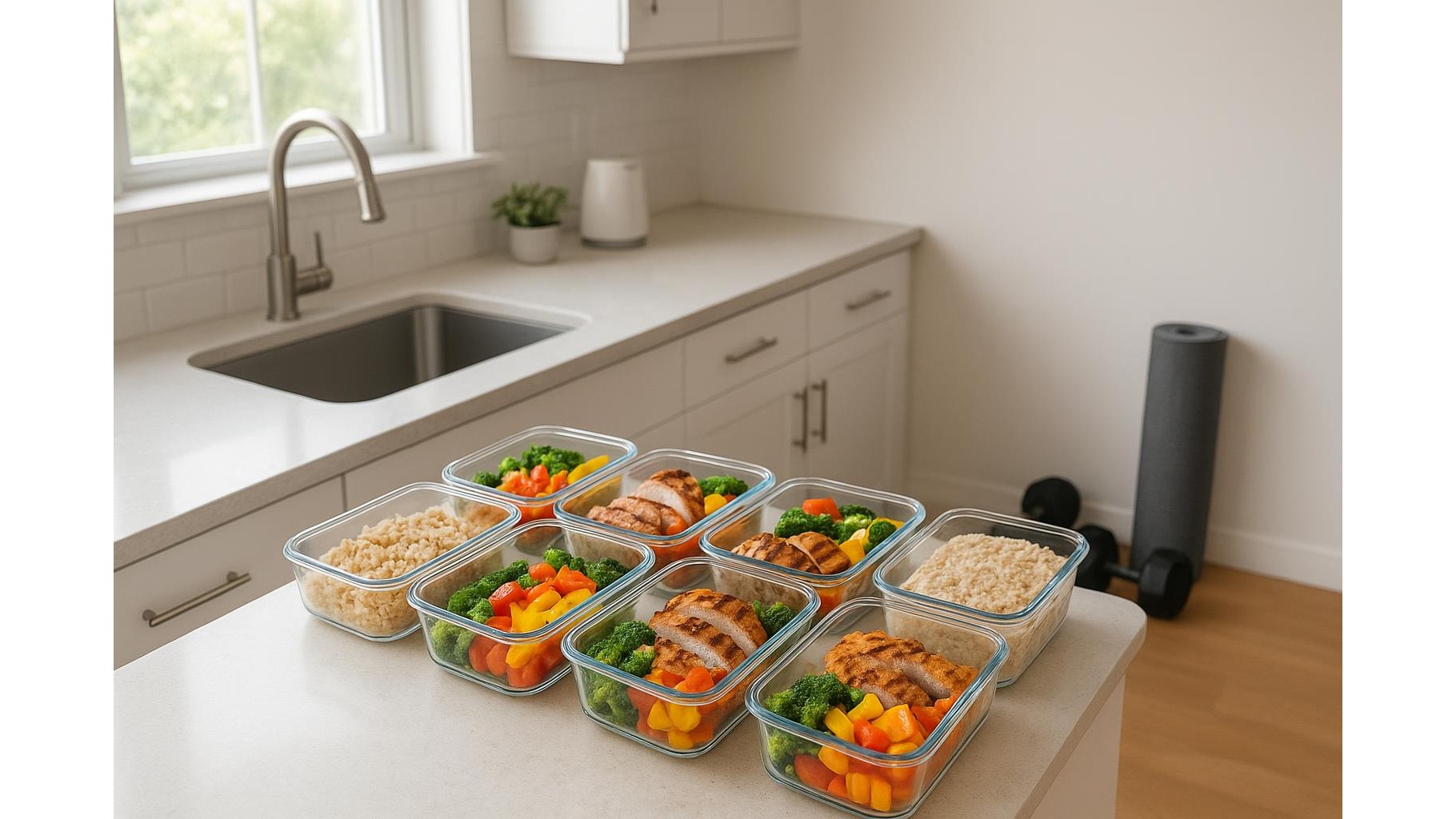
Instead of following complicated recipes, think in meal prep templates that you can repeat every week with different flavours. One classic combo is: protein + grain + vegetable + sauce. On Sunday, you might roast a tray of chicken thighs or tofu, cook a pot of brown rice and quinoa, and roast mixed vegetables like peppers, carrots and broccoli. During the week, you quickly assemble bowls with different sauces (tomato‑based, yoghurt‑herb, or a simple olive oil and lemon) to keep things interesting. For families, prep one versatile base, such as tomato‑lentil sauce, and then adjust the final plate: more pasta for kids, extra chicken and vegetables for you. Store grab‑and‑go post‑workout snacks such as hard‑boiled eggs, Greek yoghurt pots and fruit so that refuelling after a home workout takes seconds rather than willpower.
Time‑saving strategies that fit real life
A Sunday kitchen reset only works if it fits your actual schedule. Block out 60–90 minutes, set a timer and treat it like a non‑negotiable training session. Start with a written shopping list tied to your templates, so you are not improvising in the supermarket. When you cook, use batch methods like sheet‑pan roasting and one‑pot stews to minimise washing‑up. Chop vegetables while grains are simmering and proteins are in the oven, so everything finishes at once. If you truly hate cooking, focus on assembling rather than cooking: buy pre‑washed salad mixes, frozen vegetables, pre‑cooked grains and tinned beans, then simply add a high‑quality protein and a healthy fat. The goal is consistency, not perfection; even a modest prep of two dinners and some snacks will noticeably improve your energy and recovery.
How to align your meals with your home training plan
To get the most from your home workouts, match your weekly menu to your training schedule. On heavy strength days, plan slightly larger portions of carbs and protein in the meal after your session: think chicken, rice and vegetables, or a lentil and potato stew with extra olive oil. On lighter cardio or mobility days, emphasise vegetables, lean proteins and moderate carbs to support recovery without overeating. If you train early, prep high‑protein breakfasts such as overnight oats with Greek yoghurt, chia seeds and berries. For evening training, have a balanced afternoon snack (for example, yoghurt and fruit or hummus with wholegrain crackers) and a ready‑to‑reheat dinner waiting at home. Adjust your Sunday prep based on what is coming up: travel, late meetings or kids’ activities all influence which pre‑cooked meals will actually get eaten.
A thoughtful Sunday kitchen reset turns nutrition from a constant battle into a quiet advantage. By dedicating a short window each week to planning and prepping simple, repeatable meals, you remove decision fatigue, protect your recovery and stay aligned with your home fitness goals. Over time, this ritual becomes part of your training system, just like progressive overload or tracking your workouts. Start small this Sunday—prep one protein, one grain, one vegetable mix and a couple of snacks—and build from there. Your future self, finishing a tough set in your home gym with a nourishing meal already waiting, will be grateful.