Building a compact home gym no longer means sacrificing versatility. The latest generation of foldable weight benches with built‑in resistance bands packs presses, rows, curls and core work into one space‑saving platform you can slide under a bed or stand in a wardrobe. In this guide we’ll see who these benches are really for, which key specs to check before buying, and how to turn one smart bench into the centrepiece of a tiny workout corner.
Who a foldable bench with bands is really for
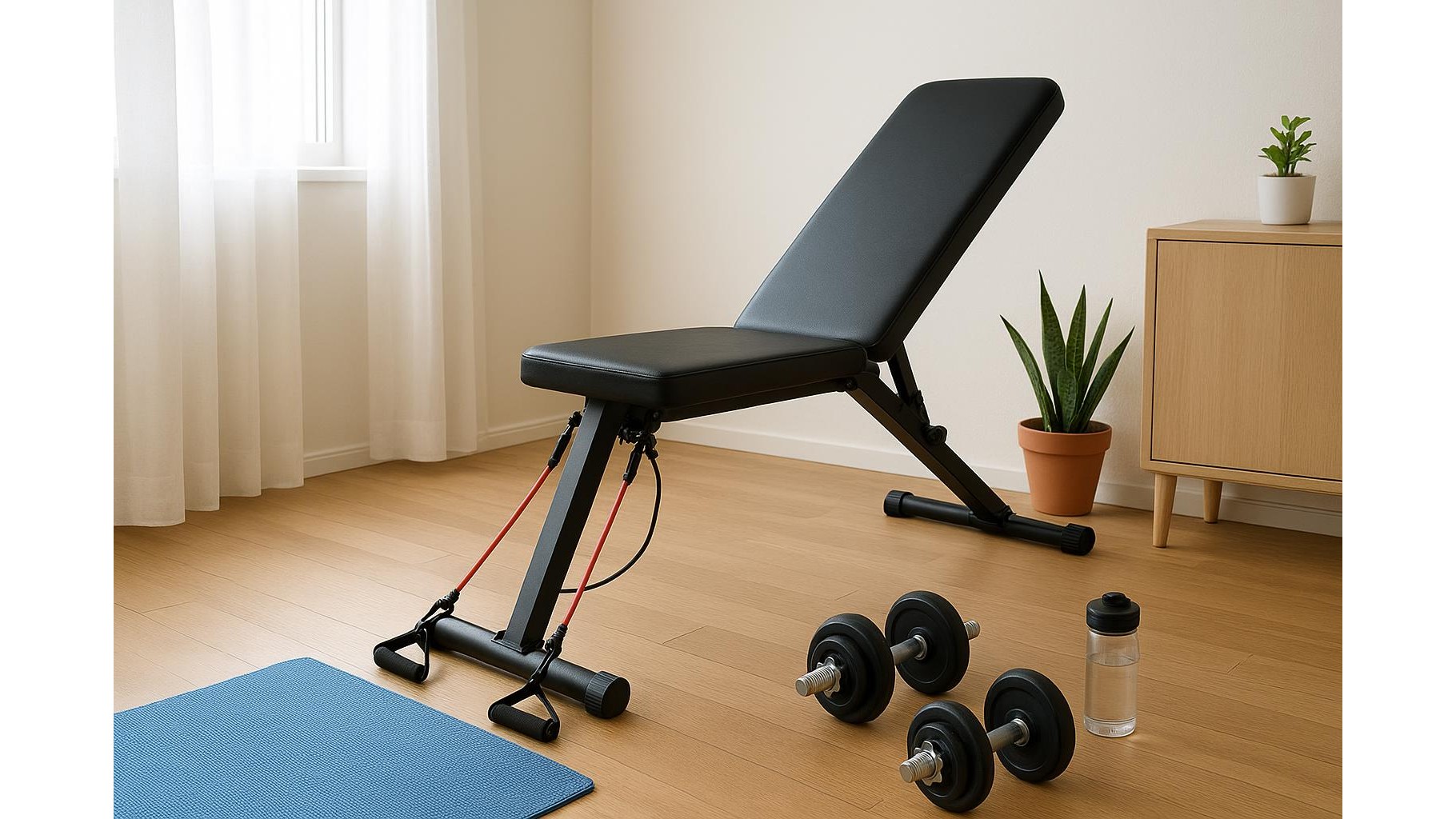
A foldable weight bench with integrated bands suits anyone who needs serious training options in a very small footprint. If you live in a flat, share a home office, or can’t dedicate a whole room to fitness, a bench that folds nearly flat and stores vertically is a game‑changer. It’s ideal for beginners who feel intimidated by a full rack and barbell, but also for intermediate lifters who want extra volume and joint‑friendly resistance. The attached resistance bands let you train when you don’t want to drag out dumbbells, and they’re especially useful for rehab, mobility and higher‑rep accessory work. If you already own adjustable dumbbells or kettlebells, a foldable bench with bands multiplies what you can do without adding clutter.
Stability, frame and safety: what to check first
The number one priority when choosing a foldable bench is stability. Look for a solid steel frame with a clearly stated max user + load rating (ideally 200 kg or more combined). Wide, non‑slip feet help prevent wobble on hard floors, while a locking hinge or pin system keeps the bench from shifting during presses or rows. Avoid ultra‑light, flimsy designs that flex when you sit down. Check that the bench has a stable front post so your feet have a predictable position for pressing, and confirm that folding/unfolding is quick but still feels secure. If you plan to use heavier dumbbells, prioritise benches that specifically mention use for strength training rather than just sit‑ups.
Band quality, anchoring points and resistance levels
Built‑in resistance bands are only useful if they’re both safe and progressive. Look for benches where the bands attach via metal carabiners and reinforced anchor points rather than thin plastic clips. Multiple anchoring rings along the frame open up more exercises: low points for rows and curls, higher points for presses and flyes. A good setup offers several resistance levels (for example, light, medium and heavy bands) so you can match the load to the muscle group and your experience. Bands should be latex or high‑grade rubber, with a smooth stretch and clear guidance on maximum extension. Replaceable bands are another plus, allowing you to swap in heavier or lighter sets as your strength improves without changing the bench itself.
Angles, padding and comfort during longer sessions
Adjustability turns a basic platform into a full‑body training station. Choose a bench with multiple backrest angles, from flat through several incline positions and ideally a slight decline for ab work. A reasonably high seat height makes it easier to set up for dumbbell presses, rows and hip thrusts without awkward joint angles. Pay attention to padding: you want firm yet comfortable foam that doesn’t compress down to the wood or metal underneath, with a tear‑resistant cover that wipes clean after sweaty sessions. A narrow gap between seat and backrest improves comfort during flat presses. If you’re tall, check overall bench length so your head and hips are fully supported. These comfort details are what make you actually use the bench three times a week instead of letting it gather dust.
Making it the centerpiece of a truly compact home gym
To turn a foldable bench with bands into a mini home gym, think in zones and accessories rather than big machines. Use the included bands for presses, rows, curls, triceps extensions and lateral raises, then add a single pair of adjustable dumbbells to cover heavier presses, goblet squats and Romanian deadlifts. Store everything vertically: bench against the wall, bands coiled on a hook, dumbbells under a desk. Plan a few full‑body circuits you can do in 30 minutes, rotating pushes, pulls, legs and core, almost all starting from or around the bench. With smart programming and a compact kit, you can build strength, muscle and conditioning without ever dedicating more than a small corner of your living space.
In summary, a foldable weight bench with built‑in resistance bands is one of the most efficient ways to create a space‑saving home gym. Focus your choice on frame stability, band quality and anchoring, adjustable angles and supportive padding, then combine the bench with just a couple of extra tools. Chosen well, this single piece of equipment can support years of progressive training in even the smallest flat, proving you don’t need a garage or a full rack to train effectively at home.