After a long video-based home workout in front of the TV, tablet or phone, it is common to feel digital eye strain, mild headaches and a sense of visual fatigue. Rapid on‑screen movement, high contrast images and bright backlit displays all force your eyes to work harder. Building a simple, consistent at‑home eye and screen recovery routine helps your eyes relax, supports better focus for the rest of the day and makes your next home workout feel more comfortable.
Reset your focus with near–far eye drills
Start your post‑workout routine by gently resetting the focusing muscles of your eyes. After staring at a screen a few metres away, the ciliary muscles can feel locked at one distance. Stand or sit upright, pick a point on your finger held about 20–30 cm from your nose, and a second point across the room, such as a picture frame or door handle. Focus on your finger for 5 seconds, then quickly shift to the far object for 5 seconds. Repeat this near–far switch 10–15 times, breathing slowly and keeping your shoulders relaxed. Follow up with the classic 20‑20‑20 method: every 20 minutes in future sessions, look at something 20 feet away for 20 seconds. These simple eye exercises help relieve strain from prolonged fixed‑distance viewing and are particularly effective after HIIT or dance‑style video classes with lots of screen time.
Palming, blinking and gentle eye stretches
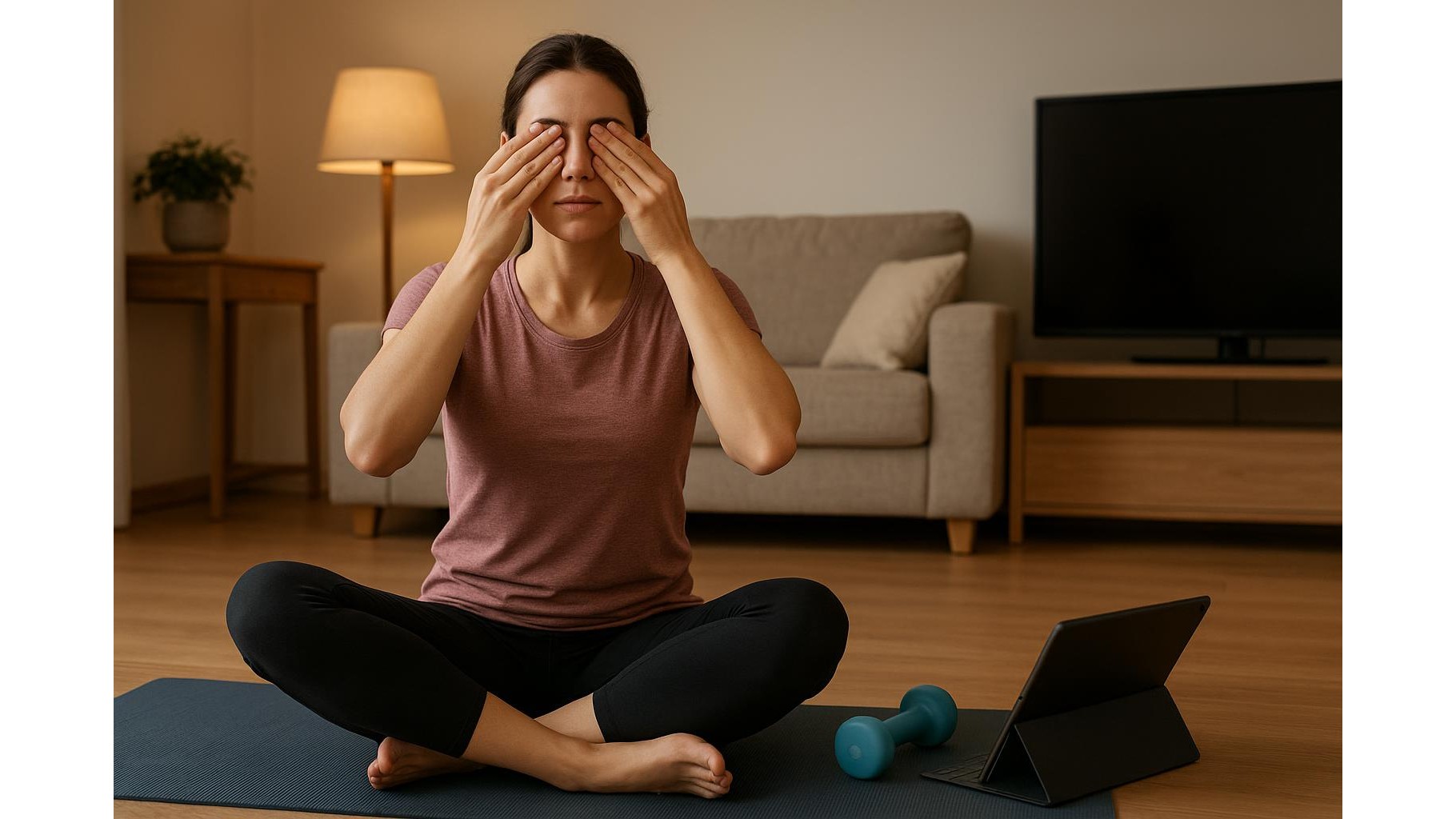
Next, give your eyes a true break from any light source. Rub your hands together until they feel warm, then gently cup your palms over your closed eyes without pressing on the eyeballs. This “palming” technique blocks light and lets the visual system calm down. Hold for 60–90 seconds while inhaling deeply through the nose and exhaling slowly through the mouth. When you remove your hands, perform a series of deliberate full blinks for 30–60 seconds; focused screen use often makes us blink less, drying out the eyes. Finish with slow “eye stretches”: look up, down, left and right, holding each direction for 3 seconds, then draw an imaginary circle with your gaze in both directions. Keep the movements smooth and comfortable, avoiding any strain. This quick sequence reduces eye fatigue and supports tear film distribution, which can ease burning and gritty sensations.
Optimise screen distance, height and brightness
Many symptoms of screen fatigue come from poor viewing geometry rather than the workout itself. After class, take a minute to adjust your setup for next time. Your TV or monitor should ideally sit at or just below eye level so you can keep your neck neutral; looking too far up or down forces extra effort from both eyes and neck muscles. For tablets and phones, avoid placing the device on the floor or too close to your face. Aim for at least 50–70 cm distance from your eyes, with the screen angled to reduce reflections. Match screen brightness and contrast to the room: if the display looks like a lightbox, dim it; if you squint to see details, increase brightness slightly. Whenever possible, enlarge workout text prompts and timers so your eyes do not have to strain to read small fonts during high‑intensity movements.
Tame glare and balance your room lighting
Harsh glare and unbalanced lighting dramatically increase visual stress during and after workouts. Instead of exercising in total darkness with a bright screen, aim for soft, indirect ambient light behind or beside the display. Close or tilt blinds to cut strong daylight reflections, and move shiny surfaces that bounce light into your eyes. A simple rule: the screen should not be the brightest object in the room. If you feel tension around your temples or find yourself frowning, check for hotspots of light reflecting off the display. Adjust lamp positions, change bulb intensity or switch to warmer colour temperatures in the evening to support relaxation. This more even lighting environment reduces the workload on the eyes, making your recovery drills more effective and helping to prevent post‑workout headaches.
Build a consistent post‑workout eye care habit
The true power of an at‑home eye and screen recovery routine lies in consistency rather than complexity. You only need 5–10 minutes after each video‑based home workout to complete near–far focus drills, palming, blinking and a quick check of your screen and room setup. Pair these habits with your cooldown stretches: for example, do eye exercises between hamstring stretches or while you hydrate. Over time, you are likely to notice fewer symptoms of digital eye strain, improved comfort when following longer workout programs and better concentration for tasks that follow your training session. Treat your eyes like any other muscle group you train at home: give them structured recovery, and they will support your fitness goals more reliably.
In summary, taking a few minutes after each session to relax your eye muscles, restore natural blinking, fine‑tune screen settings and improve lighting can significantly reduce screen‑related eye fatigue. By integrating these simple techniques into your regular home workout routine, you protect your long‑term visual comfort and make every video‑guided session feel smoother, clearer and more enjoyable.