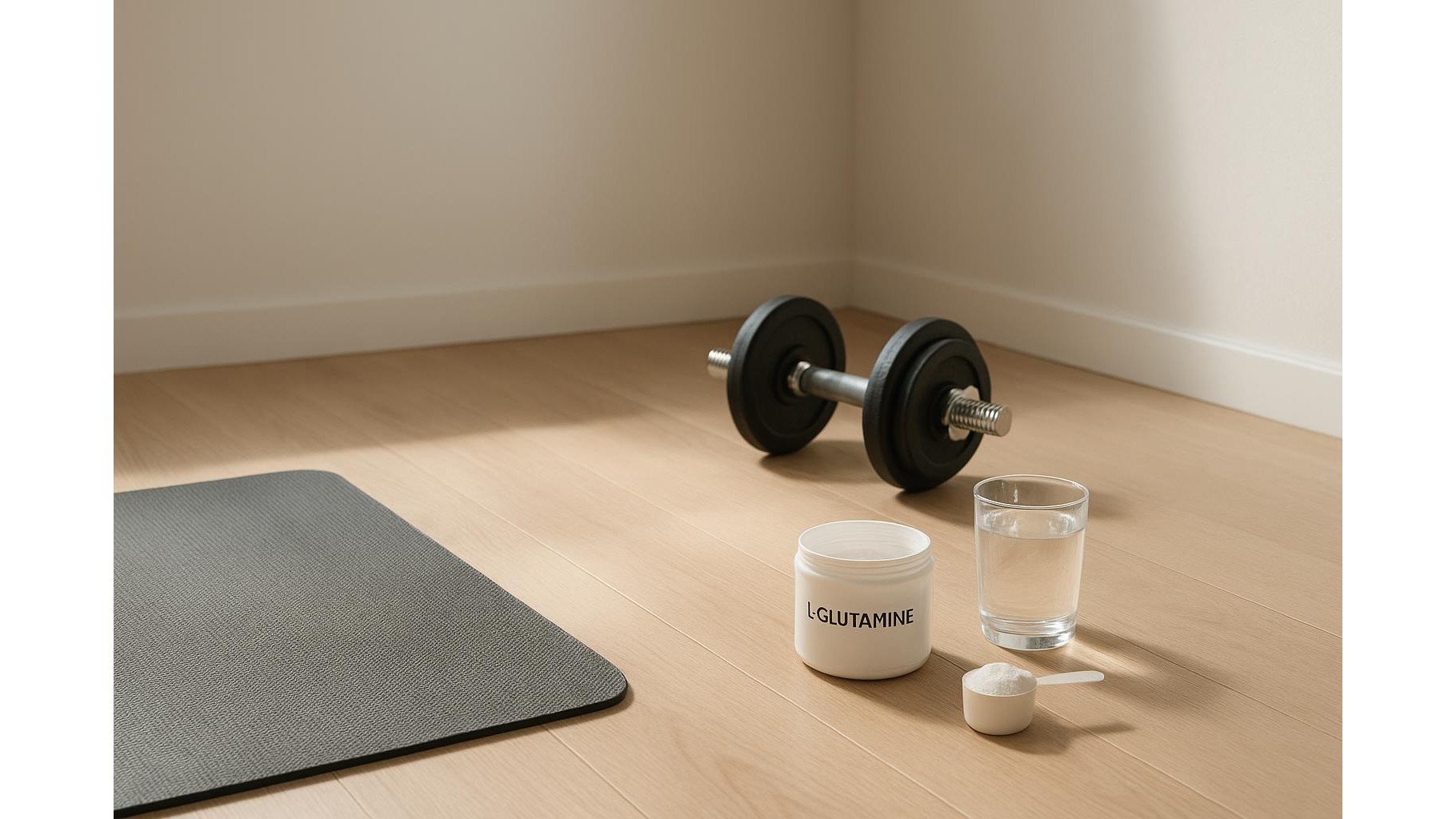
L-glutamine is one of the most common supplements found in kitchen cupboards of home athletes. Marketed for everything from muscle recovery to gut health and even immune support, it can be hard to separate science from hype. Training at home, you want products that truly support performance and well-being, not powders that quietly drain your budget. This article offers a concise, evidence-based look at what L-glutamine does, where it may help, usual dosages, safety, and when it is probably unnecessary for the average home trainee.
What L-glutamine actually is and how it works
L-glutamine is a non-essential amino acid, meaning your body can produce it on its own. It is the most abundant amino acid in the bloodstream and plays a key role in protein synthesis, immune function, and as a fuel source for cells lining the intestine. During severe stress – such as major burns, serious illness, or very high training loads combined with calorie restriction – glutamine levels can drop. In those extreme situations, glutamine may become “conditionally essential” and supplementation can make sense. For most healthy home athletes eating enough protein, however, the body usually maintains adequate glutamine levels without extra powders.
L-glutamine and gut health: who may benefit
One of the most plausible uses of L-glutamine is support for the gut barrier. Intestinal cells love glutamine as an energy source, and clinical research has tested it in patients with conditions like short bowel syndrome, inflammatory bowel issues, or severe illness. In some of these medical settings, glutamine can help maintain or restore gut integrity. For a typical home trainee with a normal digestive system, the benefits are far less clear. However, people who suffer from frequent stomach upset during hard cardio, or those under heavy training plus dieting, might experiment with a moderate dose and track symptoms. It is not a cure-all, but it may help a minority of athletes who experience high gut stress.
Recovery, muscle gain and performance
Many home lifters buy L-glutamine hoping for faster muscle recovery, more strength, or extra muscle growth. Here the evidence is underwhelming for people who already consume enough dietary protein (for example 1.6–2.2 g per kg of bodyweight). Studies on resistance-trained individuals show little to no added benefit of glutamine supplementation on hypertrophy or strength when protein intake is adequate. Any improvement in soreness or perceived recovery is often small and inconsistent. For most home athletes, investing in high-quality protein powder, structured programming, sleep, and smart progression will provide a better return than relying on glutamine for gains.
Typical dosages and safety considerations
Common supplemental doses of L-glutamine range from 5 to 20 g per day, often split into 2–3 servings. For gut-related purposes in clinical research, higher doses are sometimes used, but that is under medical supervision. For a healthy home trainee, staying at the lower end (for example 5–10 g per day) is usually more than enough if you decide to try it. L-glutamine is generally considered safe for short- and medium-term use, with few side effects at standard doses, though some people may experience mild digestive discomfort. Those with liver disease, kidney issues, or specific metabolic disorders should consult a doctor before supplementation. As with any supplement, it should complement – not replace – a balanced diet based on whole foods.
When L-glutamine is probably unnecessary
For most home athletes who eat a high-protein diet and train at moderate to high intensity without extreme calorie restriction, L-glutamine is often a low-priority supplement. Your body already produces it, and common protein sources like meat, dairy, eggs, and legumes provide ample glutamine. If your budget is limited, money is usually better spent on high-impact basics: quality protein, creatine monohydrate, adjustable dumbbells or kettlebells, and a supportive training environment at home. L-glutamine might only move the needle for specific groups: athletes under very high stress, people with certain digestive problems, or those recovering from illness under medical care. For everyone else, its benefits are subtle at best, making it one of the first supplements to cut when you streamline your stack.
In summary, L-glutamine is a biologically important amino acid with legitimate roles in gut health and immune function, especially under medical or extreme-stress conditions. For the average home trainee who eats sufficient protein and manages recovery, the evidence for major improvements in muscle growth, performance, or everyday digestion is limited. If you are curious, test a modest dose, monitor how you feel, and be honest about whether it truly helps. Otherwise, focus on proven fundamentals – nutrition, sleep, smart programming, and consistent training – before spending on supplements that may offer only marginal returns.