When you are building a home gym, choosing between self-powered and plug-in cardio machines is more than a tech detail. It affects how your workouts feel, where you can place the equipment, how much maintenance you face and even what shows up on your energy bill. This guide compares manual and self-powered bikes, ellipticals and treadmills with traditional electric models, so you can match the right machine to your space, training style and budget.
How self-powered cardio machines actually work
Self-powered or manual cardio machines generate their own electricity through your movement. On a manual treadmill, the belt only moves when you push it with your legs. On a self-powered bike or elliptical, your pedalling drives an internal generator that powers the console and resistance system. Because there is no need for a wall socket, you gain flexible placement in a room and avoid messy cables. Training can also feel more engaging, as the machine immediately responds to your effort. However, at very low speeds, some manual models feel less smooth than their electric counterparts, which use a motor to keep the belt or flywheel turning consistently.
Plug-in treadmills vs manual designs for runners
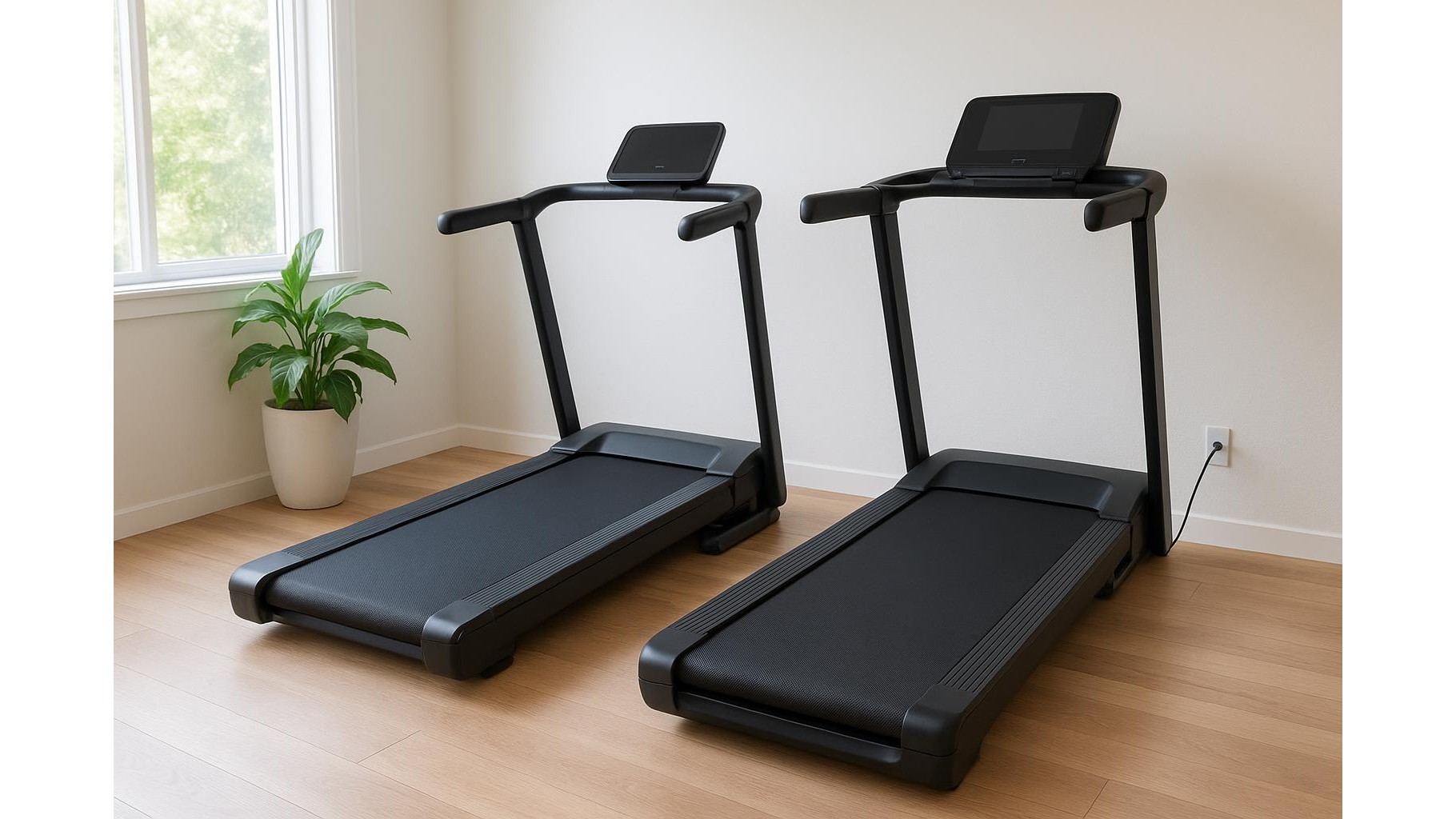
With plug-in treadmills, an electric motor controls belt speed and incline, giving you precise settings for intervals and long runs. They tend to offer richer consoles with guided workouts and entertainment options, but they must sit near a socket and draw continuous power while in use. Manual or self-powered treadmills shift the workload to your legs: the faster you push, the faster the belt runs, creating an intense, self-paced style of running that is excellent for sprints and conditioning. For walking and light jogging, plug-in models usually feel smoother and quieter, especially at low speeds. For short, intense sessions and maximum energy savings, a manual treadmill can be the better fit.
Bikes and ellipticals: comfort, noise and usability
On exercise bikes and ellipticals, the gap between self-powered and plug-in is often smaller in terms of workout feel. Many quality self-powered bikes use magnetic resistance and internal generators to offer smooth pedalling without external electricity. This cuts cables and often reduces operating noise, a key win if your home gym is near living areas or bedrooms. Plug-in ellipticals and bikes may deliver more advanced displays, built-in programs and app connectivity, but those features are only useful if you truly use them. For simple, steady-state cardio in a compact space, self-powered models can provide quieter workouts and cleaner setups with fewer failure points.
Energy consumption, bills and sustainability
Every plug-in treadmill, bike or elliptical draws power for its motor, console and sometimes incline system. Over months and years of regular training, this energy usage adds up on your electricity bill. Self-powered cardio machines avoid this completely, since they use your effort as the energy source. While the savings per session may be modest, they become meaningful with daily use and multiple family members training at home. Beyond direct costs, self-powered equipment appeals to those focused on low-impact, sustainable home gyms, minimising both energy waste and electronic components that can fail. If you want to reduce long-term running costs and environmental impact, a self-powered option is a strong choice.
Placement, maintenance and reliability in a home gym
Because they do not need sockets, self-powered cardio machines are easier to position in challenging rooms, basements or garages. You are not limited by cable length, and you can rearrange your space freely. With fewer electronic parts, these machines often have fewer things that can break, and maintenance usually focuses on mechanical components and occasional lubrication or belt adjustment. Plug-in machines may require more regular checks of motors, wiring, consoles and incline systems, and can be more vulnerable to power surges or damp environments. However, they may also come with better diagnostics and support from brands that specialise in connected fitness, which can be valuable if you rely heavily on digital training features.
In summary, the choice between self-powered and plug-in cardio machines hinges on what you value most in your home gym. Self-powered treadmills, bikes and ellipticals excel in energy efficiency, simple maintenance, flexible placement and a more engaged training feel. Plug-in models shine when you want ultra-smooth low-speed performance, rich consoles, guided programs and automatic speed or incline control. Clarify your priorities around noise, space, running costs and tech features, then choose the style of machine that best supports your long-term fitness routine at home.