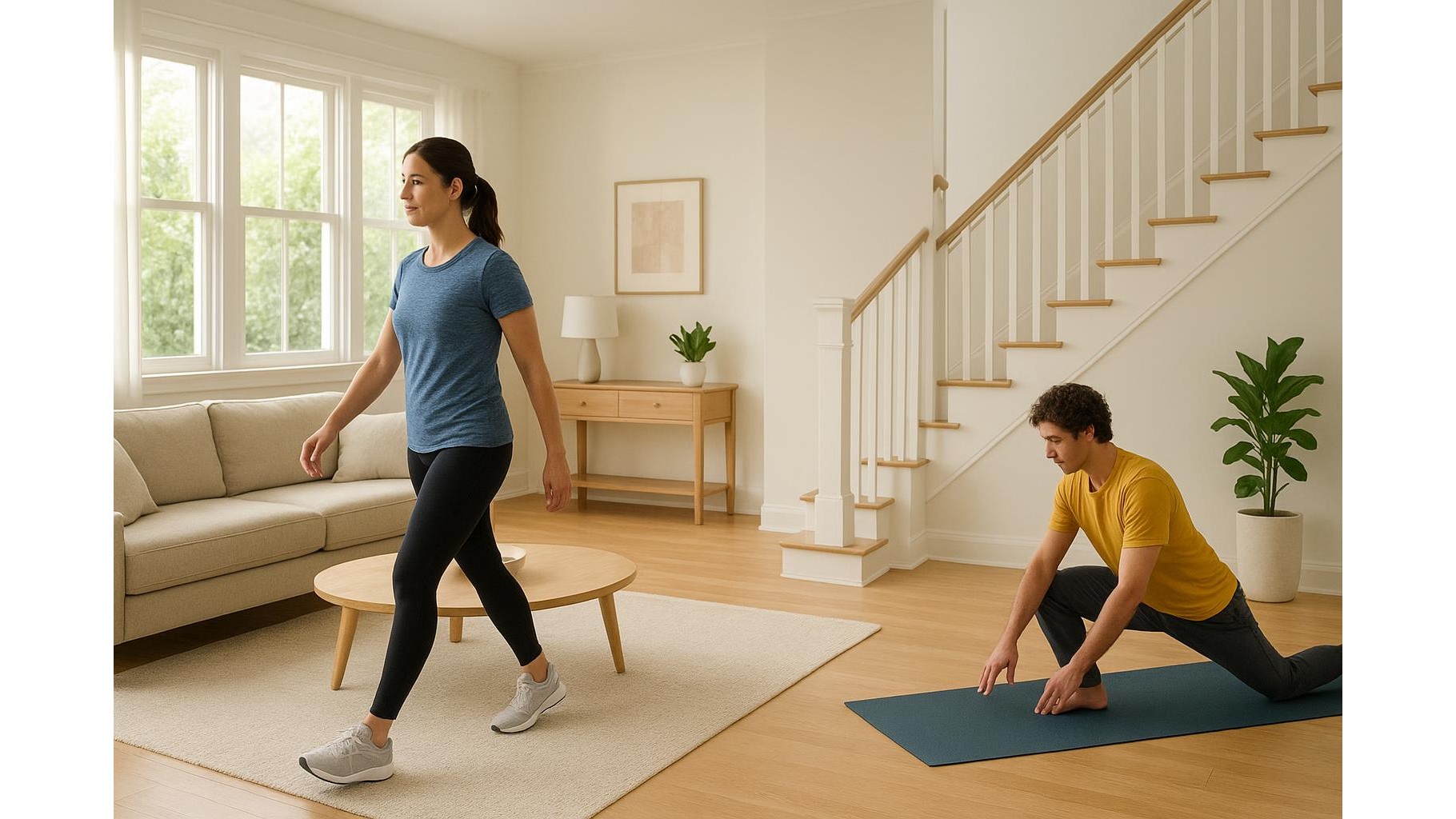
Active recovery does not require a treadmill, bike or any fancy gadgets. With a bit of planning, you can turn your hallway, living room and stairs into a powerful, joint-friendly active recovery zone that supports your home strength training. By focusing on indoor walking routes, simple stair routines and light mobility work, you can boost blood flow, ease soreness and keep your habit strong on “easy” days, all without buying extra equipment.
Why active recovery matters for home strength training
On lifting days you challenge your muscles; on active recovery days you help them rebuild. Gentle low‑impact cardio improves circulation, bringing nutrients to tired muscles and helping clear metabolic waste. This reduces stiffness and can make the next workout feel smoother. For lifters training at home, it is tempting to rest on the sofa between sessions, but long periods of complete inactivity can leave you feeling tighter and more sluggish. A structured, easy routine of walking, stairs and mobility drills gives your joints movement without adding serious fatigue, so you recover better while still burning a few extra calories and reinforcing your “I move every day” identity.
Build an indoor walking circuit in any home
You do not need a cardio machine to walk with purpose. Start by mapping a simple indoor walking route: for example, from bedroom to kitchen and back, or around a clear loop in your living room. Set a timer for 10–20 minutes and walk continuously at an easy conversational pace. To keep it joint‑friendly, land softly, keep your posture tall and let your arms swing naturally. You can break this into short “walking snacks” throughout the day—five minutes every hour adds up quickly. If your space is tight, use marching in place or gentle side‑steps. The goal is not to get out of breath, but to feel warm, loose and more mobile by the end.
Use stairs as your built‑in cardio tool
If you have access to stairs, you already own a powerful, free conditioning tool. On recovery days, use them in a controlled, low‑impact way: walk up one flight at a comfortable pace, then walk back down slowly, focusing on smooth, quiet steps. Aim for 5–10 minutes, checking that your breathing stays easy and your knees feel stable. Hold the handrail if needed and avoid running or jumping. You can also mix stair walking with flat indoor laps—two minutes of walking, one minute of easy stairs, then repeat. This light stair work strengthens your calves, glutes and balance without the pounding that comes from higher‑intensity intervals.
Light mobility sequences to loosen tight joints
Pair your walking with mobility exercises to make active recovery even more effective. After 5–10 minutes of indoor walking, flow through controlled movements for your main lifting joints: gentle neck and shoulder circles, cat‑camel for the spine, hip circles, leg swings and ankle rolls. Keep the range of motion pain‑free and smooth, focusing on slow breathing. Two or three rounds of a simple sequence can turn stiffness into a pleasant feeling of openness. Think of this as “oiling the hinges” rather than stretching aggressively; you are reminding your body of the positions you need for squats, hinges and presses, without adding extra load.
Structuring a joint‑friendly active recovery day
A simple template keeps your active recovery routine consistent. One option: morning—10 minutes of easy indoor walking plus 5 minutes of mobility; afternoon—5–10 minutes of stair walking or marching in place; evening—another 10 minutes of relaxed walking while listening to music or a podcast. Keep intensity low: on a 1–10 effort scale, aim for 3–4, where you could speak in full sentences. If you track strength progress, treat these days as supportive, not competitive—no chasing personal bests. Over time, you will notice you feel fresher before lifting sessions, recover faster from soreness and maintain better overall movement quality.
By turning your home into an active recovery space, you remove the excuse of “no cardio machines” and protect your progress from unnecessary soreness and stiffness. Indoor walking routes, careful stair use and light mobility drills offer a low‑cost, sustainable way to support your home gym training and long‑term joint health. Keep it easy, keep it consistent, and let these sessions be the gentle glue that holds your weekly training plan together.