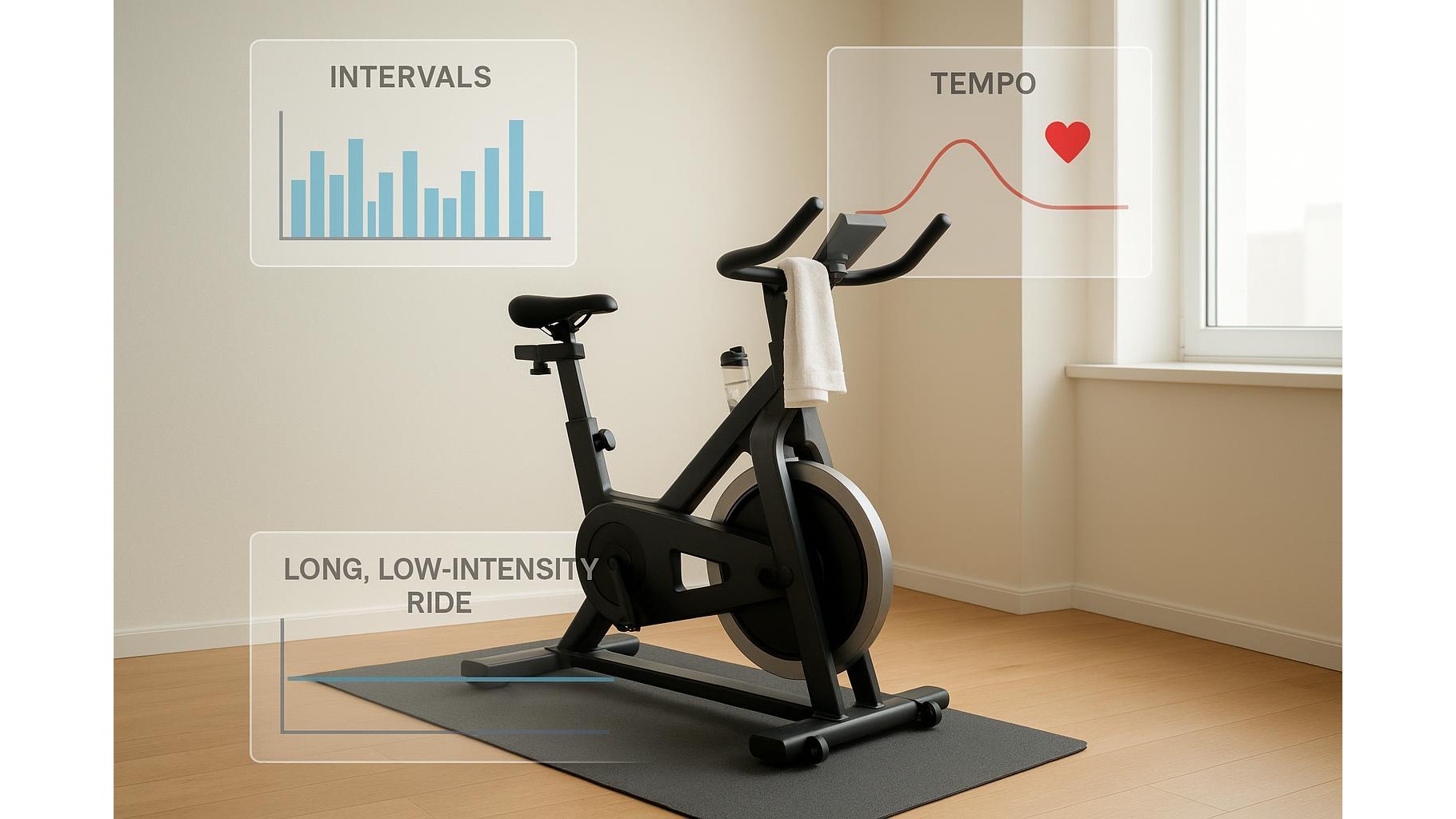
If you only have one home exercise bike, it can still feel like a full cardio toolkit when you learn how to play with resistance and cadence. By changing gear load and pedal speed, you can simulate everything from easy recovery rides to hard interval sessions, without needing a treadmill or cross-trainer. This guide shows you how to structure intervals, tempo rides and low‑intensity sessions so your single bike behaves like three different machines.
Turn resistance and cadence into training “gears”
Think of your bike’s resistance levels as the slope of the road and your cadence (rpm) as how fast you drive up it. Low resistance with higher cadence feels like a flat road, perfect for longer, easier rides. High resistance with a slower, powerful cadence feels like a steep climb, ideal for strength-focused cardio. A simple structure is to define three gears: easy (low resistance, 80–90 rpm, you can talk easily), moderate (medium resistance, 75–85 rpm, talking in short sentences), and hard (high resistance, 60–75 rpm, you can only say a few words). Once you lock these in, you can build any session format just by shifting between gears instead of buying more equipment.
Designing interval sessions on a single bike
To mimic a dedicated HIIT cardio machine, use sharp changes between your easy and hard gears. After a 5–10 minute warm-up in your easy gear, try 8–10 rounds of 30 seconds hard (high resistance, 90–100% of your sustainable effort) followed by 60–90 seconds easy. Keep your cadence high in the work intervals and let it drop slightly in recovery, but never stop pedalling. For a more advanced twist, extend the hard efforts to 60 seconds and shorten recovery to 45 seconds, or use “pyramid” sets like 20–40–60–40–20 seconds hard, each followed by equal easy time. This one interval structure can replace sprint modes on far more complex machines.
Building steady tempo rides for endurance
On many cardio setups, people use a separate machine for tempo or threshold workouts, but you can do the same on your bike by locking into a challenging, steady gear. After warming up, increase resistance to moderate-high and maintain a cadence of 80–90 rpm for 15–25 minutes where you can talk, but only in short phrases. This is your “middle ground” between easy and all-out intervals. It develops your aerobic engine and mental focus without destroying your legs. You can split the effort into blocks (for example, 3 × 8 minutes tempo with 2 minutes very easy pedalling between) to make it feel more manageable, simulating the feel of a long, smooth treadmill run.
Using low-intensity rides for recovery and fat loss
Low-intensity sessions are where a home exercise bike shines as a low-impact alternative to walking. Set resistance to low or low-moderate and hold 80–95 rpm while keeping your heart rate in a conversational zone for 30–60 minutes. This kind of LISS (low‑intensity steady state) supports fat oxidation, joint‑friendly conditioning and active recovery between hard workouts. You can vary your saddle height or hand position to reduce discomfort and mentally break the ride into 5 or 10‑minute chunks. By respecting the easy pace, you turn the same bike that does brutal intervals into a go‑to tool for stress relief and daily movement.
Planning your weekly “three machines in one” routine
With smart programming, your single bike can cover every cardio need in a home gym. A simple weekly template might be: one or two interval days, one tempo ride, and one or two low-intensity sessions, plus at least one full rest day. For example, Monday: intervals (short, hard efforts), Wednesday: tempo block of 20 minutes at moderate‑hard, Friday: longer LISS ride at easy intensity, and optionally Sunday: another gentle spin. Rotate resistance and cadence targets across sessions so your body keeps adapting. Track total time and perceived effort rather than obsessing about precise watts; consistency with these structured variations will deliver better cardio fitness than owning multiple machines you rarely use.
Used this way, a single home exercise bike becomes a versatile cardio system that can drive intervals, tempo work and easy recovery without extra hardware. By deliberately manipulating resistance, cadence and session length, you simulate the stimulus of several different machines, from rower to treadmill. Start with clear easy, moderate and hard gears, build a simple weekly plan around them, and let your one bike cover many goals in your home gym.