Buying a home treadmill online can feel like reading a foreign language. Product pages are packed with specs about motor power, running belt size, cushioning systems and console features, but none of that helps if you don’t know what really matters for your training and your space at home. This guide breaks down the key treadmill specifications in simple terms so you can choose confidently without ever stepping into a store.
Understanding treadmill motor power and types
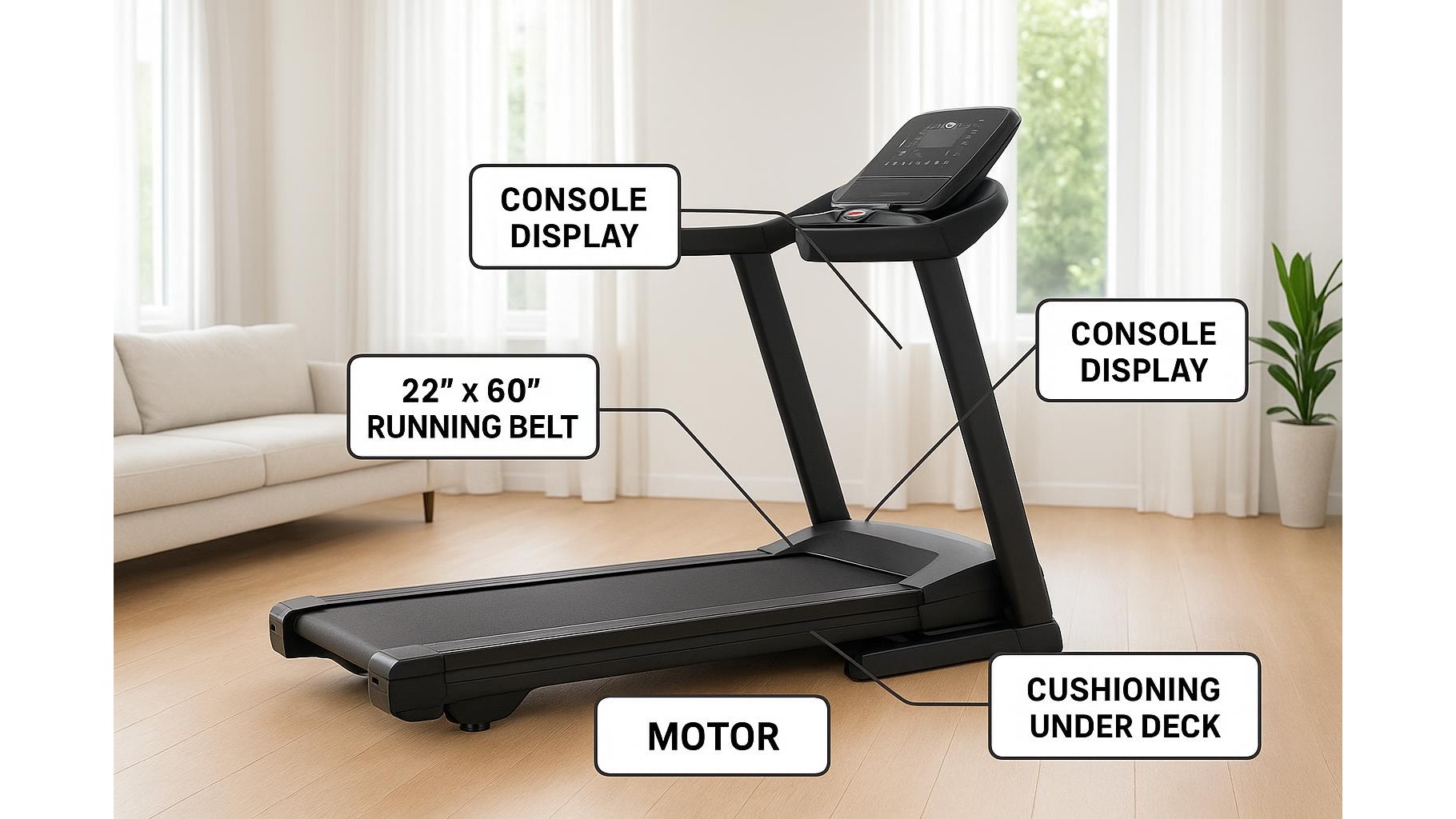
The motor is the heart of any treadmill and one of the first specs to check. Most home machines list a continuous horsepower (CHP) rating – this tells you how much power the motor can deliver over time, not just in short bursts. For light walking and rehab, around 1.75–2.0 CHP is usually enough. If you plan to jog regularly, look for 2.25–2.75 CHP. Runners, heavier users, or households where several people train should look for at least 3.0 CHP to keep the belt smooth at higher speeds and reduce strain on the motor. You may also see terms like DC and AC motors: DC motors are common in home treadmills and are generally quieter, while AC motors are often found in commercial models and are built for heavy use. Pay attention to maximum user weight too – if you are near the limit, consider going up a motor class for durability.
Running belt size, frame and folding design
The running belt size is crucial for comfort and safety, especially if you are tall or plan to run. Online specs usually list belt dimensions in centimetres; a compact walking treadmill might be around 120 x 40 cm, while more versatile machines offer 140–150 cm length and 45–50 cm width. If you stride long or do intervals, a longer deck helps you avoid feeling cramped. Also look at the stated max user weight and frame construction: heavier frames often feel more stable and reduce wobble at speed. For smaller homes, check if the treadmill is foldable and look for details like easy-lift hydraulics and transport wheels. The folded footprint listed in the online description will tell you whether it truly fits your storage space, not just your imagination.
Cushioning systems and noise levels
One of the big advantages of training on a treadmill instead of pavement is shock absorption. Brands often promote proprietary cushioning systems, which might sound like pure marketing, but the spec sheet usually hints at what to expect. Look for mentions of multi-zone cushioning, elastomer dampers or adjustable firmness under the deck – these features can reduce impact on joints and make longer sessions more comfortable. If you live in a flat or have family members sleeping nearby, check reviews and product descriptions for comments about noise levels. Lower top speeds with smaller motors can sometimes be quieter, but build quality and belt alignment also matter. A well-cushioned deck combined with a solid frame typically generates less vibration and noise, something you will appreciate in an upstairs room.
Console features, programmes and connectivity
The console is where you control and track your workouts, and today even affordable treadmills come with surprisingly rich features. Basic models often provide clear readouts for speed, time, distance, calories and pulse, plus a selection of baked-in training programmes for fat burn, intervals or hill work. Mid-range and premium options may add Bluetooth connectivity, app integration, and support for virtual running platforms. When reading specs online, think about what you will realistically use: do you want simple buttons you can press without thinking, or a touchscreen with streaming classes? Also check for quick-access keys to jump between speeds and incline levels, and practical extras like tablet holders, USB charging ports and built-in speakers. These small details can make home workouts more enjoyable and keep you consistent.
Incline, speed range and safety essentials
Incline and speed range tell you whether a treadmill matches your fitness goals. Walkers focusing on low-impact cardio may be satisfied with a top speed of 8–10 km/h and a modest manual incline. Runners and those training for events should look for at least 16 km/h top speed and motorised incline up to 10–15%. Incline quickly increases the challenge and calorie burn without forcing you to run faster, and online product pages normally list the number of incline levels or the percentage range. Don’t skip the safety features: a safety key that clips to your clothing and stops the belt if you fall is essential, and side rails should be long enough to grip confidently. Review images and descriptions for emergency stop buttons and clear labelling; these are non-negotiable if you’re new to treadmill training or sharing the machine with family.
How to read reviews and match specs to your space
Once you understand the main specs, the final step is matching them to your home and your routine. Start by measuring your available floor area and ceiling height, then compare to the treadmill’s dimensions and required clearance listed online. A machine that is perfect on paper can still be wrong if you cannot safely mount and dismount it or if your head nearly touches the ceiling at full incline. Next, use customer reviews to validate the marketing claims about stability, noise and cushioning. Look for patterns rather than single complaints: repeated mentions of wobble or belt slippage are red flags, while consistent praise for build quality is a good sign. By combining a clear understanding of motor power, belt size, cushioning and console features with honest user feedback, you can confidently order a treadmill that fits your body, your goals and your home – no in-store test run required.