Working from home makes it very easy to wander into the kitchen between video calls and training sessions. Without a plan, even a well-stocked fitness pantry can turn into a source of constant grazing. By combining pantry inventory tools and barcode-based nutrition apps, you can keep your high-protein snacks visible, organised and aligned with your goals instead of your cravings.
Why your snack pantry needs a system
Most home gyms fail in the kitchen, not in the squat rack. If your cupboards are full but you never quite know what is there, you will default to the easiest option when you are tired after a workout or a long meeting. A simple system that tracks what you have, how much is left and what fits your macros removes decision fatigue. Instead of asking “What can I eat?”, you open your app and see a short list of goal-friendly snacks that are ready to go. This turns your pantry into an extension of your home gym equipment rather than a distraction.
Choosing smart high-protein snacks for your pantry
Before you worry about apps, you need the right snacks on your shelves. Look for high-protein, lower-sugar options that are portion-controlled and easy to eat around workouts: protein bars, jerky, roasted chickpeas, protein puddings or single-serve nut butter sachets. Check the labels and favour at least 10–20 g of protein per serving, with moderate calories and minimal added sugar. Prioritise snacks that will not crumble all over your keyboard and that you can grab quickly between online meetings and training blocks. Once you have defined 5–10 “approved” options, buy them in multipacks so your apps can track them like regular pantry items.
Setting up a pantry inventory workflow
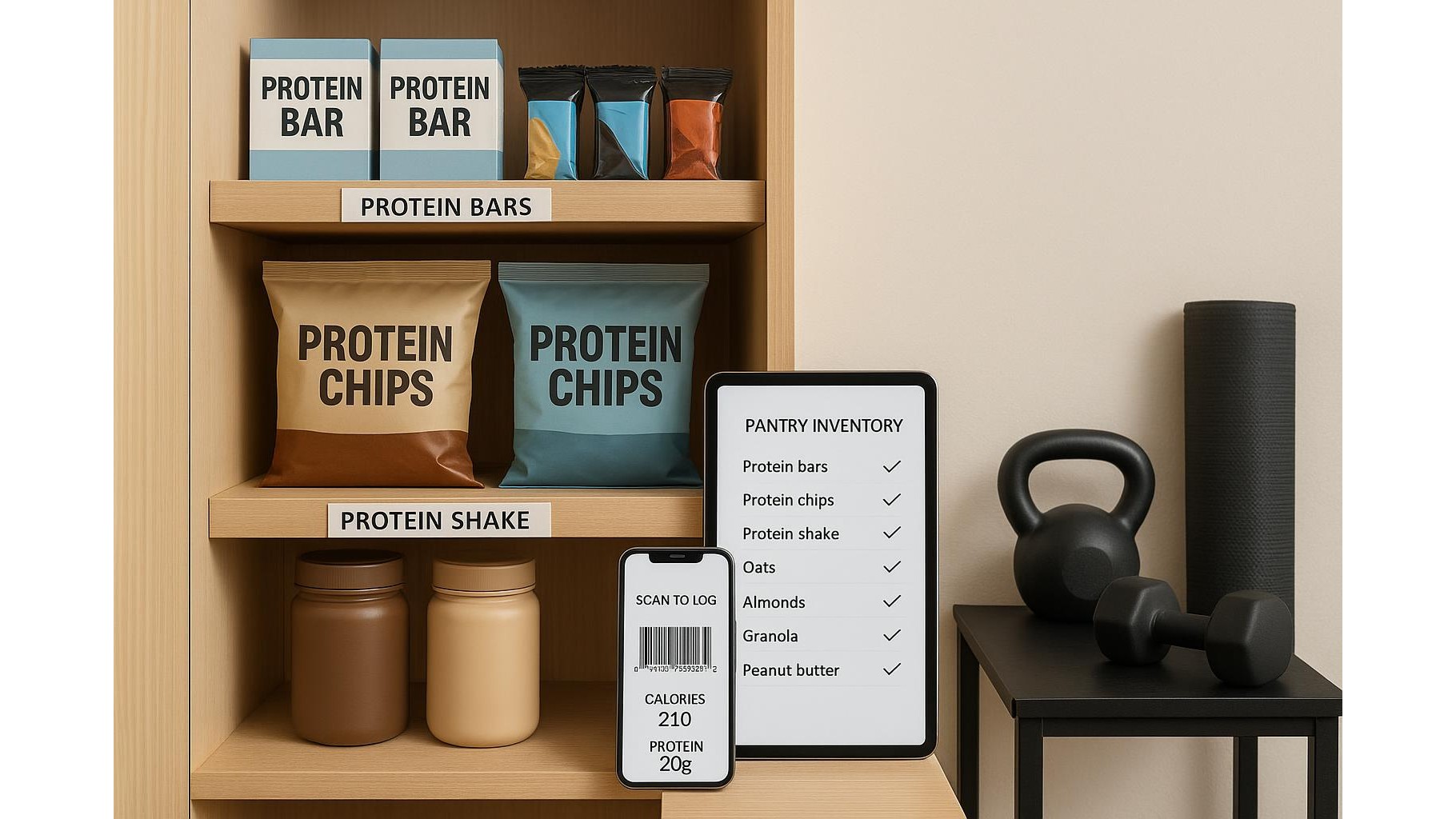
A pantry inventory app works like a digital shelf. Create categories such as “Pre-workout”, “Post-workout” and “Desk snacks”, then add your chosen products with their quantities and expiry dates. When you restock, you add the number of bars, sachets or pots; when you eat one, you subtract it in the app. Over time you will see patterns: perhaps you fly through post-workout snacks but rarely touch pre-workout options. This data helps you adjust your next grocery order and prevents both overbuying and running out right before a heavy training session. The key is to keep the workflow simple enough that you actually use it every day.
Using barcode apps to control portions and macros
Barcode-based nutrition tracking apps complement your pantry list by monitoring what you actually eat. Instead of manually typing nutrition values, you scan the product barcode and the app logs calories, protein, carbs and fats. This makes it effortless to see how that “small” snack affects your total daily intake. You can create a routine where every time you grab a snack from the pantry you do two actions: reduce the item count in your pantry app and scan the barcode in your nutrition app. In less than 15 seconds you have updated both stock and macros, which is far more realistic to maintain than a complex meal plan spreadsheet.
Building snack routines around your training
Once your apps are set up, connect them to your home workout schedule. Decide in advance what a typical day should look like: for example, one pre-workout snack about 60 minutes before training, one post-workout snack within 1–2 hours afterwards, and no random grazing in between meetings. Use your pantry app to pin or favourite the snacks that best fit each slot, then use your barcode app to check that you are hitting your protein targets without overshooting calories. Over a week this consistency supports better recovery, more stable energy and less frustration about “accidental” snacking.
Keeping your system simple and sustainable
The aim is not perfection but consistency. Choose apps with clean interfaces and features you will actually use: basic inventory, barcode scanning, simple reports. Keep your snack list short and review it every couple of weeks—remove items that trigger mindless eating and add options that keep you satisfied. Store your “green light” snacks in a visible, easy-to-reach spot and hide or avoid ultra-processed treats that make tracking harder. By aligning your pantry, your apps and your training plan, you create an environment where the easiest choice is also the best one for your fitness goals.
In summary, combining pantry inventory tools with barcode-based nutrition apps lets you treat your snacks like part of your home gym setup: planned, measured and ready for action. With a few minutes of initial organisation and a quick scan each time you eat, you can avoid mindless grazing, stay on top of your high-protein essentials and support your workouts without relying on complicated meal plans.