With a bit of creativity, a simple aerobic step platform can become the heart of a compact home gym. Combined with a pair of dumbbells and a few resistance bands, it lets you train your whole body in a very small space. In this guide, you’ll learn how to set up safe and effective exercises for presses, rows, step-ups and core work, transforming a basic step into a surprisingly powerful mini strength station.
Choosing the right step, dumbbells and bands
A sturdy, non‑slip step is essential. Look for a platform with a grippy surface, wide base and adjustable height so you can tailor intensity for step‑ups and bench‑style presses. Pair it with moderately heavy dumbbells that let you complete 8–12 reps with good form. Round out your kit with a set of resistance bands that include handles and door anchors, plus a few long loop bands. This combination keeps your workstation light, portable and easy to store while still allowing progressive overload as you get stronger.
Safe setups for presses and rows
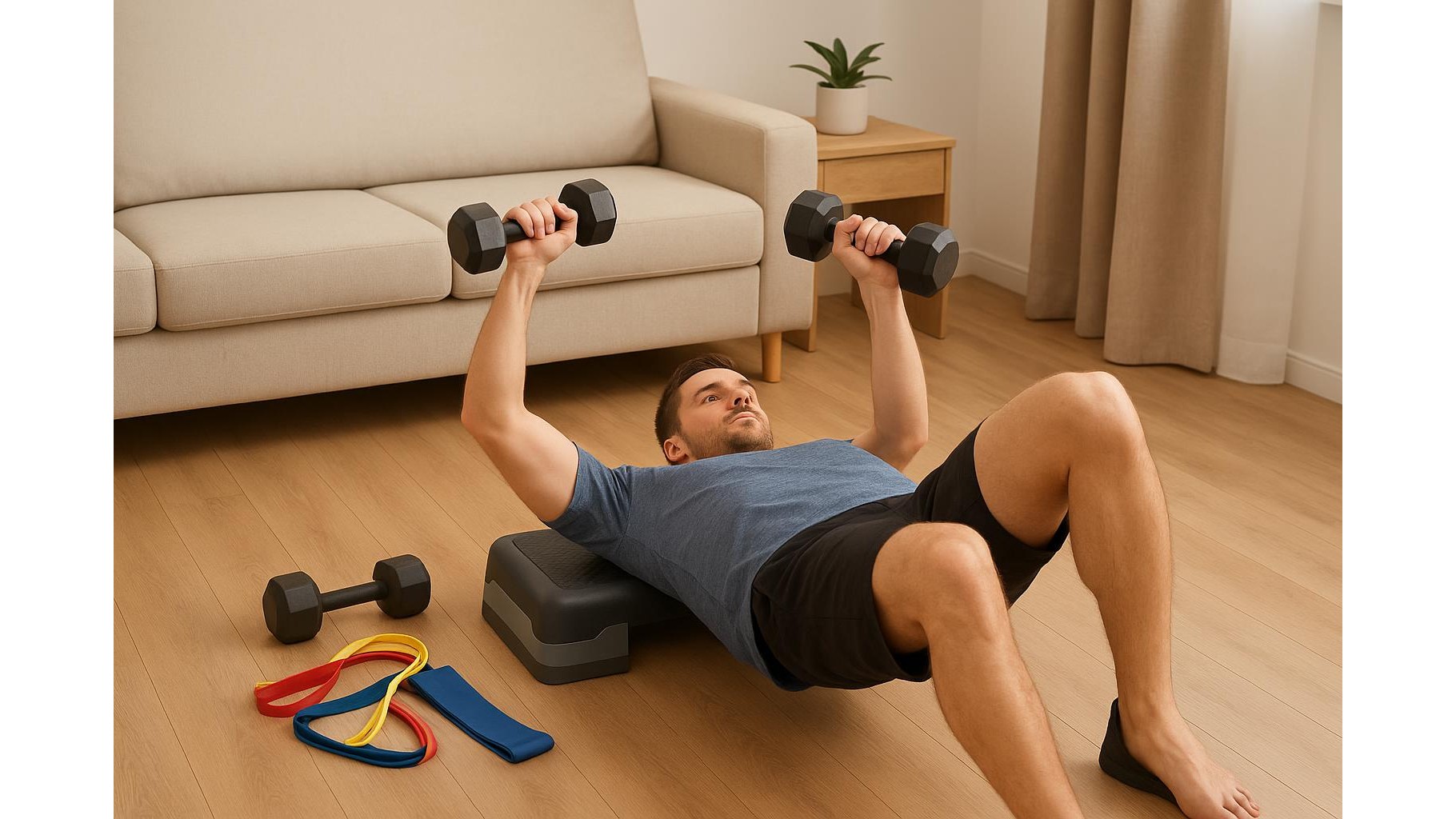
To mimic a bench, place your aerobic step on a flat surface and check that it doesn’t rock. For dumbbell chest presses, sit at one end, lie back so your shoulders rest fully on the platform, feet flat and planted wide for stability. Keep your wrists straight and lower the dumbbells under control until your elbows are just below shoulder level. For single‑arm rows, hinge at the hips and place one hand and the same‑side knee on the step, forming a strong, neutral spine before pulling the weight. Avoid arching your low back or letting your shoulder collapse toward the floor; the step should feel like a solid support, not a balancing act.
Step‑ups, splits and lower‑body strength
The step shines for leg training. Begin with bodyweight step‑ups, driving through the whole foot and avoiding pushing off the back leg. When that feels easy, hold dumbbells at your sides to turn them into serious strength work. You can also use the platform for Bulgarian split squats: place the top of one foot on the step behind you and sink straight down, keeping the front knee tracking over the middle of the foot. For hip thrusts, rest your upper back along the long edge of the step, plant your feet, squeeze your glutes at the top and add a dumbbell across your hips when bodyweight alone is no longer challenging.
Core training and full‑body conditioning
Your mini station doubles as a powerful core tool. Elevated planks with hands or feet on the step increase instability and demand more from your midsection. Try step‑up to press combinations: step onto the platform, then press the dumbbells overhead, stepping down under control. This blends strength and cardio for time‑efficient conditioning. Mountain climbers with hands on the step reduce wrist strain while keeping intensity high. Throughout, keep your ribs stacked over your pelvis and avoid sagging hips; quality reps beat quantity when it comes to building a strong, resilient core.
Using resistance bands to expand your station
Resistance bands turn your aerobic step into a more complete training hub. Loop a long band under the step and hold the ends for banded rows, chest presses or overhead presses when you want a joint‑friendly alternative to dumbbells. Attach handle bands to a door anchor for lat pulldowns, face pulls and rotational core drills, using the step to adjust your body angle or to sit/half‑kneel for stability. Bands offer a different resistance curve from free weights, challenging your muscles most where they’re strongest and giving your joints a break while still driving progress in your home strength training.
With just an aerobic step, a couple of dumbbells and a few resistance bands, you can build a surprisingly versatile mini strength station that fits almost any home. Focus on stable setups, controlled movement and progressive loading, and this simple platform will support effective full‑body workouts for years without demanding much space, money or equipment.