Building a home office around your training routine is one of the easiest ways to boost recovery, reduce joint stiffness and keep your energy stable throughout the day. By alternating between a standing desk, intentional floor sitting and short movement breaks, you can turn working hours into low‑intensity mobility work that supports your strength training or cardio sessions instead of stealing from them.
Why alternating positions helps recovery
Static positions are the enemy of joint health and post‑workout recovery, whether you are frozen in a chair or locked at a standing desk. Alternating between standing, floor sitting and brief movement breaks promotes circulation, which helps clear metabolic waste from tough lifting or HIIT sessions and brings nutrients back into the muscles. Standing encourages light activation of the posterior chain, while floor sitting invites hips, ankles and spine to explore ranges of motion you never touch in a regular office chair. The goal is not to “burn extra calories” but to sprinkle in gentle, joint‑friendly movement that leaves you feeling looser, not tired.
Setting up a standing desk you can actually use
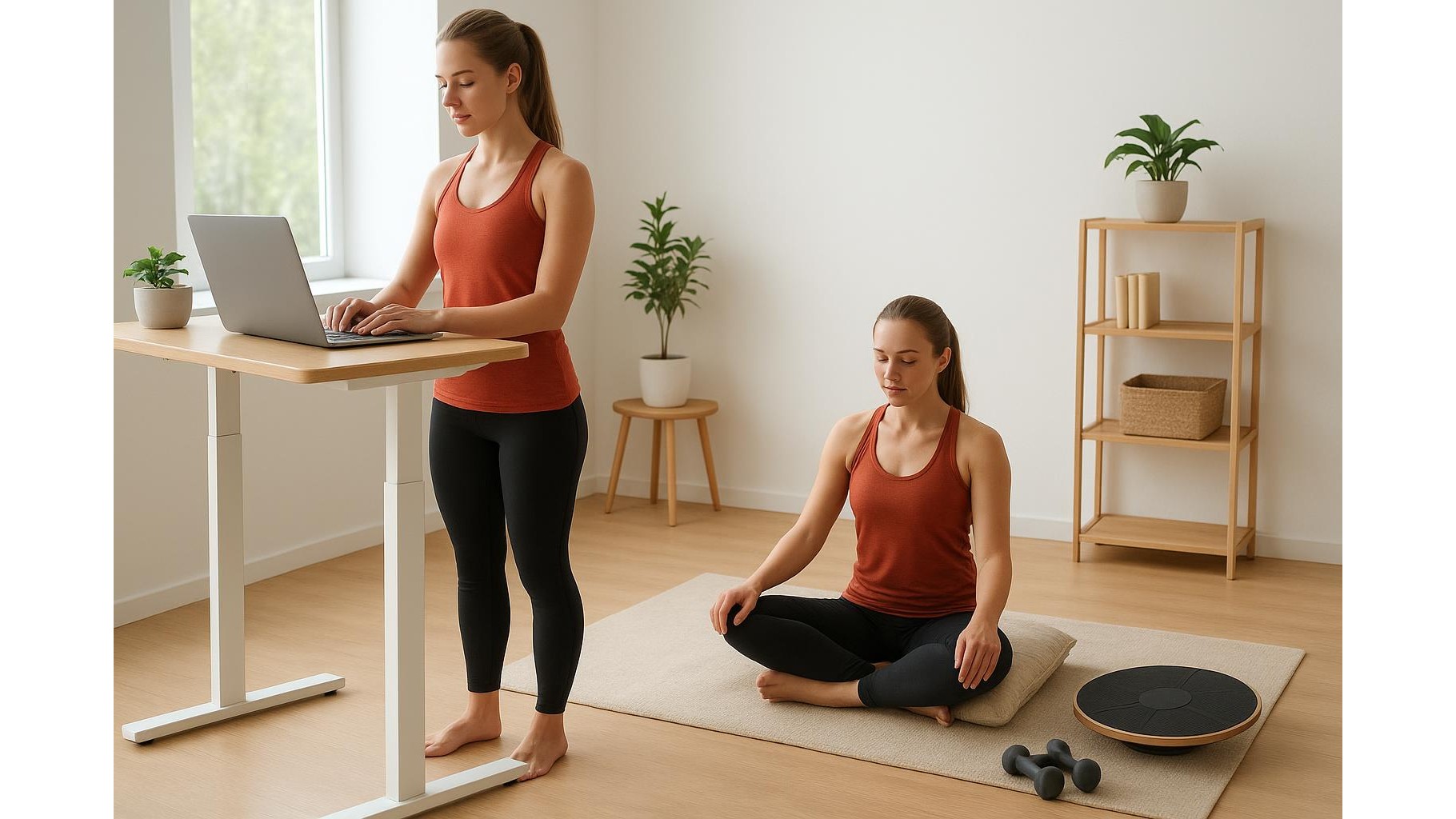
A quality height‑adjustable standing desk is the anchor of this recovery‑friendly setup. Look for a model with smooth, electric adjustment, a stable frame and memory presets so you can switch between sitting and standing heights in seconds instead of fussing with cranks. Compact desks designed for home offices help you maintain proper monitor height and neutral wrists, reducing strain on the neck, shoulders and forearms that could otherwise carry over into your pressing or pulling sessions. When you stand, keep your elbows around 90 degrees, distribute weight evenly through both feet and think of your standing time as a chance to reset posture, not hold a rigid military position.
Floor sitting as built‑in mobility work
Integrating floor sitting into your day is like sneaking in constant, low‑key mobility drills. Use a firm floor cushion or meditation seat to slightly elevate the hips so you can relax in positions such as cross‑legged, 90/90 hip sits or long‑sitting with legs extended. Rotating through these shapes for a few minutes at a time keeps the hips, knees and ankles comfortable and resilient for deep squats, split squats and lunges. Keep your laptop on a low coffee table or a portable lap desk to avoid hunching, and treat any sense of numbness or pinching as a cue to gently shift, not to force yourself to “tough it out.” Over weeks, many lifters notice easier squat depth and less tightness on off‑days.
Active standing: balance boards and micro‑movement
To get more out of your standing time without tiring yourself, add gentle instability with a balance board or anti‑fatigue mat. Rocking, pivoting and small ankle movements encourage subtle activation of the feet, calves and hips, which helps counter the stiffness that can build up from heavy deadlifts or long runs. Think of this as active standing: knees soft, weight shifting slightly, shoulders relaxed and breathing steady. Keep sessions short—10–20 minutes at a time—so you do not overload the calves before a big training session. Pair these bouts with low‑cognitive‑load tasks such as emails or calls, and return to a stable stance or seated position when you feel your focus or posture slipping.
Structuring your workday around training
The most effective home setup is planned around your key workouts. On heavy lower‑body days, use more floor sitting and brief standing bouts early in the day to open hips and ankles, then prioritize a seated or gently standing position in the final 60–90 minutes before training to preserve freshness. After sessions, avoid collapsing into a chair for hours; instead, alternate 20–30 minutes of light standing with 10–15 minutes on the floor in relaxed positions, plus a 2–5 minute walk every hour. On lighter cardio or upper‑body days, you can extend standing periods and use balance tools more liberally, making the whole day a rolling, low‑intensity recovery block.
Putting it all together for long‑term joint health
When you combine a standing desk, intentional floor sitting and short movement breaks, your home office becomes part of your training program rather than competition for it. You reduce stiffness, keep joints well nourished and arrive at each strength or cardio session feeling prepared instead of compressed by hours of static sitting. Start with simple alternations—10–20 minutes standing, 10–20 minutes floor sitting, a brief walk—and adjust ratios based on how your body and performance respond. Over time, this rhythm of changing positions will support better recovery, more comfortable lifts and, ultimately, a more sustainable home fitness lifestyle.