Keeping your barbells and weight plates in top condition is essential if you train at home. Without a commercial gym’s maintenance routine, dust, sweat and moisture can quickly turn into rust, peeling chrome and chipped plates that damage your floor. With a simple cleaning, oiling and storage routine, you can protect your investment, keep your knurl sharp and smooth, and make your home gym look and feel like new for years.
Daily and weekly cleaning to prevent rust
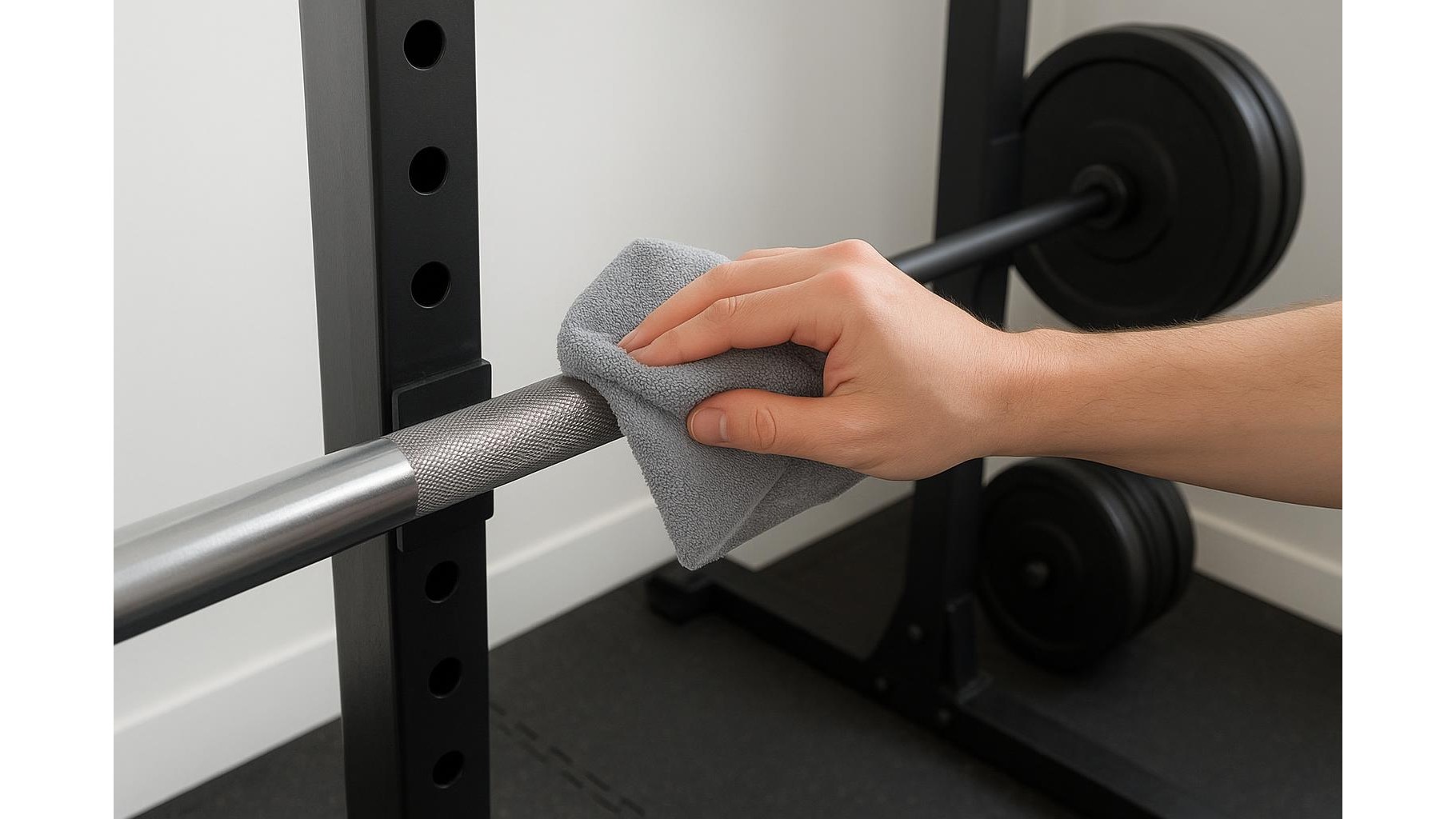
The first defence against rust is regular cleaning. After each workout, quickly wipe down your barbell shaft, sleeves and metal weight plates with a dry or slightly damp microfiber cloth to remove sweat, chalk and dust. Avoid harsh household cleaners; they can strip finishes and accelerate corrosion. Instead, use a mild, non-abrasive detergent diluted with water for occasional deeper cleaning, then dry thoroughly. Pay extra attention to the knurling where salts and chalk collect. For stubborn grime, use a soft nylon or brass brush to clean between the knurl without scratching the steel. Keeping your bar dry after each session is the single most effective habit for stopping rust before it starts.
Oiling barbells and sleeves the right way
A light oil treatment will protect bare steel and even coated bars. About once a month (or more often in humid environments), apply a few drops of lightweight machine oil to a microfiber cloth and rub it into the barbell shaft, avoiding rubber or plastic parts. Let it sit for a few minutes, then buff off any excess so the bar is not slippery in your hands. For sleeves, add one or two drops of oil where the sleeves meet the collar, then rotate the sleeves to help the lubricant penetrate the bushings or bearings. This keeps spin smooth and protects internal parts from moisture. Do not over-oil—too much attracts dust and chalk, which can gum up the mechanism and make maintenance harder over time.
Dealing with existing rust and chips
If rust has already appeared on your bar or plates, you can usually fix it with patience. Start by wiping the area clean and dry. Use a nylon or brass brush to gently scrub away surface rust, working along the grain of the steel. For more stubborn spots on a bare-steel bar, a very fine abrasive pad can help, but use it sparingly to avoid flattening the knurl. Once the rust is removed, clean off any dust and apply a thin coat of oil to seal the metal. Chipped coatings on plates or sleeves cannot be fully restored, but you can lightly sand any sharp edges to prevent further flaking and then keep the exposed metal clean and oiled. If deep pitting or structural damage is visible, retire the bar from heavy use for safety.
Storing barbells and plates to minimise damage
Proper storage is just as important as cleaning. Always keep your barbell and plates in a dry, well-ventilated area away from direct sources of moisture such as open windows, damp basements or garages with condensation. Store barbells horizontally on a rack or vertically in a bar holder so they do not bend, and avoid leaving them loaded on a rack for long periods. Plates should be racked on pegs or a plate tree rather than stacked haphazardly on the floor, which can chip edges and trap moisture between plates. If you must store gear in a slightly humid room, consider using a dehumidifier and increasing the frequency of your oiling routine to protect the steel over the long term.
Protecting your floor and barbell sleeves
Even if you are careful with rust, neglecting the flooring under your rack and platform can shorten the life of your equipment. Dropping bare iron plates directly onto concrete or tiles can crack plates, chip coating and transfer moisture and grit back onto the metal. Laying down thick rubber mats or a DIY wooden platform under your lifting area cushions impacts and reduces vibration, helping your sleeves, bushings and plates last longer. Avoid rolling loaded bars across rough surfaces, as this can grind debris into the sleeves and damage the finish. When not in use, unload the bar and place it on a rack rather than leaving it on the floor; this simple habit keeps sleeves cleaner and reduces the chance of accidental knocks that might bend the bar or chip plate edges.
With a consistent routine of cleaning, oiling and smart storage, you can prevent rust, minimise chipping and extend the life of your barbells and weight plates in any home gym. Wiping down metal after each session, applying a light coat of oil on a regular schedule, tackling rust early and protecting both your sleeves and flooring will keep your setup performing smoothly and looking almost new. A few minutes of maintenance each week is a small investment compared with replacing an entire barbell or plate set.