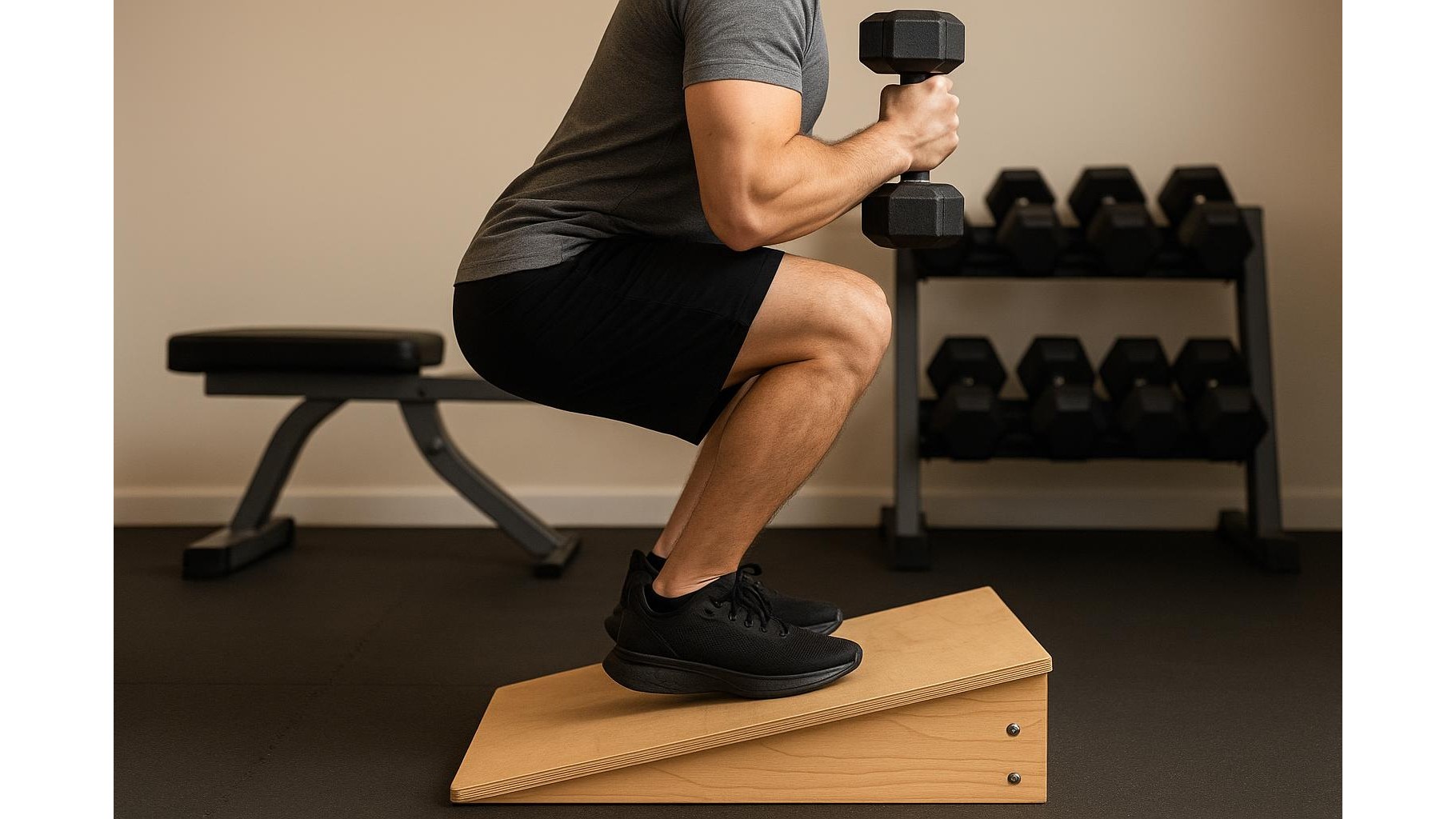
Adding heel‑elevated squat wedges and slant boards to your home gym can instantly make squats, lunges and mobility work feel smoother and more joint‑friendly. By raising the heels or standing on an angled platform, you reduce the ankle mobility demanded by deep squats, shift more tension to the quads and often improve knee comfort. The key is choosing a stable, non‑slip product with the right angle for your goals, and then learning how to use it safely in your training.
Why heel‑elevated squats help mobility and knee comfort
When you struggle to hit depth in a squat, limited ankle dorsiflexion is often the limiting factor. A heel‑elevated squat wedge lets your knees travel further forward without the heel lifting, helping you stay more upright and keep your lower back safer. This is particularly useful for quad‑focused squats, high‑bar squats and goblet squats. Many lifters with cranky knees also find that the more upright torso and controlled knee path reduces discomfort. Instead of stacking weight plates under your heels, wedges and slant boards provide a flat, secure surface that spreads pressure evenly under the foot and reduces wobbling.
Key features to look for in squat wedges and slant boards
When you buy a wedge or slant board for a home gym, prioritise stability and traction. Look for a wide, textured top surface so your shoes do not slip during heavy squats or split squats, and a rubber or grippy base that does not slide on flooring. Materials like high‑density foam, solid wood, or heavy‑duty plastic are common: foam is lighter and more forgiving underfoot, while wood and plastic feel rock solid under heavier loads. Check the stated weight capacity and compare it with your squat numbers, including any progress you expect over the next couple of years. Adjustable or multi‑piece wedges let you choose different angles, while fixed boards are simpler and often more durable.
Choosing the right angle and material for your goals
Most squat wedges offer angles between about 5° and 20°. Lower angles (around 5–10°) give a subtle heel lift that helps if you already have decent ankle mobility but want a slightly more upright squat. Mid‑range angles (10–15°) are popular for quad‑dominant squats and split squats, giving a noticeable difference in knee travel and depth. Higher angles (15–20°+) are more suited to calf stretches and dedicated ankle mobility work rather than heavy barbell squats. For most home gym users, a sturdy wooden or high‑density foam wedge in the 10–15° range is a safe, versatile starting point. If you train barefoot or in socks, prioritise a non‑slip texture on top and a firm material that will not compress excessively.
Best ways to use wedges and slant boards in a home gym routine
Heel‑elevated wedges and slant boards shine in a variety of strength and mobility exercises. For strength, place your heels on the wedge for goblet squats, front squats and bodyweight squats, focusing on a controlled descent and strong quad contraction. Use them for Bulgarian split squats and reverse lunges to emphasise the front leg and maintain balance. For mobility, stand facing uphill on a slant board and perform slow calf stretches, letting the heel sink toward the board for 30–60 seconds, or do gentle knee‑over‑toe bends while holding a support for balance. Always start with light loads or just bodyweight to get used to the new mechanics before adding heavy weight.
Safety tips and common mistakes to avoid
Using wedges and slant boards safely in a home gym comes down to good setup and gradual progression. Place the wedge on a flat, non‑slippery surface and make sure it does not rock when you step on it. Keep your whole foot supported—do not let your toes hang off the edge, which can reduce stability and stress the toes. Avoid jumping or dynamic direction changes on high‑angle boards unless they are designed for that purpose. When squatting, maintain a braced core and do not push through pain in the knees; a slight stretch or effort is fine, but sharp discomfort is a red flag. Increase range of motion and load over time, not in a single session, especially if you are using wedges to rehab older knee or ankle issues.
In summary, heel‑elevated squat wedges and slant boards are simple tools that can transform how your squats, lunges and stretches feel in a home gym. By choosing a stable, non‑slip model with a suitable angle and solid materials, you support better form, deeper range of motion and more comfortable knees and ankles. Integrate them gradually into your leg workouts and mobility sessions, pay attention to technique, and you will get more out of every rep while reducing the risk of joint irritation.