Training on a home rower can feel confusing if you only copy random gym workouts. Your screen shows distance, time, calories, maybe stroke rate and split pace – but how do you turn those into realistic goals? This guide walks you through setting beginner, intermediate and advanced targets for fat loss, cardio health and performance, so you can build smart sessions on any home rowing machine instead of guessing.
Understand your rower’s key metrics
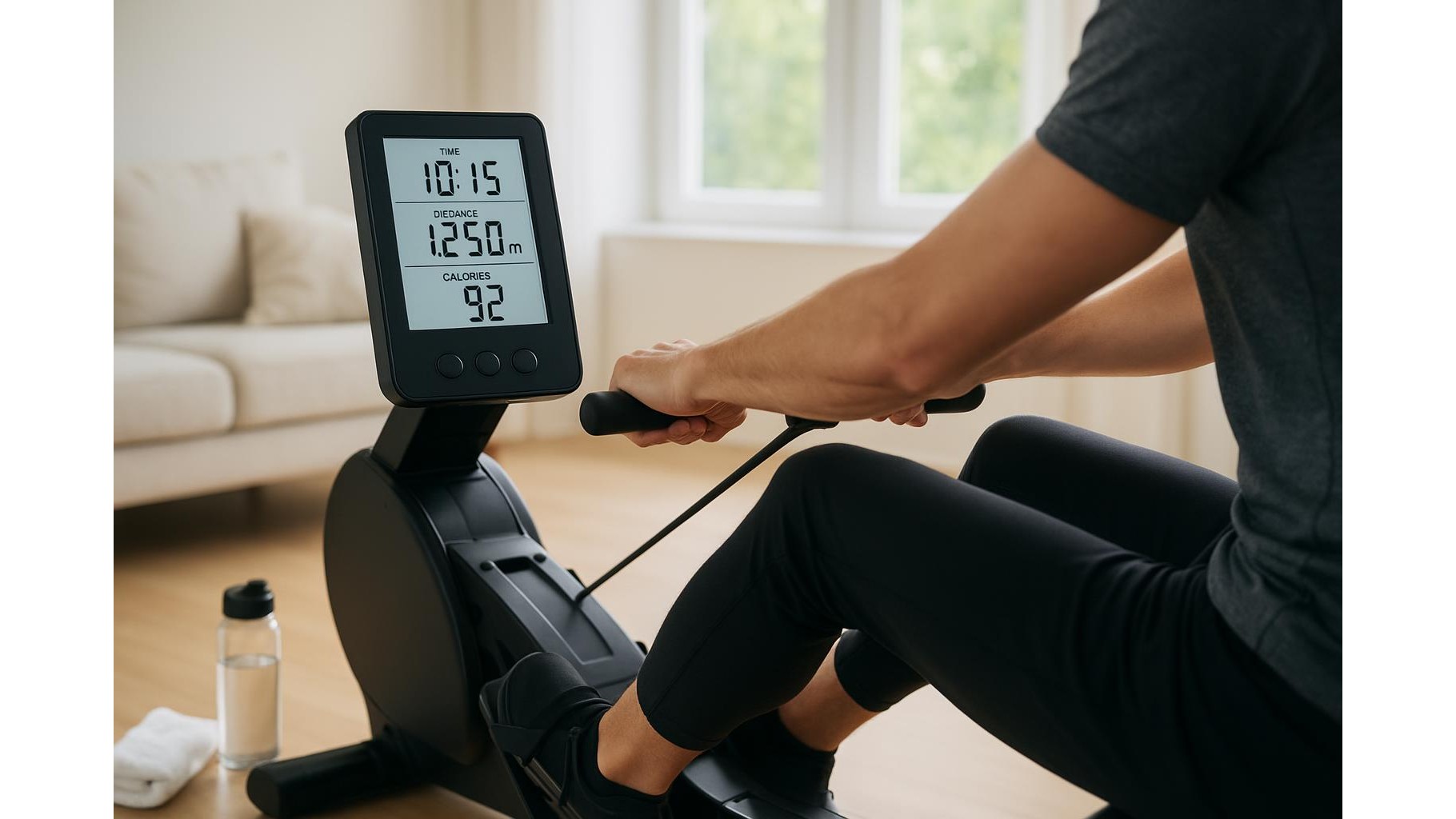
Before setting goals, you need to understand what your rower is actually measuring. Almost every machine tracks time, distance and calories. Some also show stroke rate (spm), 500 m split pace and estimated power in watts. Time is the simplest anchor for beginners: you can always row for 10–20 minutes, even if distance and pace change from day to day. Distance is best for performance goals, because you can see clear progress on set pieces like 1,000 m or 5,000 m. Calories are estimates based on your speed and (sometimes) your weight; they are useful for long fat‑loss sessions but less precise for performance. Spend one or two easy workouts just watching these numbers and learning how changes in effort affect the readout.
Set beginner targets by time and consistency
If you are new to indoor rowing, prioritise frequency over intensity. Start with a target of 3 sessions per week of 15–20 minutes. Your primary goal is simply: “Row for 15–20 minutes at a steady, conversational pace.” Note the distance covered and calories burned, but don’t chase numbers yet. After two weeks, aim to improve one metric at a time: add 2–3 minutes to one session, or keep time the same and see if you can cover an extra 100–200 m at the same comfortable effort. A realistic beginner calorie target is 120–200 kcal per 20‑minute session; let that rise naturally as you get fitter. This approach builds confidence, protects your joints and gives you a baseline to improve from.
Intermediate goals: distance and calorie targets per week
Once you can row 20–30 minutes comfortably, shift towards weekly distance and calorie goals. A solid intermediate target is 15–25 km per week, split over 3–4 sessions. For example, you might plan 3,000–4,000 m on weekdays and a longer 6,000–8,000 m session on the weekend. For fat loss, aim for 800–1,500 kcal per week on the rower, depending on your size and diet. Instead of trying to “smash” a single workout, ask: “Did I hit my weekly distance and calorie target?” This gives you flexibility – if one day feels tough, row less and make up the metres later in the week. Gradually increase your weekly distance by about 10% when you complete your plan comfortably for two consecutive weeks.
Advanced performance: split times and structured intervals
Advanced rowers should anchor goals around 500 m split pace and specific time trials. First, test an all‑out 2,000 m or 5,000 m row after a proper warm‑up and record your average split (for example, 2:10/500 m). Use that as your reference. Set targets like “Reduce my 2,000 m time by 10–15 seconds in 8 weeks” or “Hold 2:05/500 m for 6 x 500 m with 1:30 rest.” Calories will rise naturally with intensity, but the main performance indicators are your split and total time. Mix one interval session, one threshold session (20–25 minutes at a hard but sustainable pace) and one longer easy row each week. Re‑test your chosen distance every 4–6 weeks and update your targets based on the new numbers.
Balancing fat loss, cardio health and recovery
Your distance, time and calorie targets must also respect recovery. For general cardio health, aim for at least 150 minutes of moderate rowing or 75 minutes of vigorous rowing per week, spread over several days. For fat loss, your weekly calorie burn should support a small, sustainable energy deficit – rowing might contribute 800–2,000 kcal per week depending on your schedule. Build in at least one rest day from rowing and one very light session if you train often. If your performance suddenly drops, distance feels impossible or your heart rate seems unusually high for normal paces, trim back your targets for a week. Realistic goals flex with real life; they challenge you, but they never require you to ignore pain or exhaustion.
To set effective targets on your home rowing machine, start by understanding your screen, then progress from simple time‑based goals to weekly distance and calorie targets, and finally to performance‑oriented split times and time trials. Adjust your plan to your level – beginner, intermediate or advanced – and to your main objective: fat loss, cardio health or performance. Track a few key metrics consistently, review them every few weeks and make small, smart changes instead of chasing random workouts. That’s how you turn raw numbers on your display into meaningful, sustainable progress.