Building a balanced home gym on a budget is tricky, especially when it comes to training your legs. One hybrid solution you will often see is the classic weight bench with leg developer attached at the front. These combo benches promise full‑body training in a compact footprint, but are they really worth it compared with buying separate lower‑body equipment?
What is a leg-developer bench and how does it work?
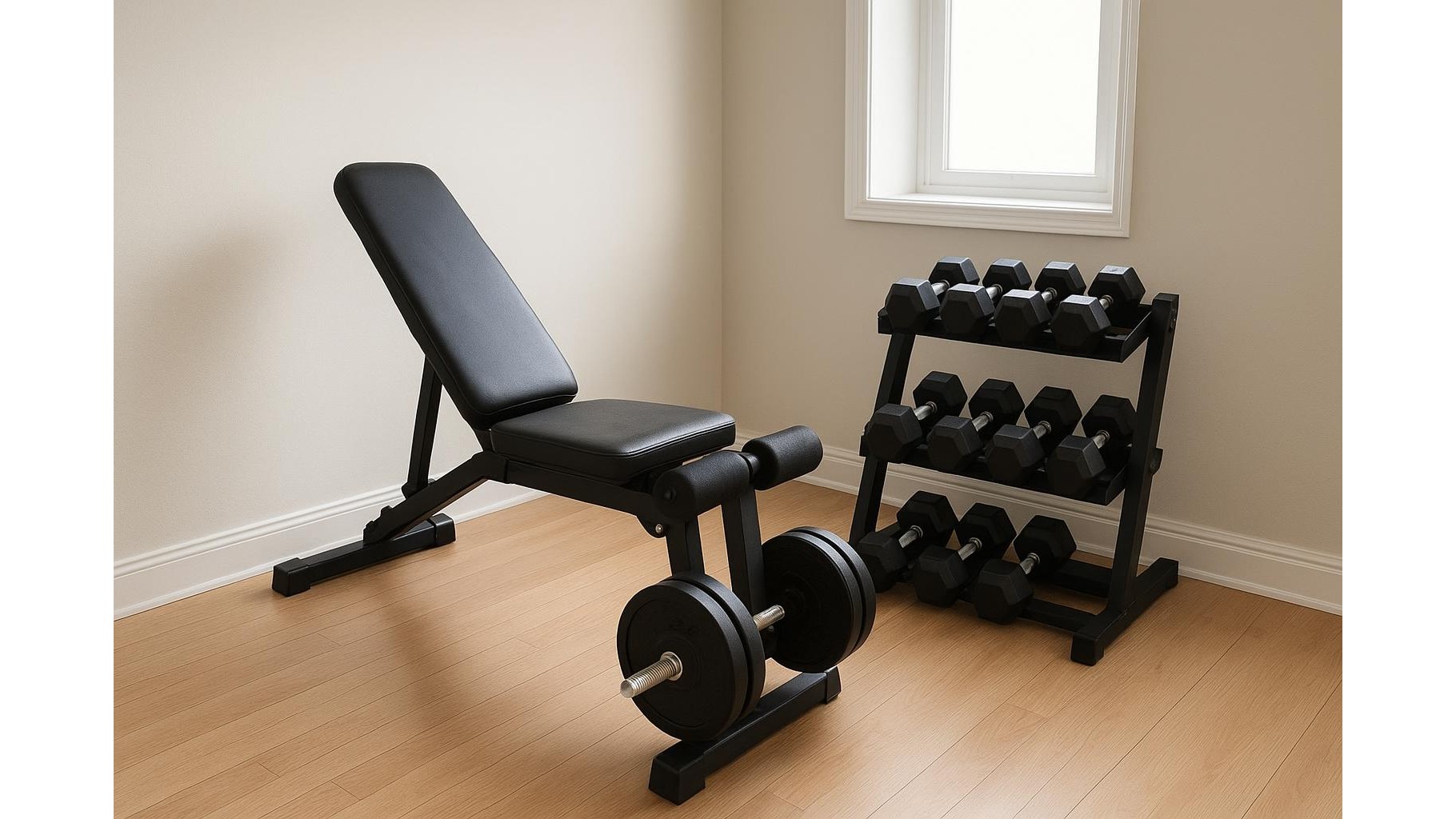
A leg-developer bench is a standard weights bench with an attachment at the front that allows you to perform leg extensions and leg curls using weight plates. You sit or lie on the bench and hook your ankles behind padded rollers connected to a lever arm. As you straighten or bend your knees, the arm lifts the load. Most designs are plate‑loaded, using standard or Olympic plates, and some integrate multiple bench positions (flat, incline, decline) for upper‑body presses as well. This makes them attractive for small spaces where one station needs to cover chest, shoulders and basic leg work.
Which muscles does the leg developer actually train?
The typical leg developer targets mainly the quadriceps via seated leg extensions and the hamstrings via prone or seated leg curls. Secondary muscles include the glutes and calves, though to a lesser extent than compound lifts like squats. Because the movement is guided by the lever arm, you isolate the knee joint rather than involving the hips and core as much. For beginners or bodybuilders who want to add isolation work after squats and deadlifts, this can be valuable. However, on its own, a leg developer will not replace heavy compound lifts for building overall leg strength and athletic performance.
Pros of a leg-developer bench in a home gym
The biggest advantage is space efficiency: you get a bench for presses and an option for leg extensions and curls in one footprint, ideal for spare rooms or studio flats. It can also be a cost‑effective way to add some leg isolation work without buying a separate machine. Many users appreciate the ease of use and quick setup—just slide weight plates on the pegs and start training. For people with knee issues, being able to control range of motion on extensions can be helpful under professional guidance. Finally, beginners may find the fixed path of motion less intimidating than free‑weight squats, making it easier to start training legs at home.
Cons, limitations and safety considerations
Despite the benefits, a leg-developer bench comes with trade‑offs. The resistance curve is fixed by the lever design and may feel awkward at certain angles, putting stress on the knees if you use too much weight or poor technique. Load capacity is often limited, so stronger lifters may outgrow the attachment quickly. Many cheaper benches feel wobbly when the leg unit is heavily loaded, which can be unsettling and potentially unsafe. Because the leg rollers protrude from the front, they also create a trip hazard in tight rooms. Finally, relying solely on leg extensions and curls can create an unbalanced program if you skip squats, lunges and hip‑dominant movements.
Who should buy a leg-developer bench (and who should skip it)?
A leg-developer bench makes sense if you have very limited space, want an all‑in‑one bench station, and already plan to do your main leg work with dumbbells or a barbell, using the leg attachment as supplementary isolation. It suits beginners, physique‑focused lifters, and anyone who values convenience over heavy loading potential. You should probably skip it if your priority is maximal strength training, heavy squats and deadlifts, or if you have the room and budget for a dedicated power rack, squat stands, and separate lower‑body tools like a trap bar or adjustable dumbbells. In that case, investing in robust free‑weight options will deliver better long‑term progress.
In summary, a leg-developer bench can be a practical, compact solution for home gym owners who want some extra quad and hamstring isolation without adding another machine. It is not a magic shortcut for leg development and should be viewed as an accessory to a solid base of squats, hinges and unilateral work rather than a replacement. Weigh your space, budget, training style and strength level carefully: if you need maximum versatility and are willing to program around its limitations, a leg-developer bench can earn its spot; if you aim for serious lower‑body strength, separate equipment is usually the better long‑term investment.